Today, April 9th, 2026, at 11:00 AM MT, SCRAM Systems released multiple enhancements for your SCRAM 24/7 GPS Activity Client Caseload.
These enhancements allow you to perform the following tasks from within SCRAM 24/7:
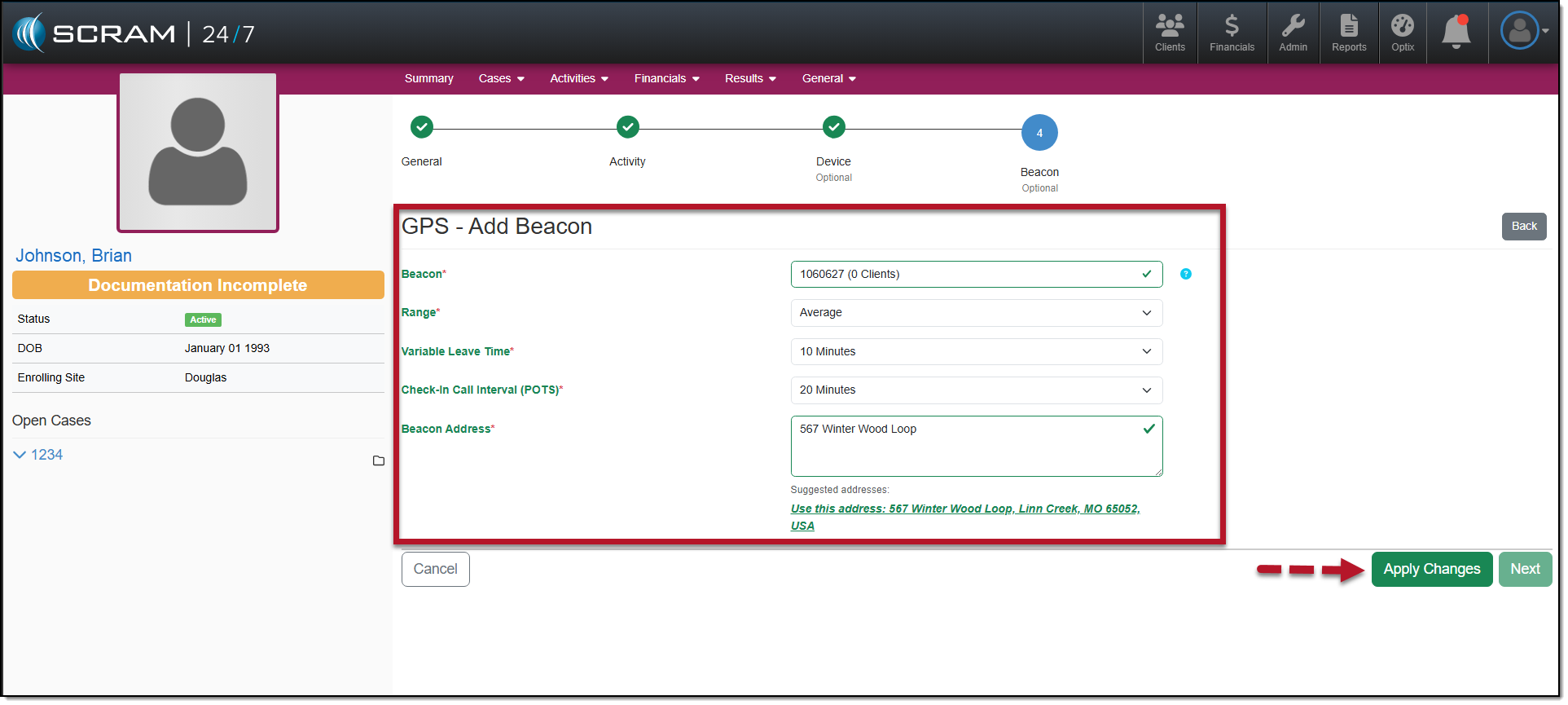
- During the Add GPS activity setup, you may now add and assign the SCRAM GPS Bracelet and Beacon.
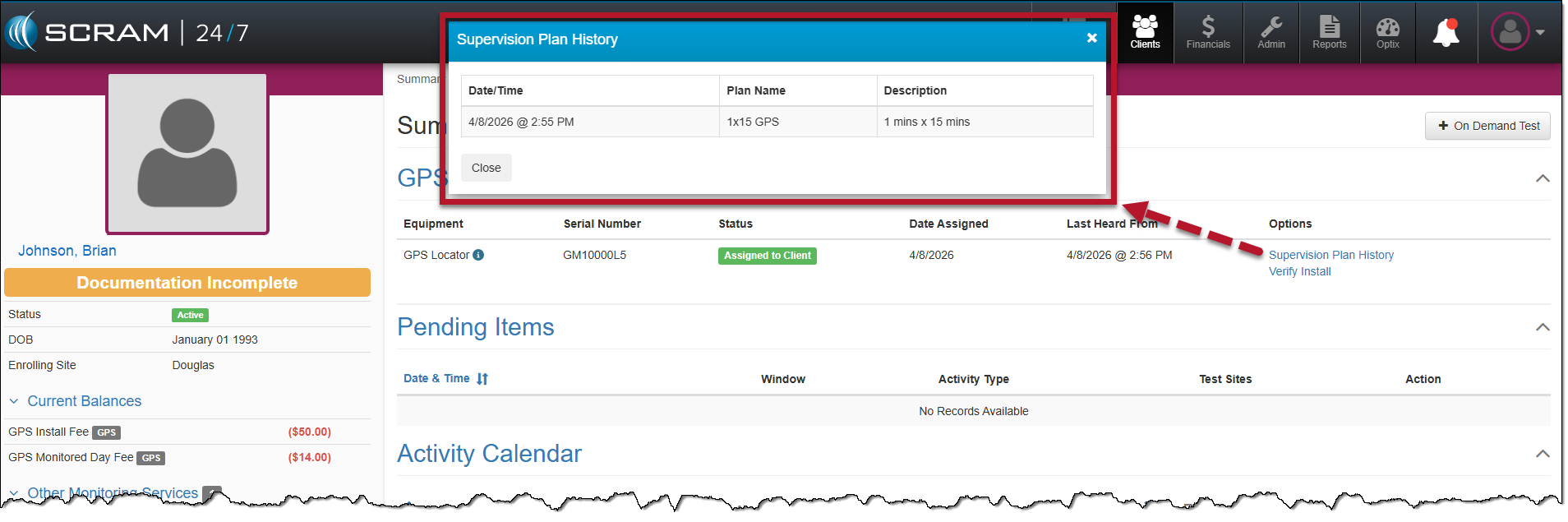
- View SCRAM GPS Supervision History on the client’s Summary page.
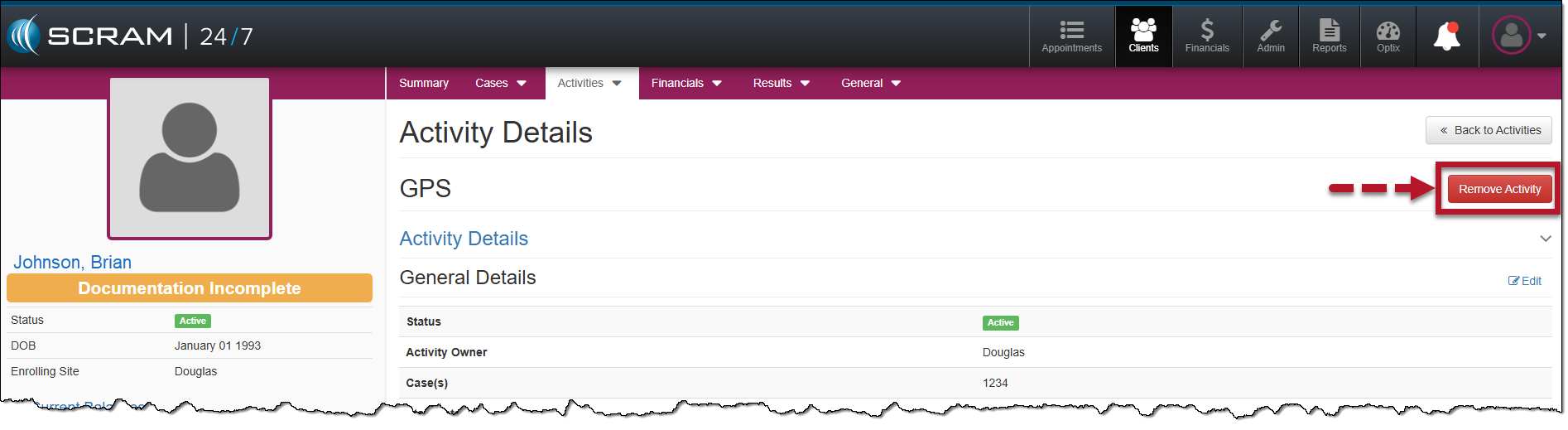
- Unassign the SCRAM GPS bracelet and Beacon when removing the GPS Activity.
Add GPS Activity
Once you have created the client’s profile in SCRAM 24/7, the next step is to add the GPS Activity and then complete the equipment assignment.
Starting on the client’s Activities tab:
- Select the +Add an EM Activity button, and then select the Add GPS Activity option from the dropdown menu.
 |
|
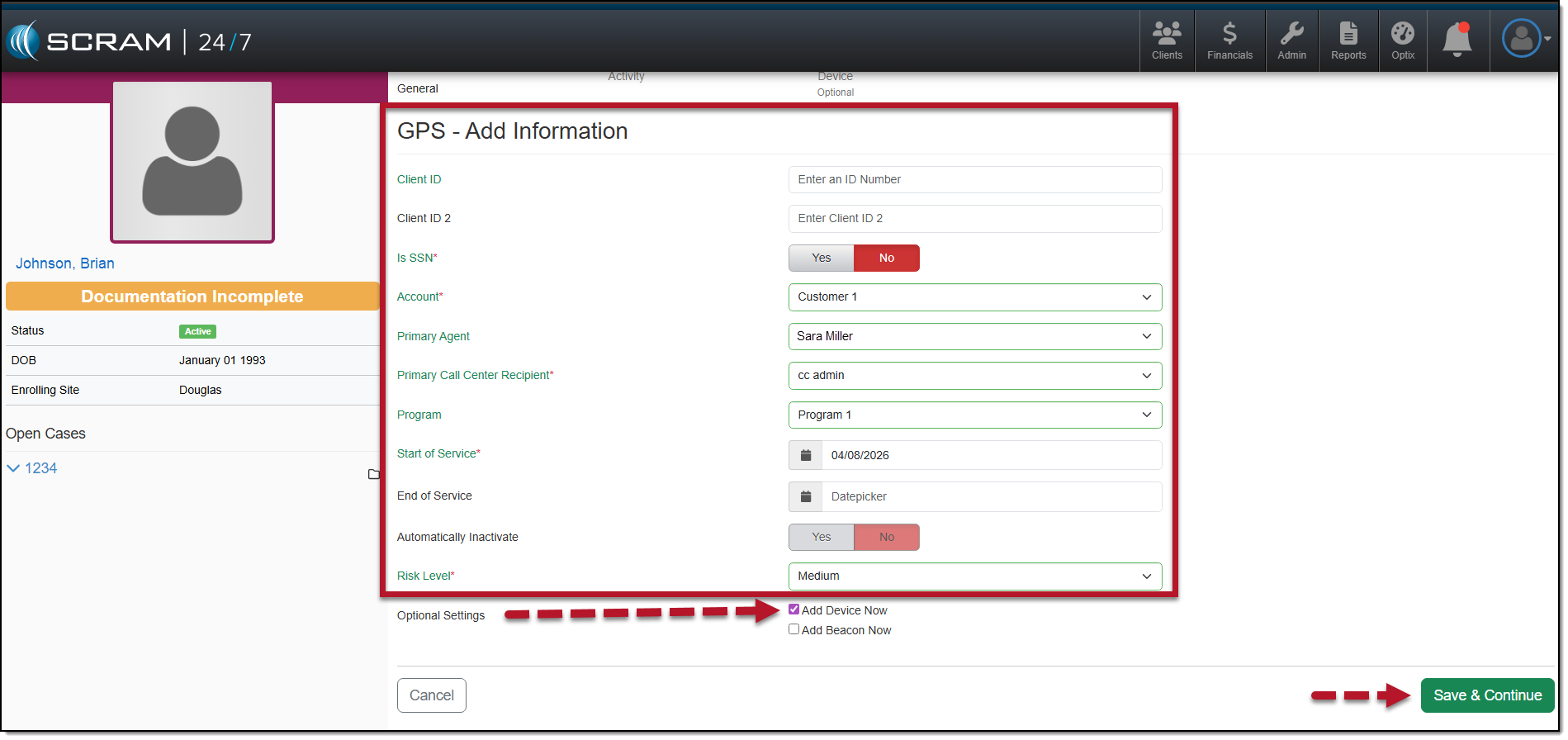
General Step
- Add the client-specific and “SCRAMNET GPS account” information. The fields and options available here are based on the selected Account.
- You may elect to assign a SCRAM GPS bracelet and Beacon at this time by selecting the checkboxes next to the appropriate selections in the Optional Settings section.
- Once your selections are made, select the Save & Continue button.
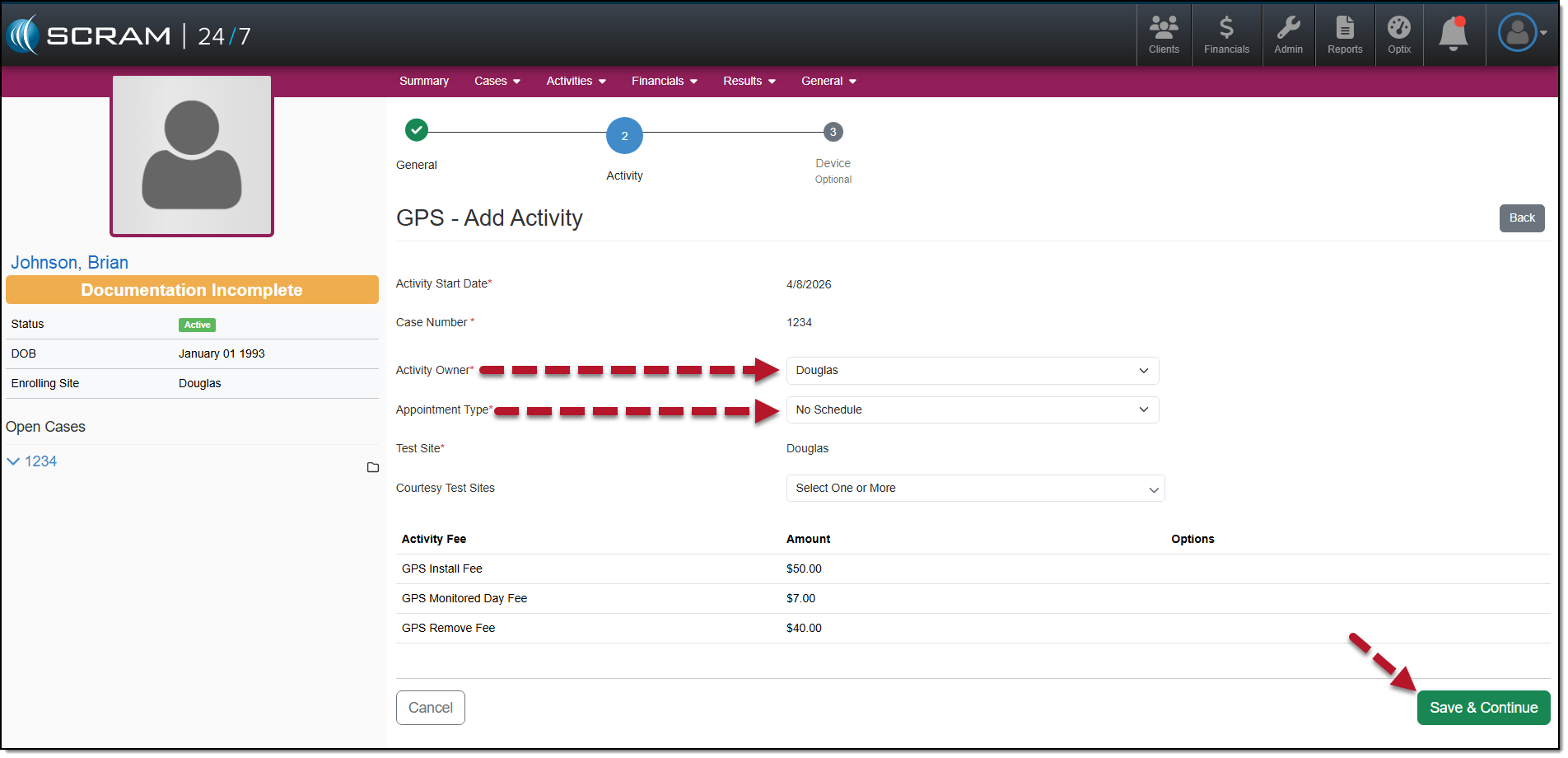
Activity Step
- Add the Activity details. All required fields are marked with a red asterisk.
- Appointment Type:
- The two options available are “No Schedule” or “In-Person Appointments.” When this In-Person Appointments option is selected, you will enter the appointment details. Once saved, the appointment is visible on the client’s Activity Calendar on the client’s Summary page and will populate on the Appointments Dashboard on the appointment date.
- Verify and update the Activity Fees if needed.
- After making your selections, select the Save & Continue button.
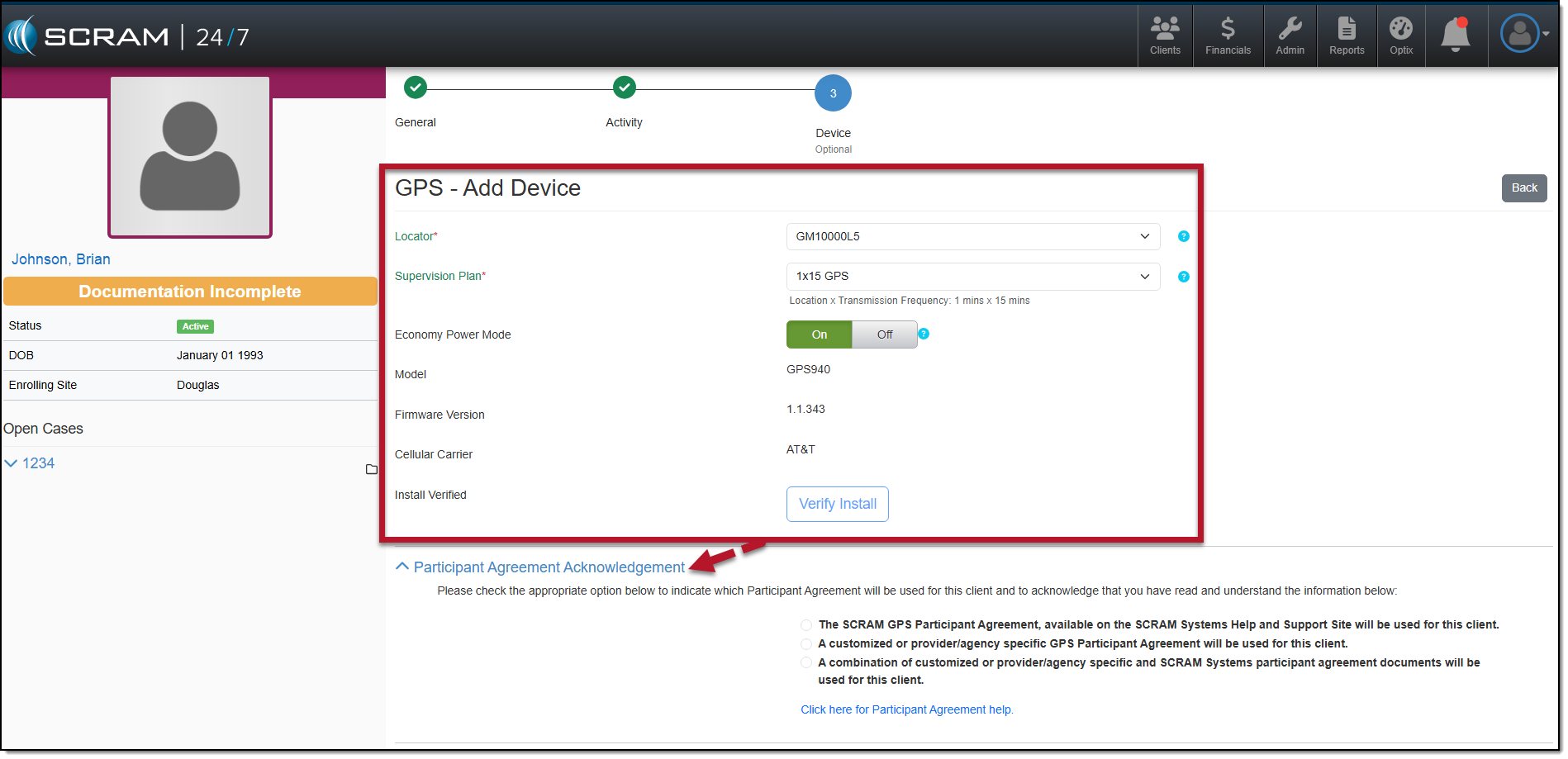
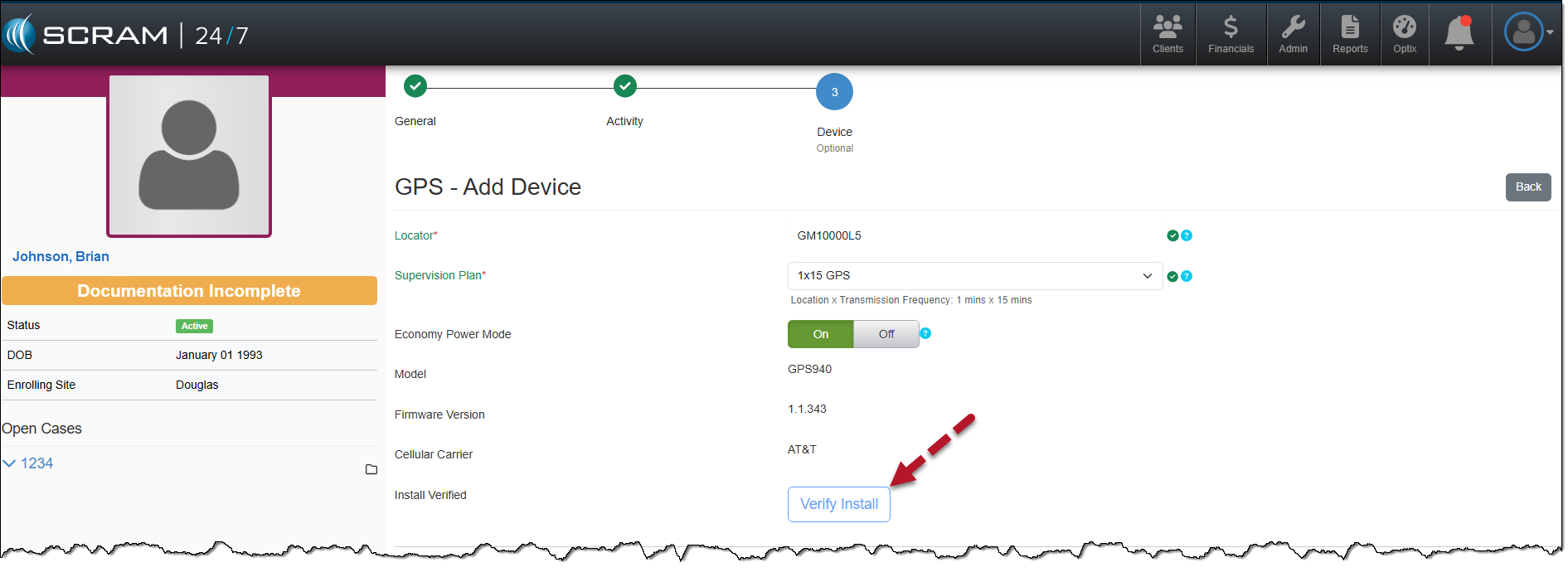
Device Step
- Select a locator from the dropdown menu.
- Select the Supervision Plan from the dropdown menu.
|
|
 |
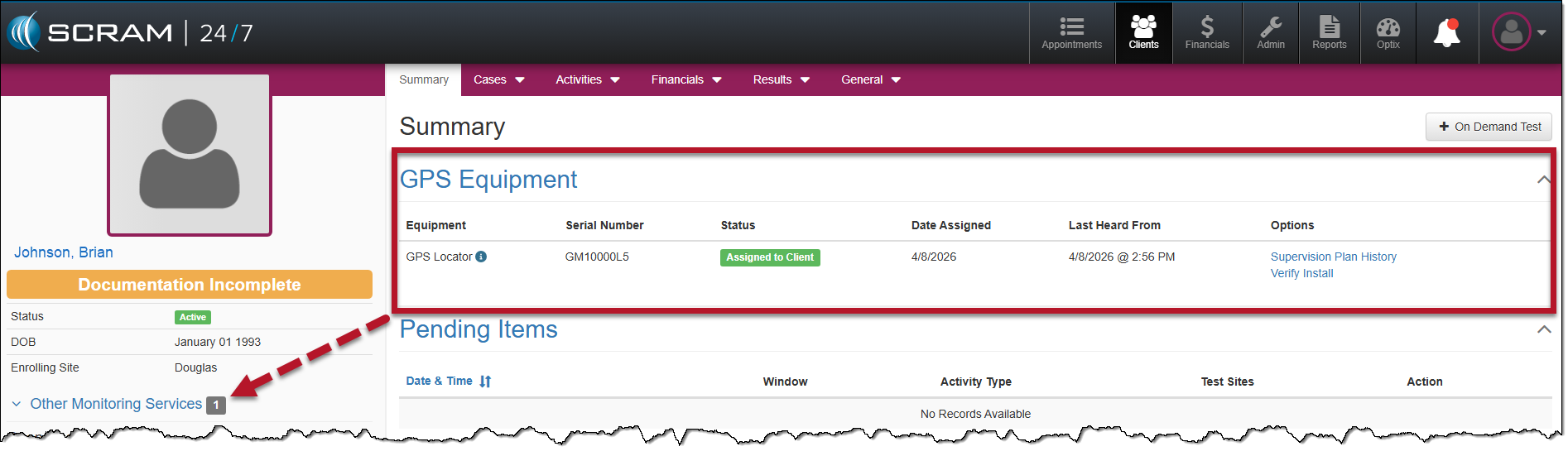
At this time, you must access the client’s SCRAMNET GPS profile page by selecting their name hyperlink in the Other Monitoring Services section in the sidebar. It is imperative that you:
If you skip this step, the client may not be properly monitored. |
Supervision Plan History Hyperlink
You may view the supervision plan information for the assigned bracelet by selecting the Supervision Plan History hyperlink located in the Options column on the client’s Summary page.
Removing the GPS Activity
When it is time to remove the GPS activity and check in the equipment, start by:
- Accessing the GPS Activity Details page.
- Select the Remove Activity button.
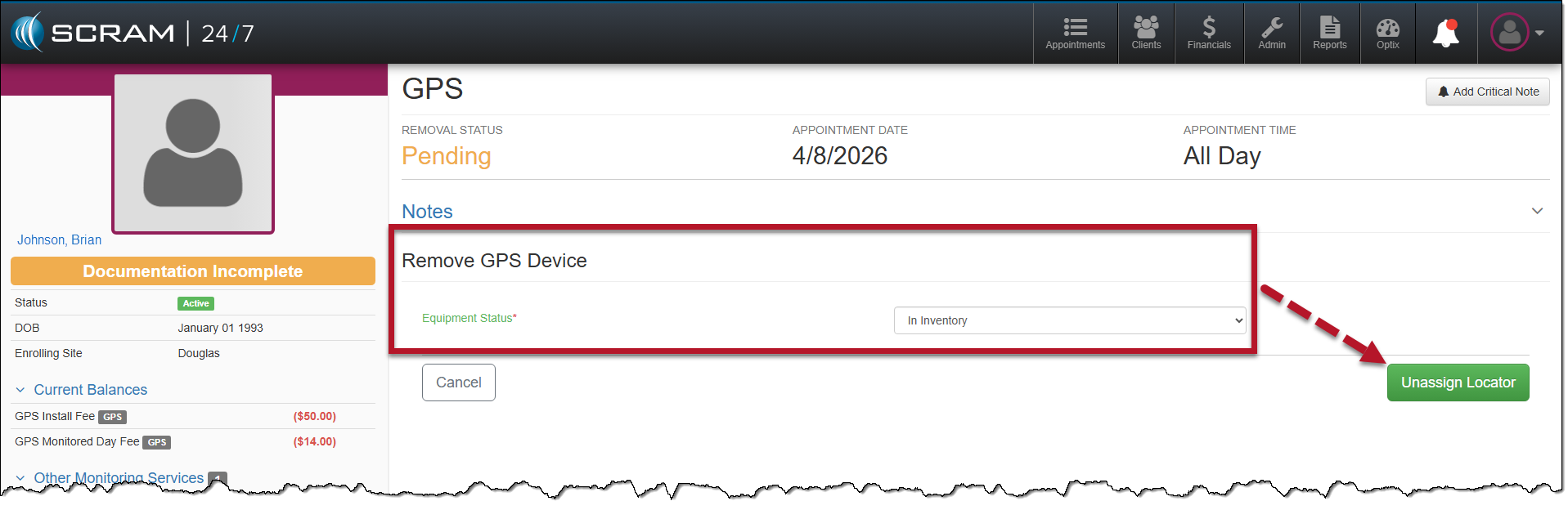
- On the Remove GPS Device page, open the Equipment Status dropdown menu and select the appropriate option. In this example, “In Inventory” was selected.
- After selecting the device status, select the Unassign Locator button.
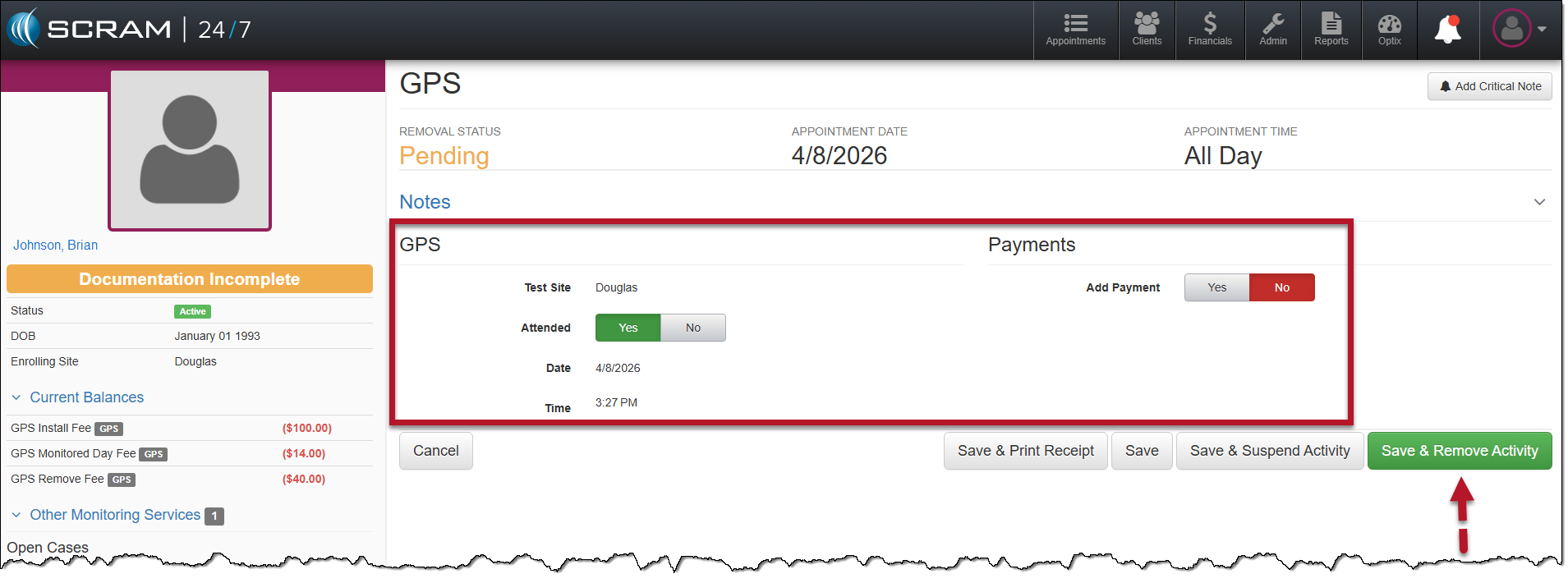
- Complete the GPS Removal appointment. Here, you may select whether the client is in attendance and record any payments made.
- Once information is entered, select the Save & Remove Activity button.
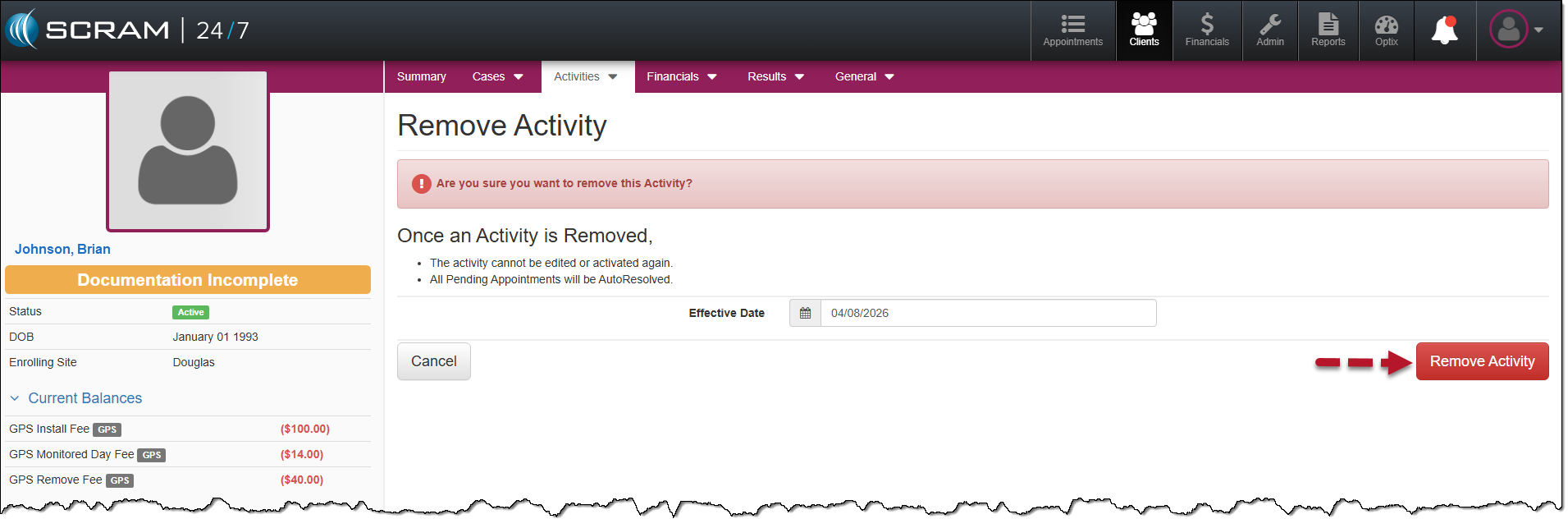
- Verify the Effective Data entry field and then select the Remove Activity button.
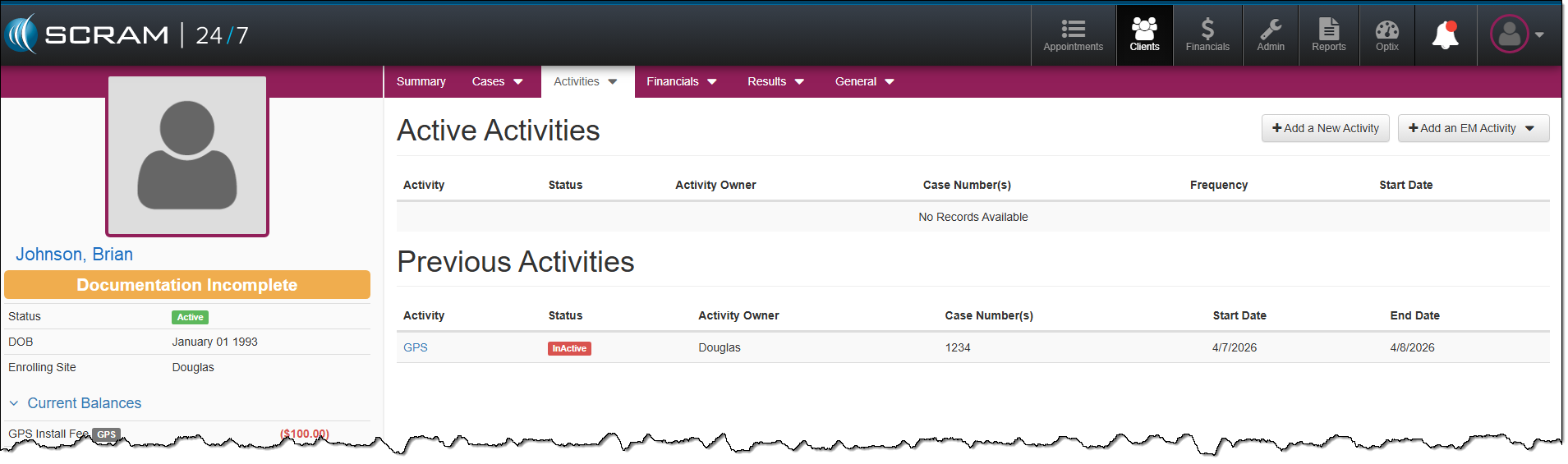
The Active Activities page now reflects the Inactive GPS Activity.
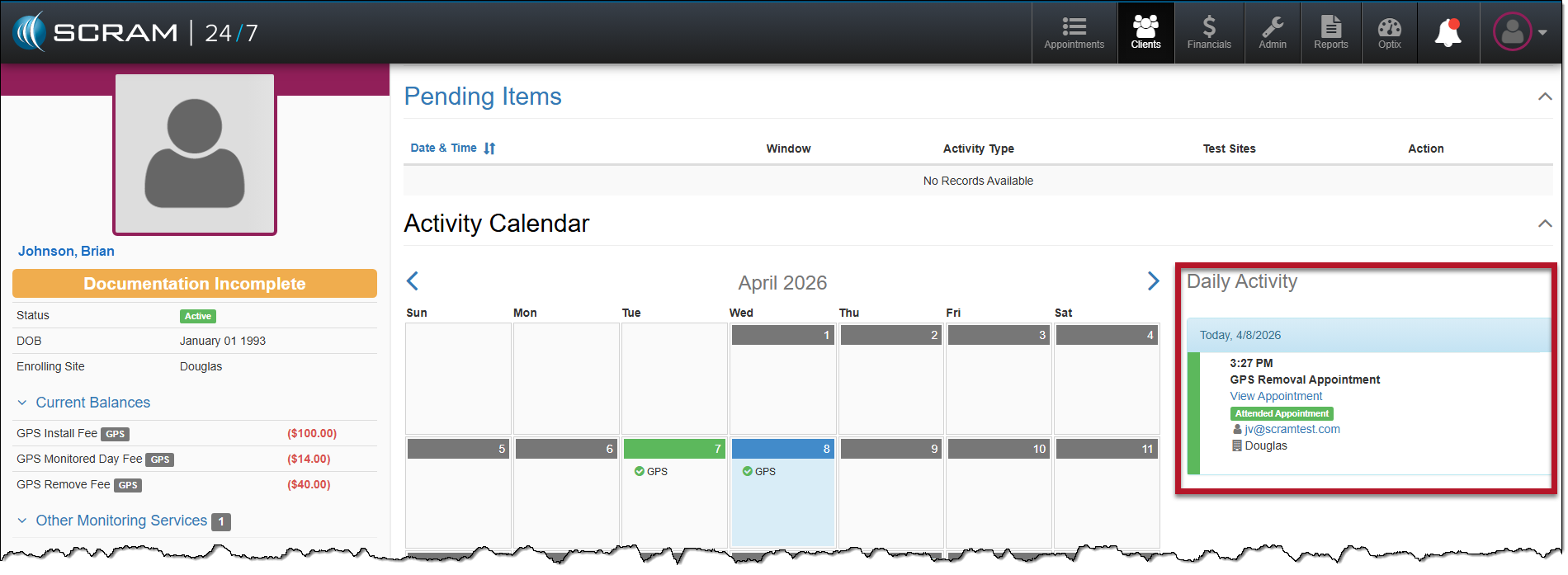
On the client’s Summary page, the Activity Calendar and Daily Activity stream will reflect a completed GPS Removal Appointment.
|
Replace GPS Device To replace a GPS Bracelet
|
|
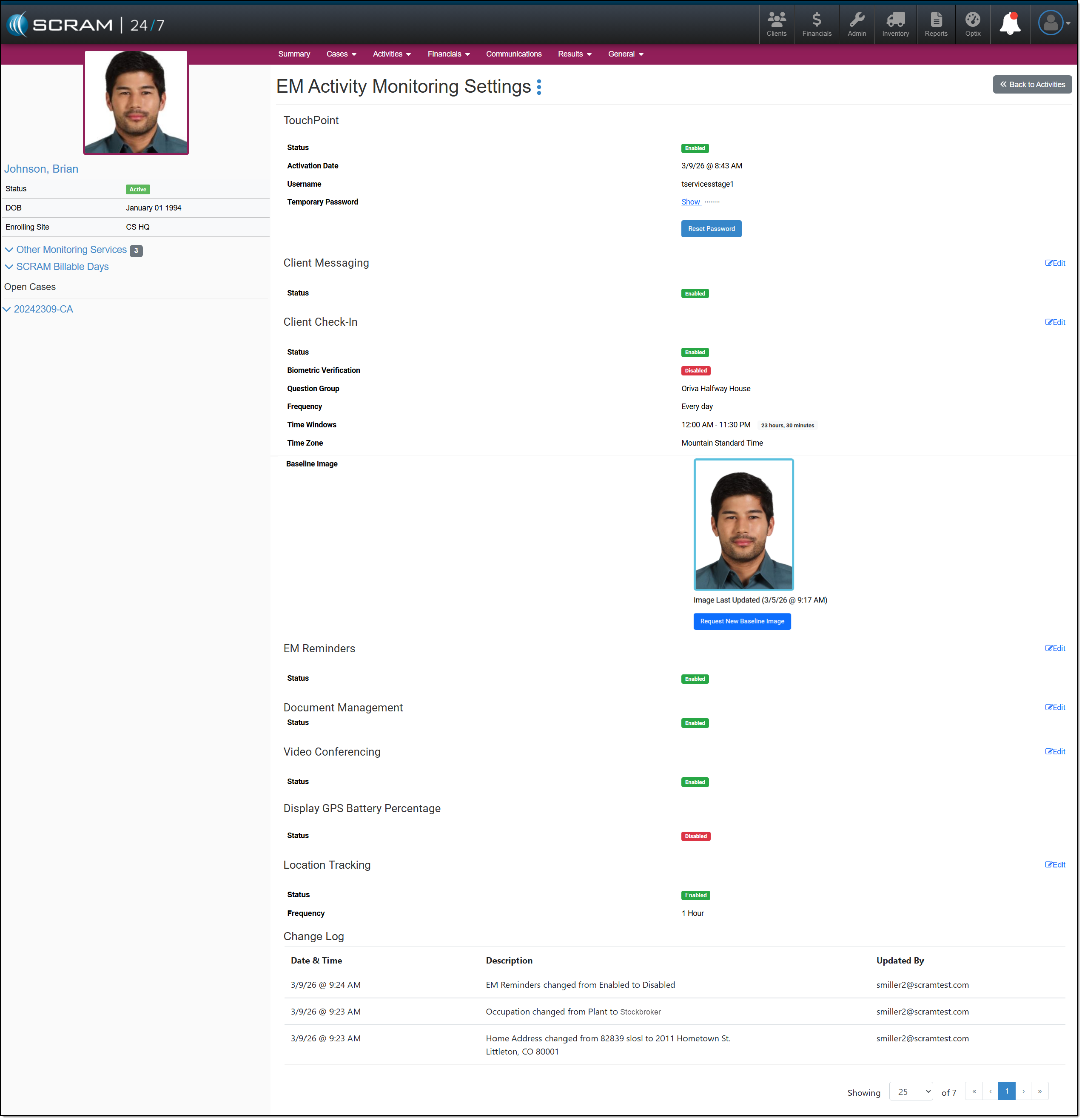
In a future enhancement, you will be able to change the client’s username or email address for their TouchPoint Mobile application. For the time being, navigate to the client’s Optix TouchPoint profile to make any updates. |
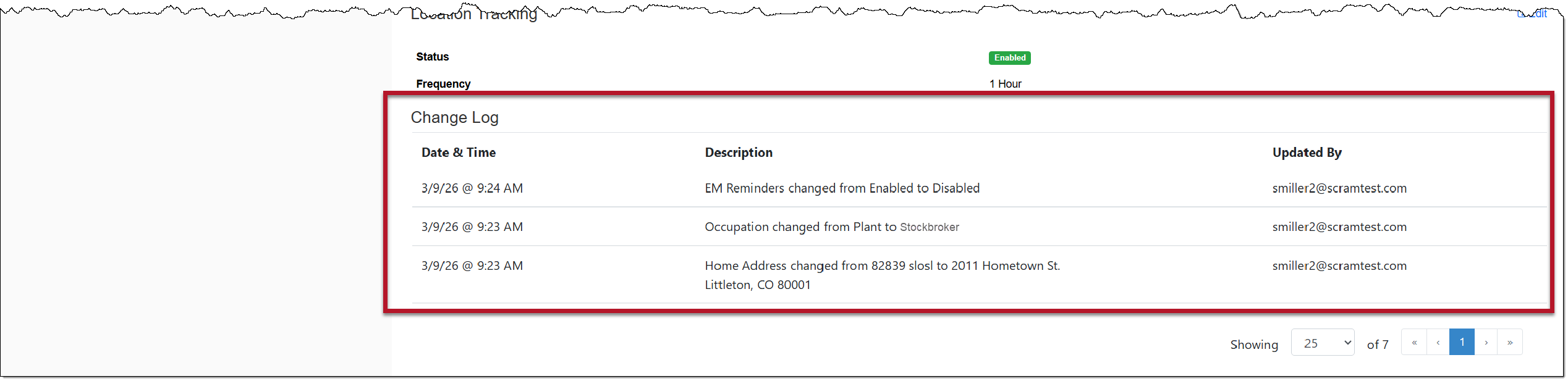
In addition to the TouchPoint services, the TouchPoint Change log history information will now be displayed on the TouchPoint Activity EM Activity Monitoring Settings page.
Offline Location Tracking
|
Your account must be enabled for location tracking for these instructions to work. Contact your SCRAM Systems Account Representative if you are interested in activating this service. |
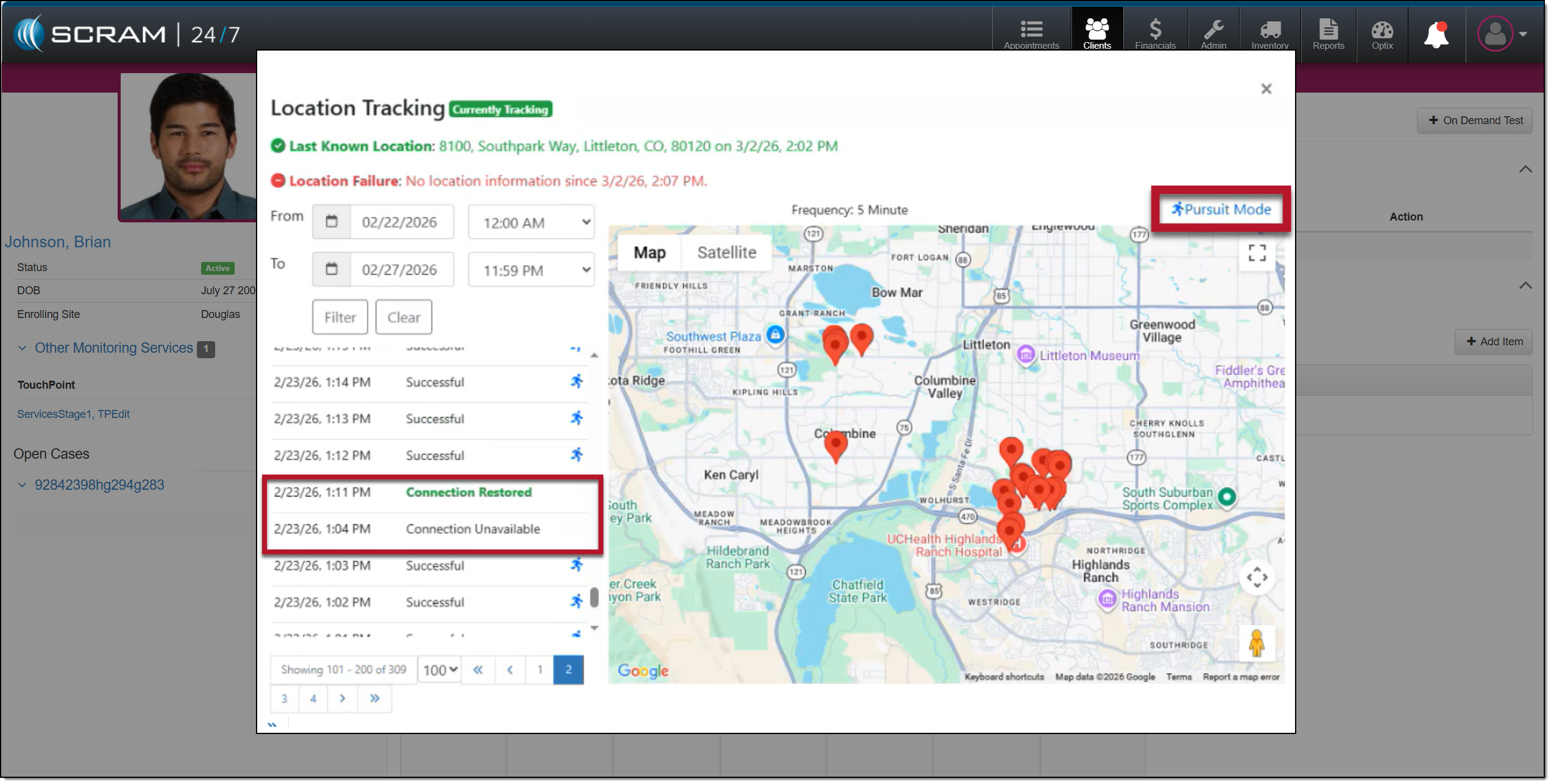
For clients who are enabled for the SCRAM TouchPoint Location Tracking service, their smartphone’s location data will be captured and stored during periods without network or internet connectivity. Once service is restored, the stored data will be transmitted to the system.
Here is how it works:
For this example, the client’s Location Tracking service is configured to collect location data every 5 minutes.
- View the Location Tracking Map by selecting the ellipsis next to the client’s name in the Other Monitoring Service, TouchPoint section.
- Select the Location Tracking Map option.
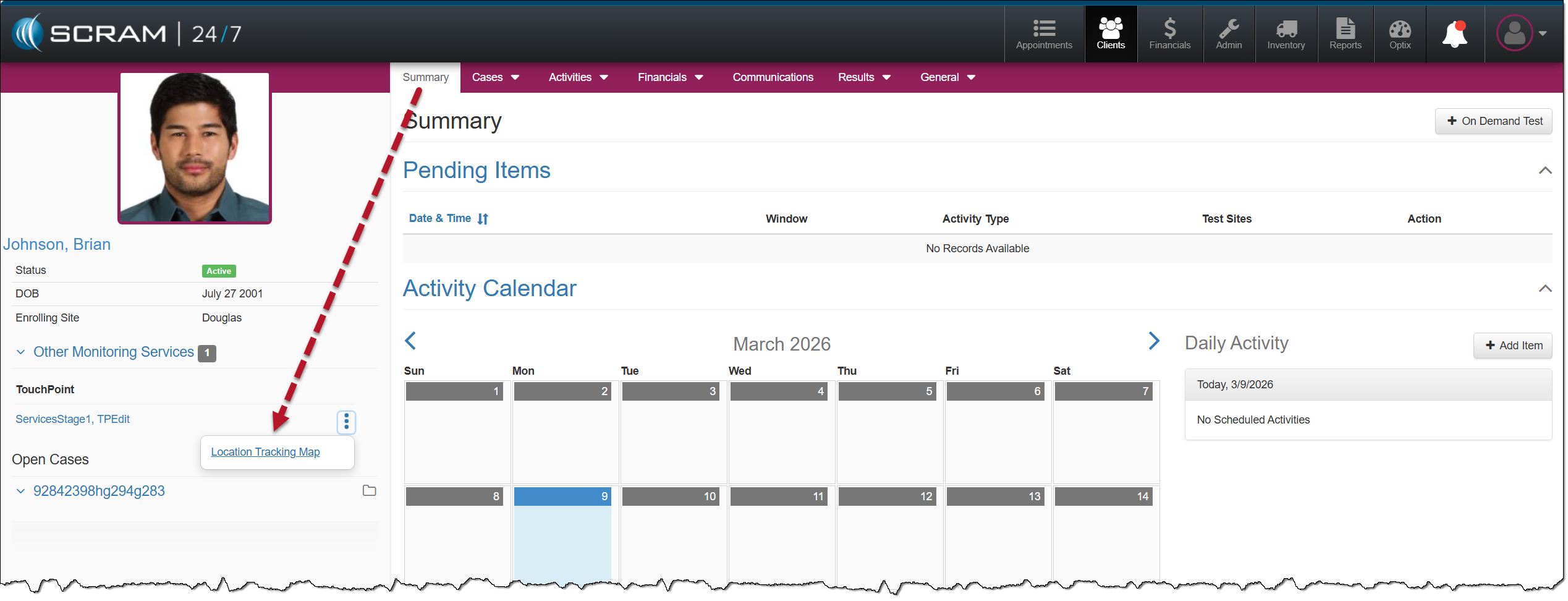
On the Location Tracking pop-up window:
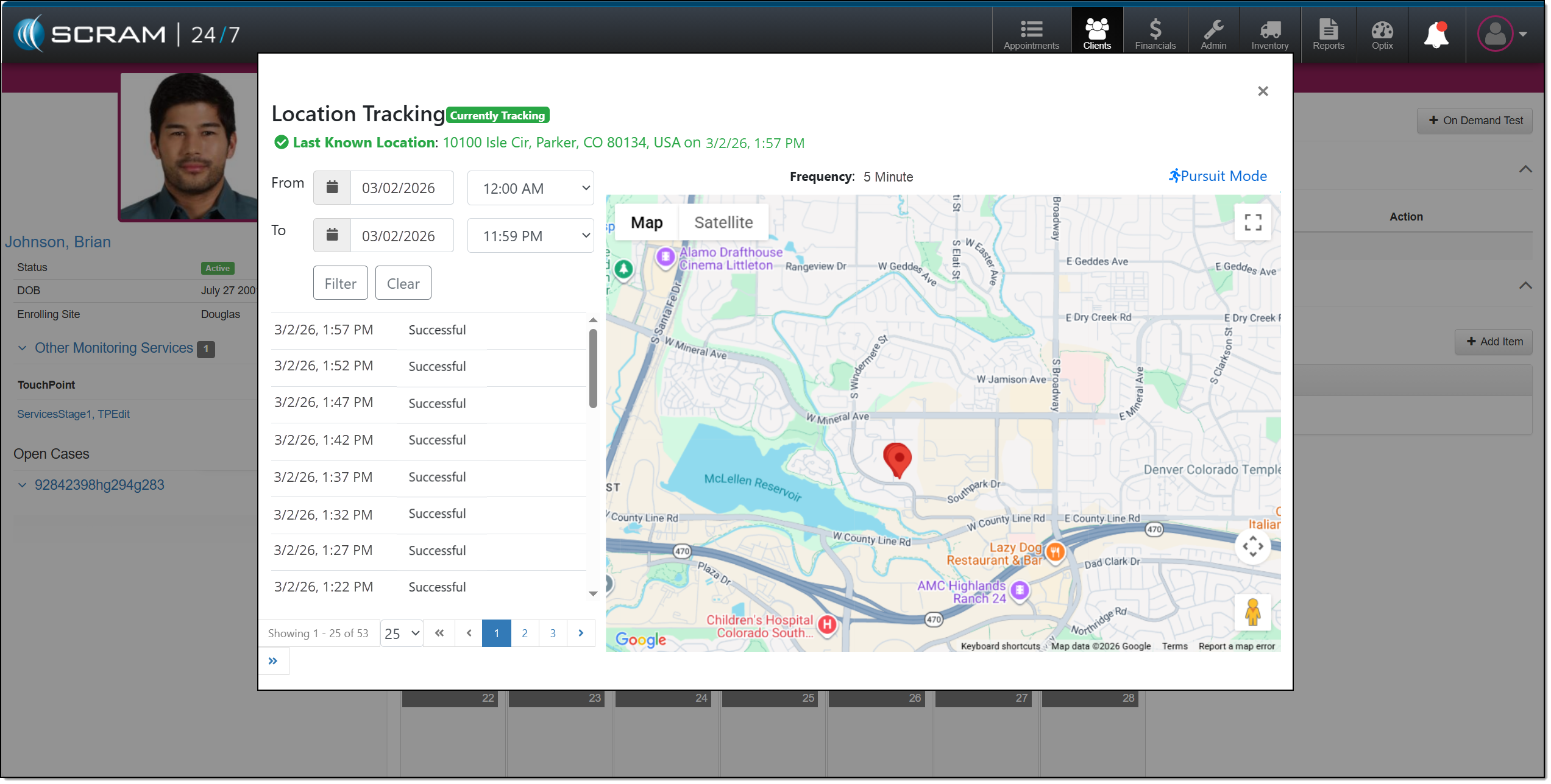
When connectivity is available:
- The location points are plotted on the map.
- Each point is recorded as Successful.
- The Location Tracking pop-up window reflects normal communication.
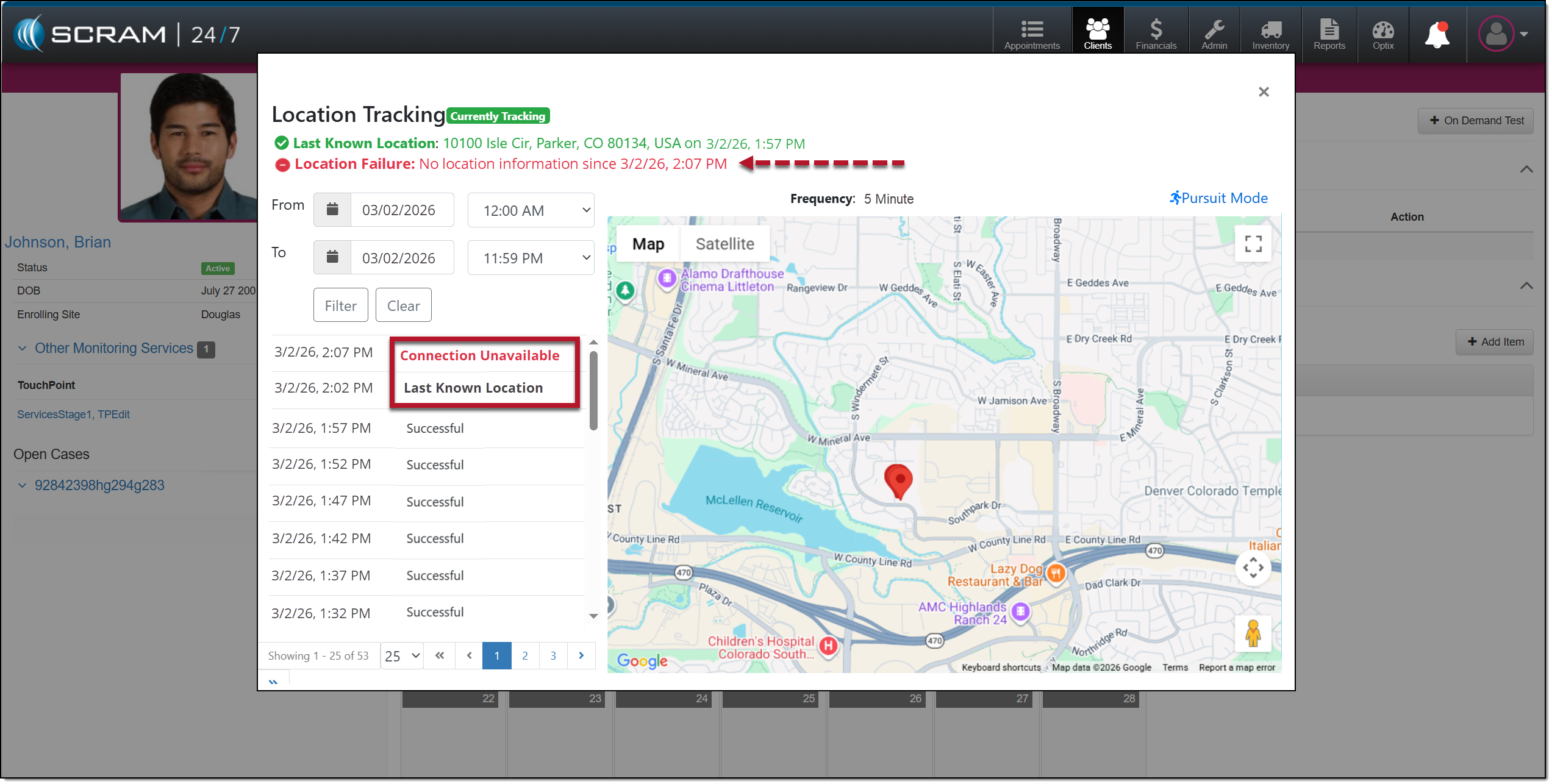
When the connection is not available:
- The location table will indicate the last known location in bold.
- At the next location interval, in this case the 5-minute interval, the location table will display Connection Unavailable in red.
- Additionally, a red Location Failure heading is displayed at the top of the pop-up window, displaying the last communication date and time.
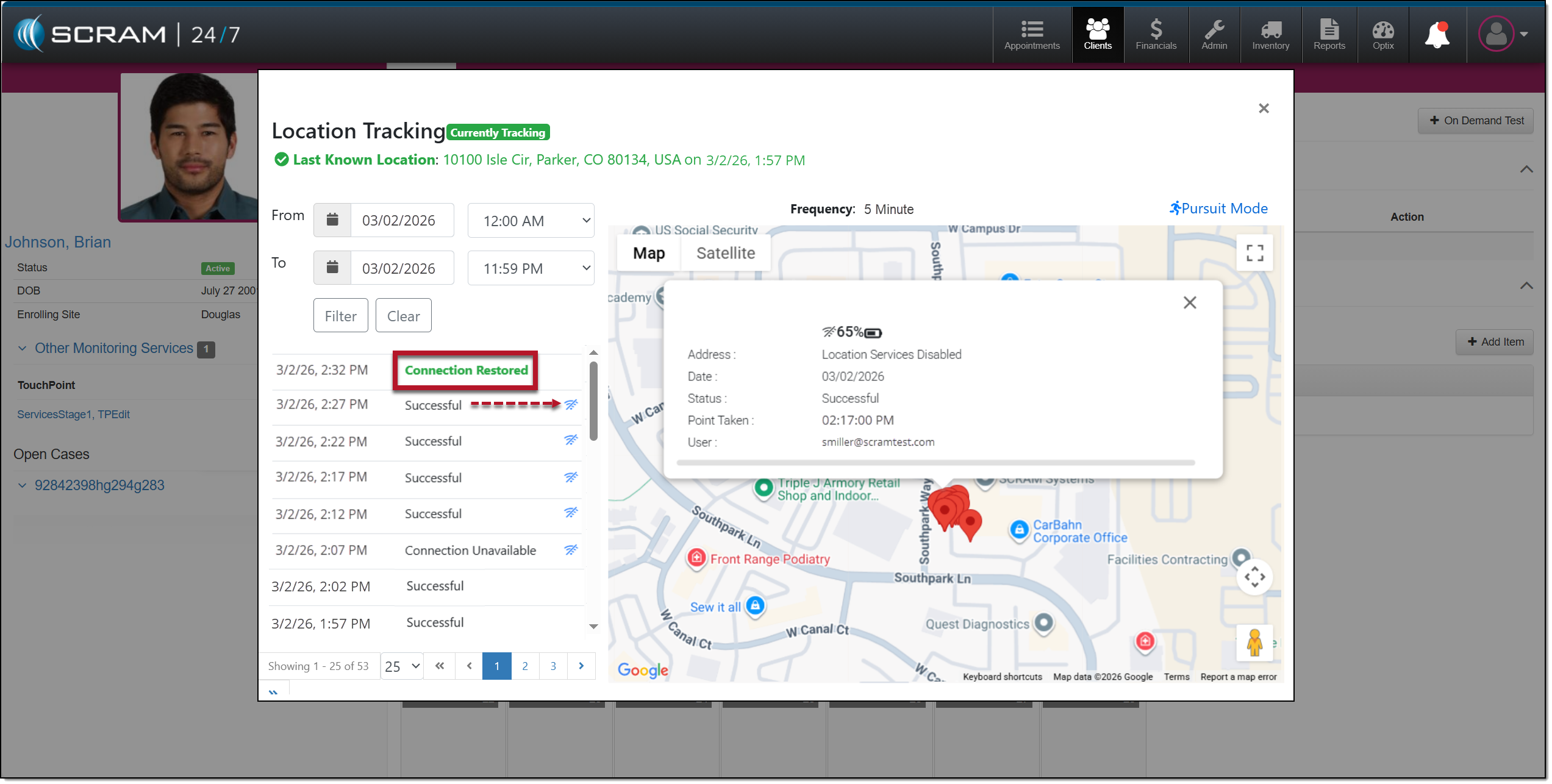
Once the connection is reestablished:
- The location data will automatically update on the map and on the location table.
- The “Connection Unavailable” message will no longer display in bold or in red.
- A “Connection Restored” message will appear bolded and in green on the location table with the date and time stamp of when communication was restored.
|
Status Updates: Location Tracking status updates are tied to the client’s configured frequency. For example, location information is gathered and communicated every 5, 10, 15, 30, and 60 minutes. Any change in connectivity or location status will only be displayed at the sent interval. |
Loss of Connectivity During Pursuit Mode
During the 15-minute Pursuit mode window, if connectivity is lost, the location table will display “Connection Unavailable,” and the red failure banner will display in the Location Tracking pop-up window.
If the device reconnects during the 15-minute Pursuit Mode window, location collection will resume automatically and continue at one-minute intervals for the remainder of the session.
On January 28, 2026, SCRAM Systems will release multiple enhancements for your SCRAM 24/7 Client Caseload.
These enhancements are:
- Consolidate Topic-Driven Client Tabs
- Activity Type Menu Options Update
- Activity Electronic Monitoring (EM) Monitoring Settings
Topic Driven Client Tabs
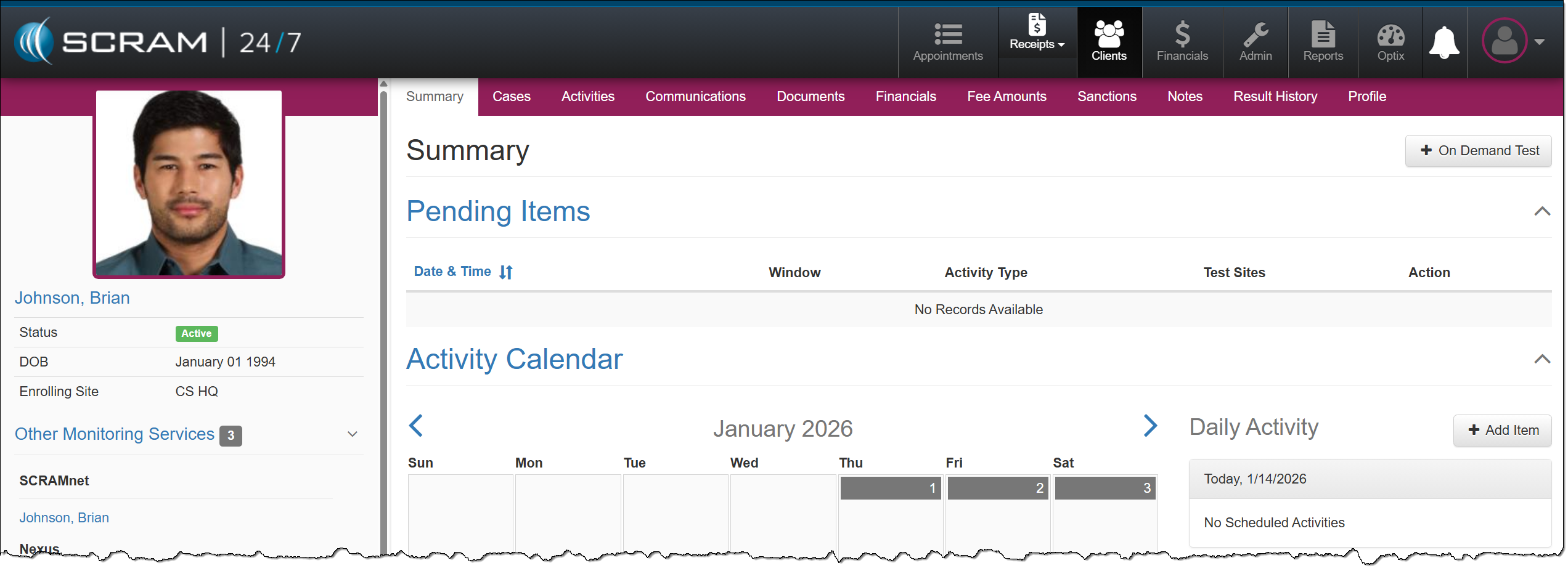
To accommodate future enhancements and provide an efficient user experience, the tabs used to view and access client information and tasks have been consolidated into topic-driven navigation tabs that include dropdown menus.
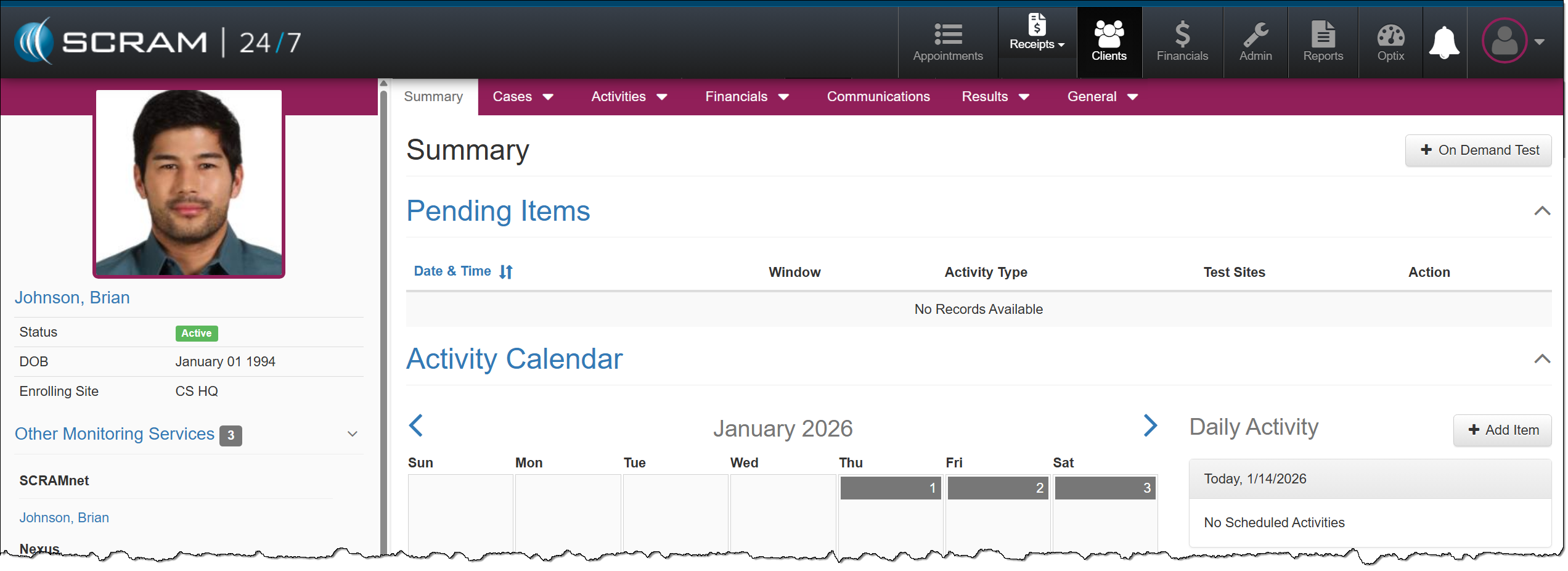
The Cases tab dropdown menu includes access to the client’s:
- Cases
- Add Case*
The Activities tab dropdown menu includes access to the client’s:
- Activities
- Add Activity
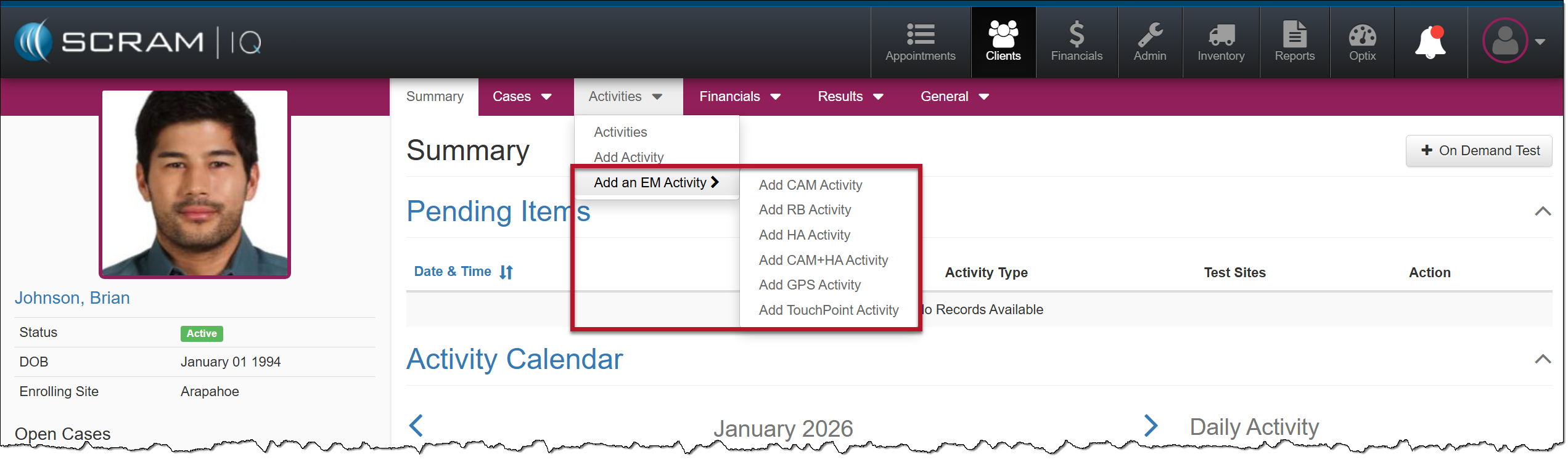
- Add an EM Activity**
The Financials tab dropdown menu includes access to:
- Client Financials
- Fee Amounts
The Results tab dropdown menu includes access to the client’s:
- Result History
- Sanctions
The General tab dropdown menu includes access to the client’s:
- Profile
- Documents
- Notes
- Add Notes*
*New direct access to specific tasks.
Activities Option
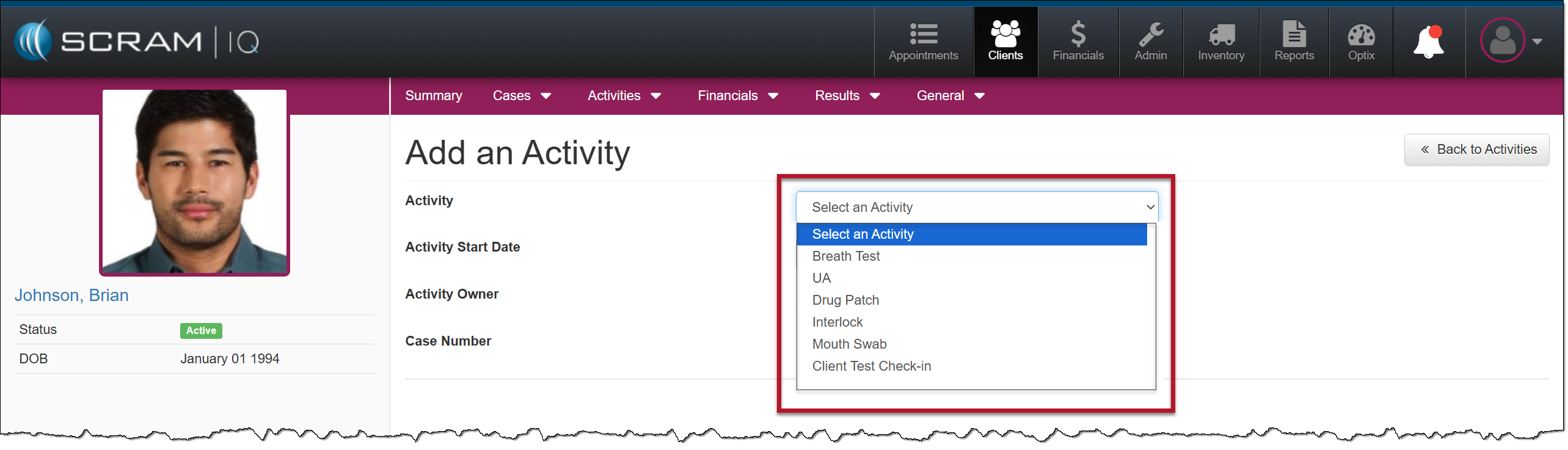
There are two additional options available on the Activities tab dropdown menu: Add Activity and Add an EM Activity. These two options separate the EM-related activities from the non-EM-related activities.
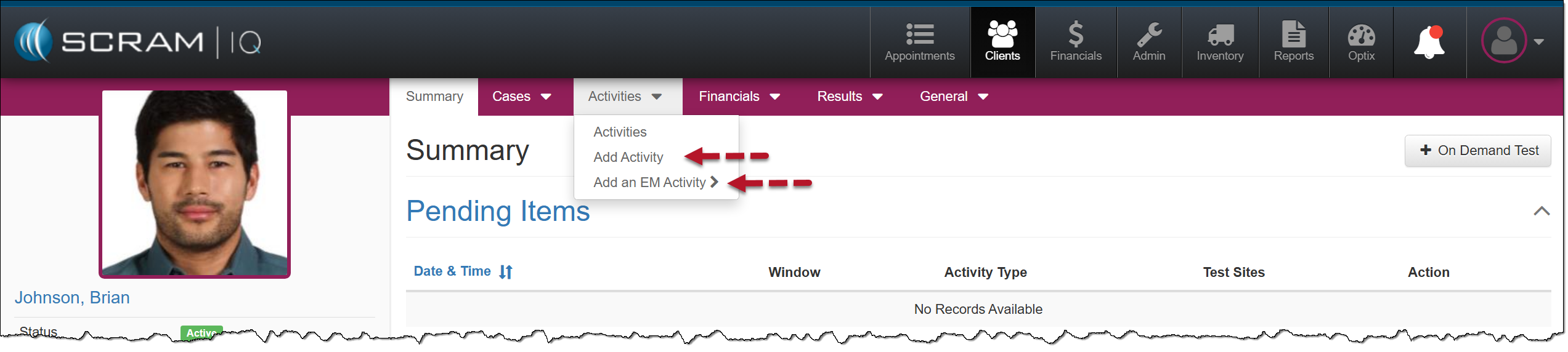
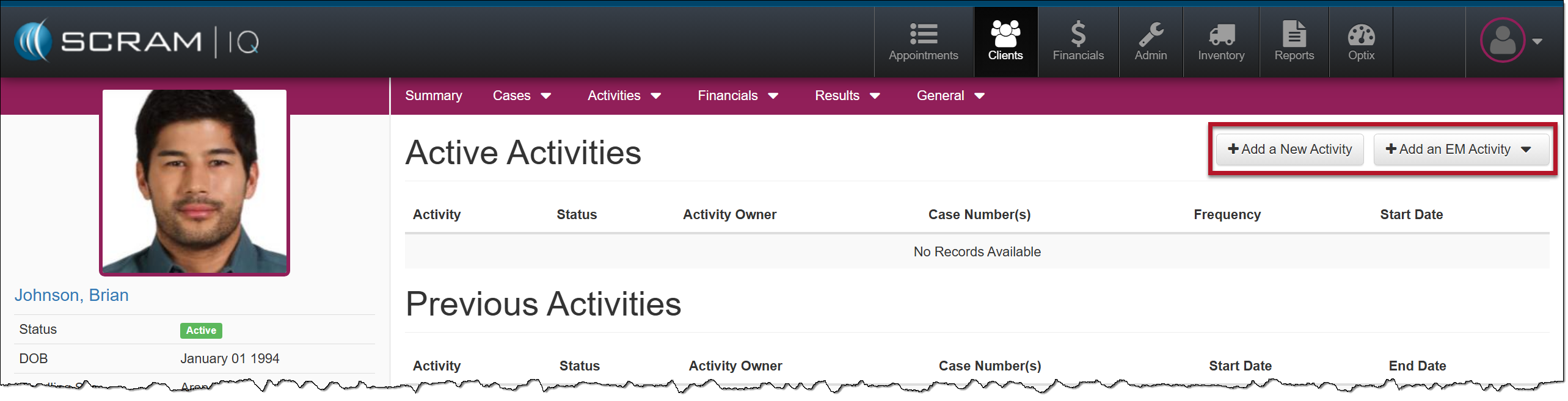
The client’s Activities page will also reflect EM-related activities from the non-EM-related activities.
 | Tip: The available Activity options will reflect the activities currently active in your program and the EM Activities you have access to. Additionally, if an Activity is currently active for the client, that option will NOT appear in the dropdown menu. |
Monitoring Settings for an Electronic Monitoring (EM) Activity
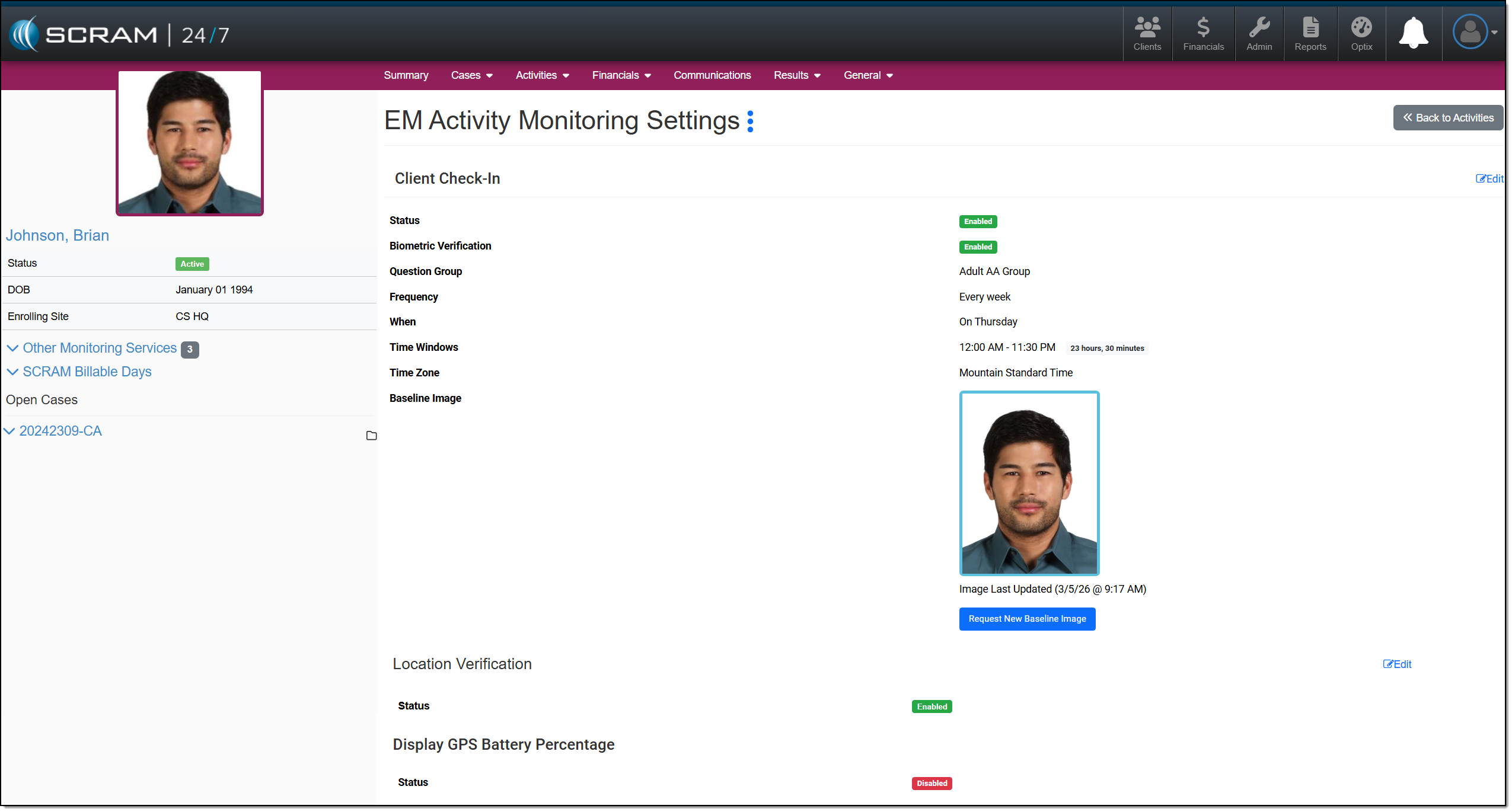
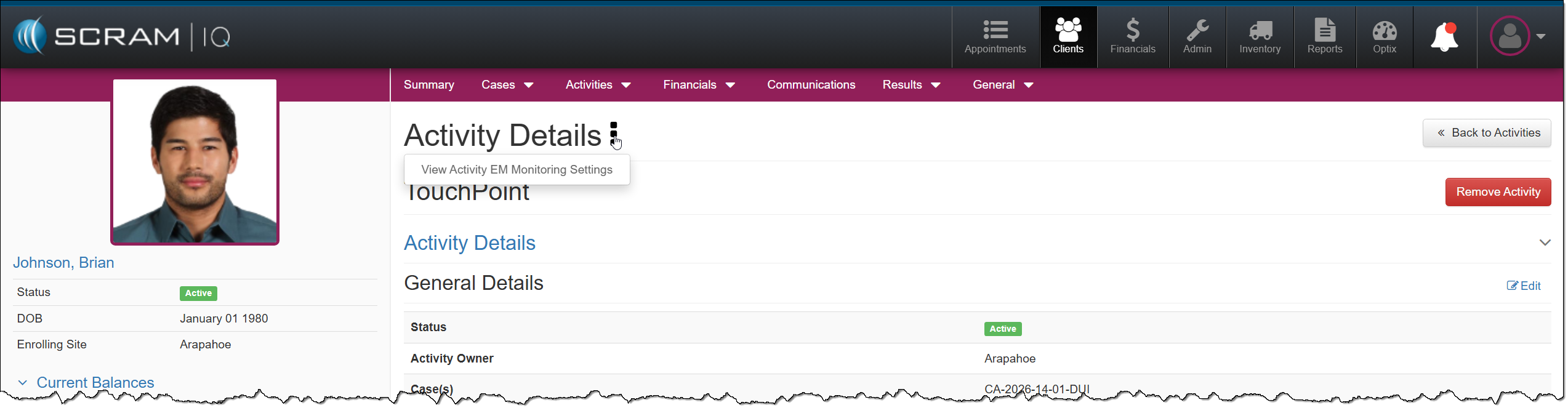
Once an EM Activity is active for a client, you may view their EM Monitoring Settings by selecting the ellipsis next to the Activity on the Active Activities page or the Activity Details page and then the View Activity EM Monitoring Settings option.
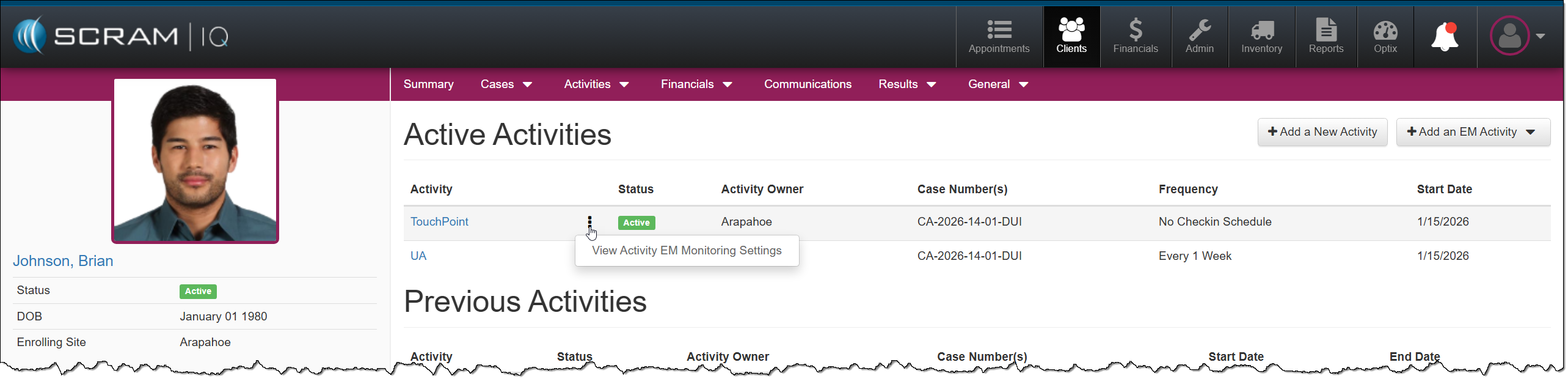
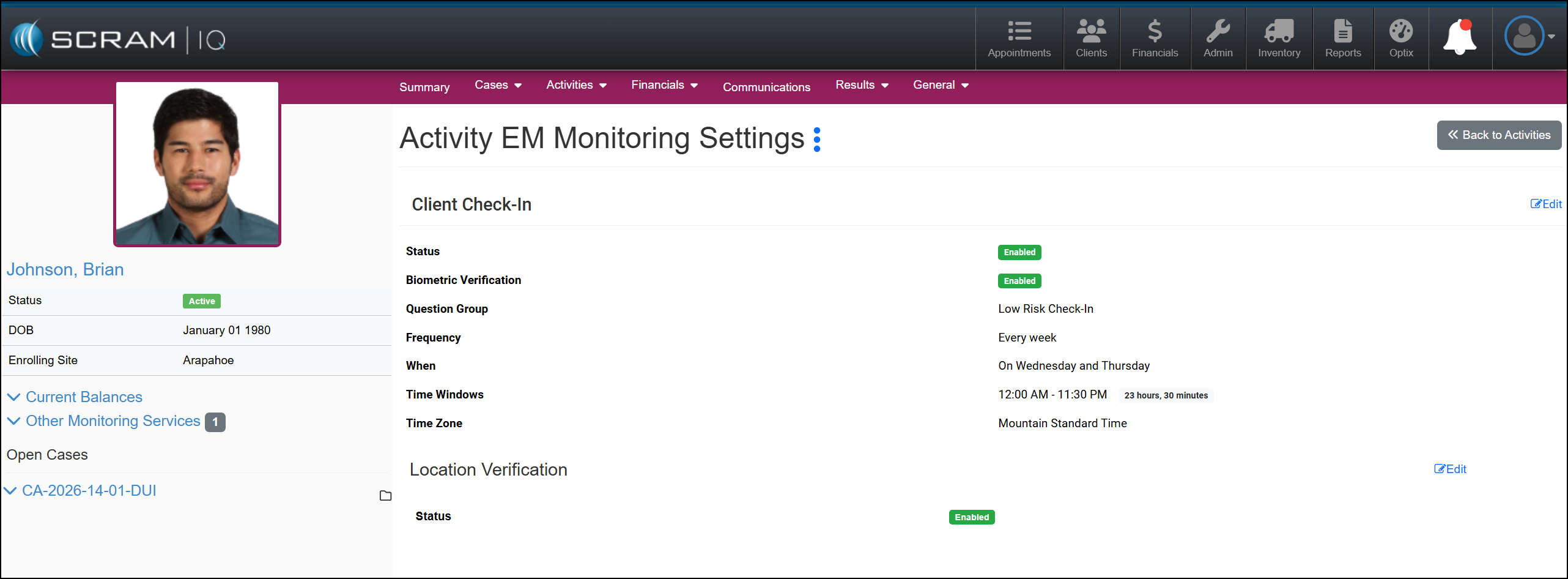
On the Activity EM Monitoring Settings page, you can view the current settings or select the Edit hyperlink to modify them.
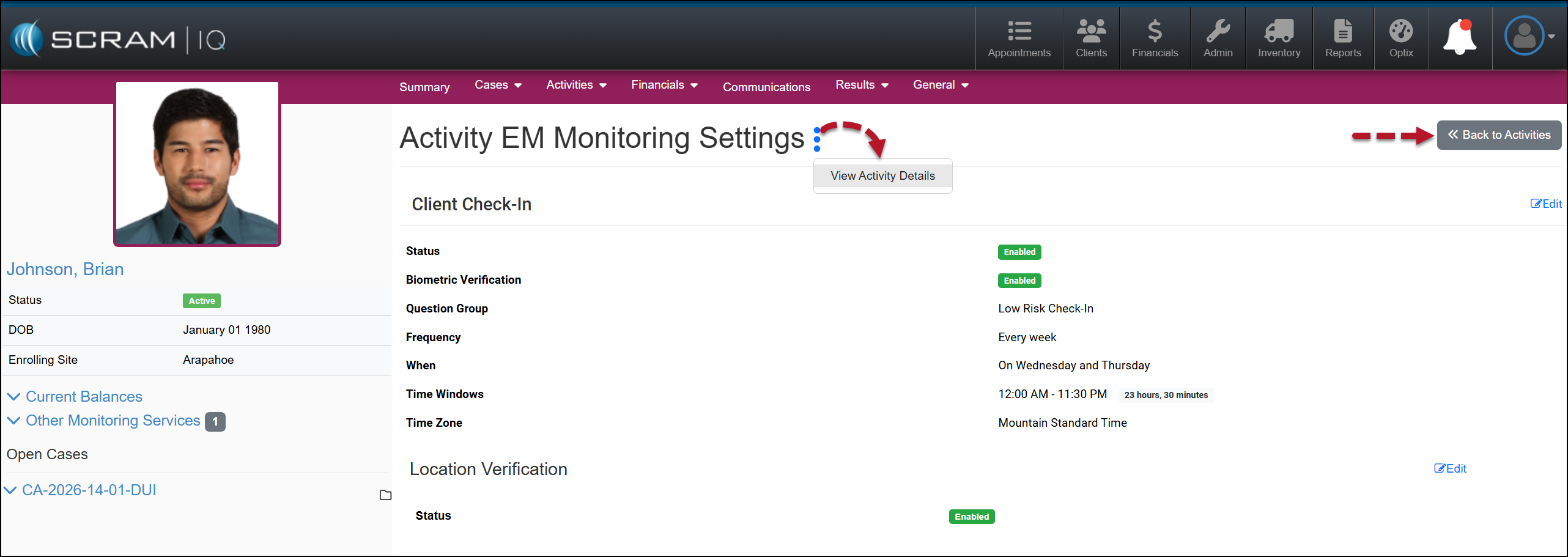
Select the ellipsis, and then the View Activity Details option to navigate back to the selected Activity Details page, or use the Back to Activities button to navigate back to the Active Activities page.
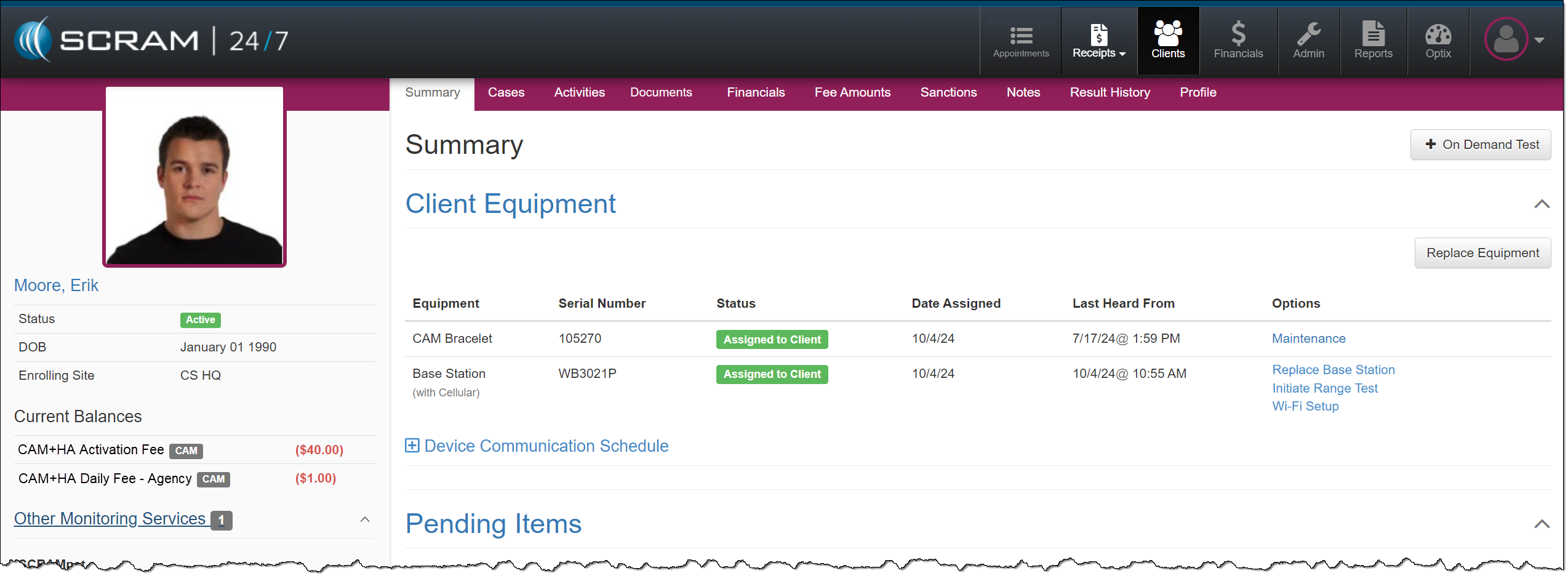
On January 14th, 2026, from 11:00 AM to Noon MST, SCRAM Systems will release two enhancements in SCRAM 24/7. The first enhancement improves client search capabilities. The second allows you to perform additional equipment actions directly from the Options column on the client’s Summary page for your CAM+HA and RB Activity clients when equipment is assigned.
During the release window, SCRAM 24/7 access will be interrupted for 1 hour. During this time frame, SCRAM 24/7 will be unavailable, and you will not be able to perform client-related tasks, such as adding a new client or managing current client activities. Once the maintenance window has expired, you will need to refresh your connection (logout/login) to the SCRAM 24/7 system to resume access and navigation.
Equipment Options Column
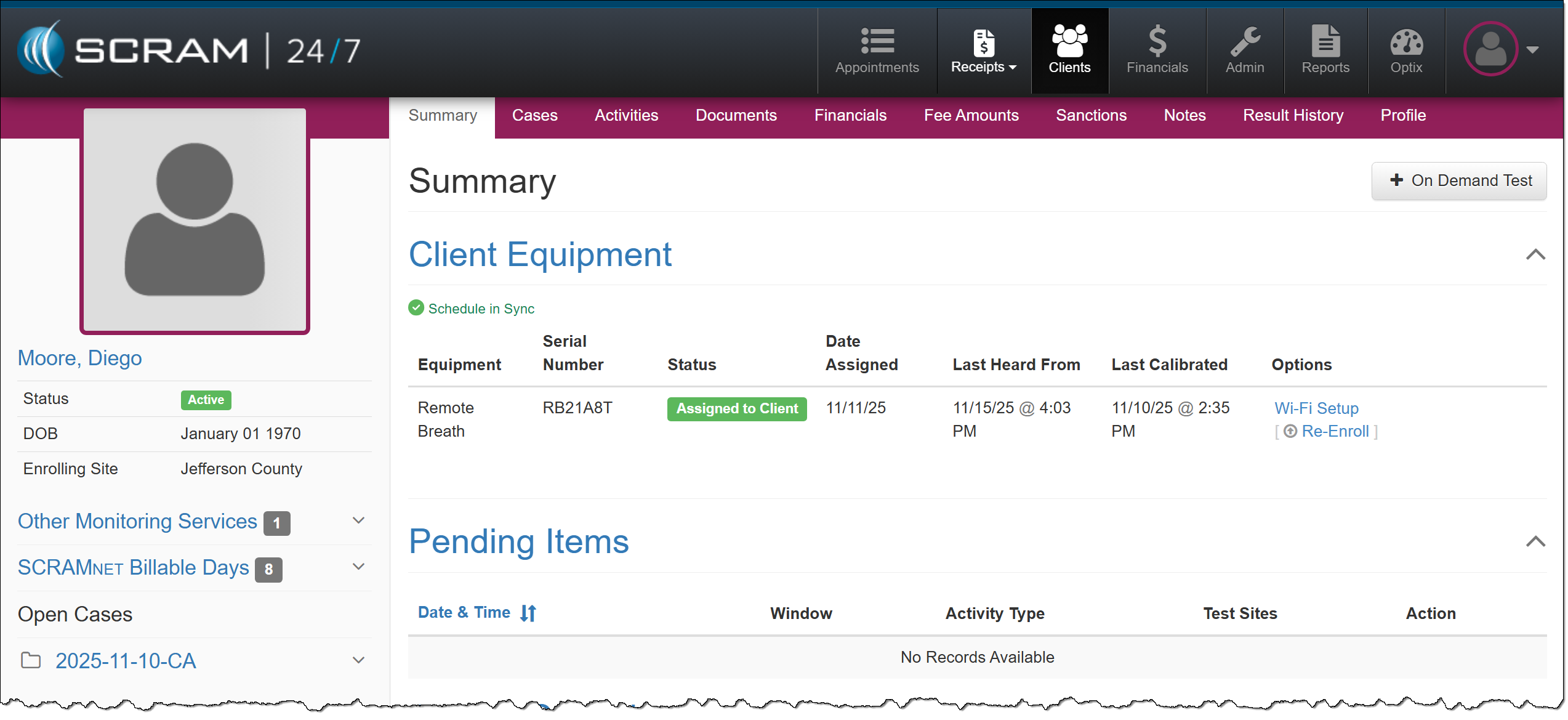
Actions typically completed in SCRAMNET for assigned equipment may now be performed on the client’s Summary page for the Remote Breath and CAM/House Arrest Activities. Select the task you wish to perform from the new ‘Options’ column found in the table under the Client Equipment heading.
Search Options
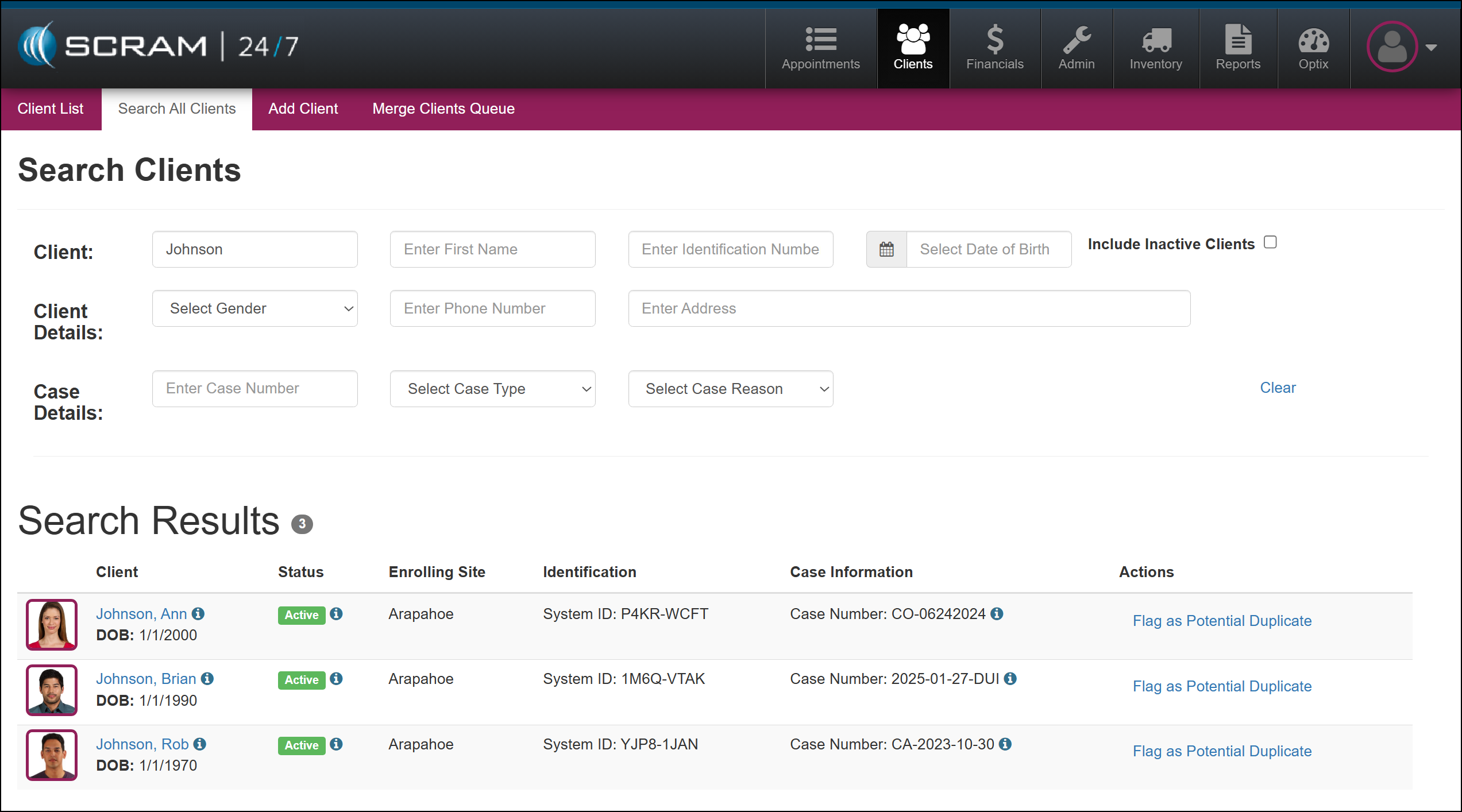
In addition to the current search fields, you may now search by:
- Date of Birth
- Gender
- Phone Number
- Address
- Case Type
- Case Reason
This update will be reflected on both the Clients page, on the Search All Clients tab, and the Financials page, on the Clients tab.
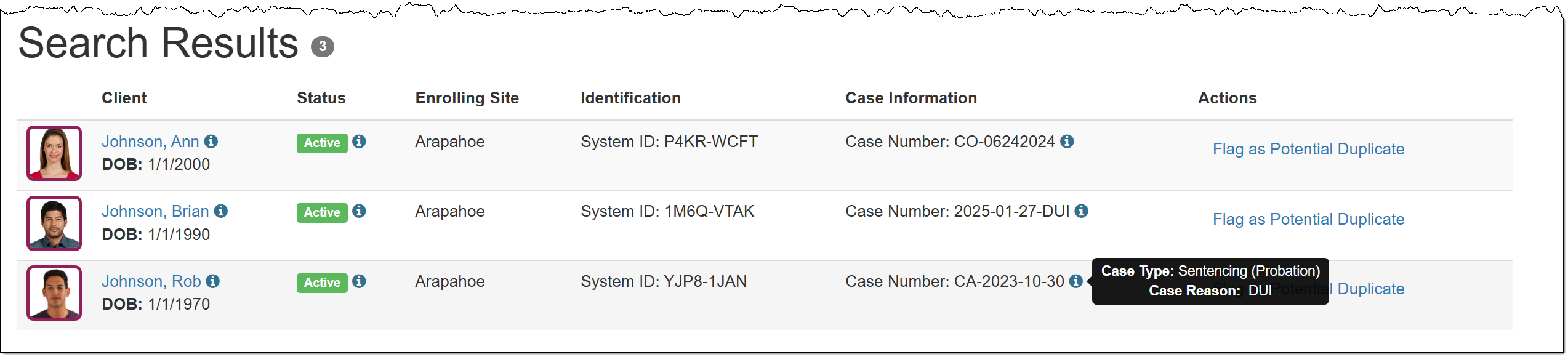
In the Search Results section, you will note some additional changes
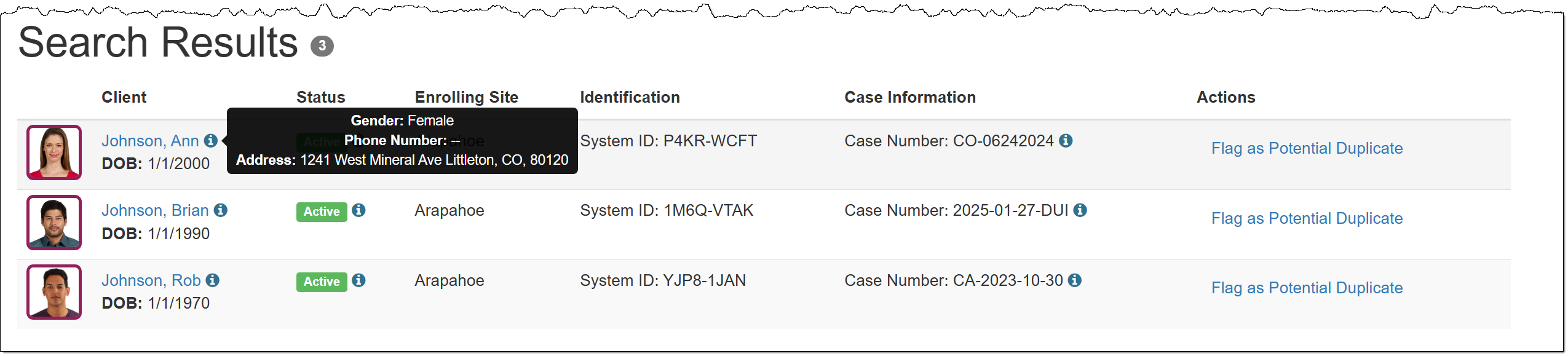
The client’s Date of Birth is now located under their name hyperlink, along with an information icon that displays the client’s gender, phone number, and address when you hover your mouse pointer over it.
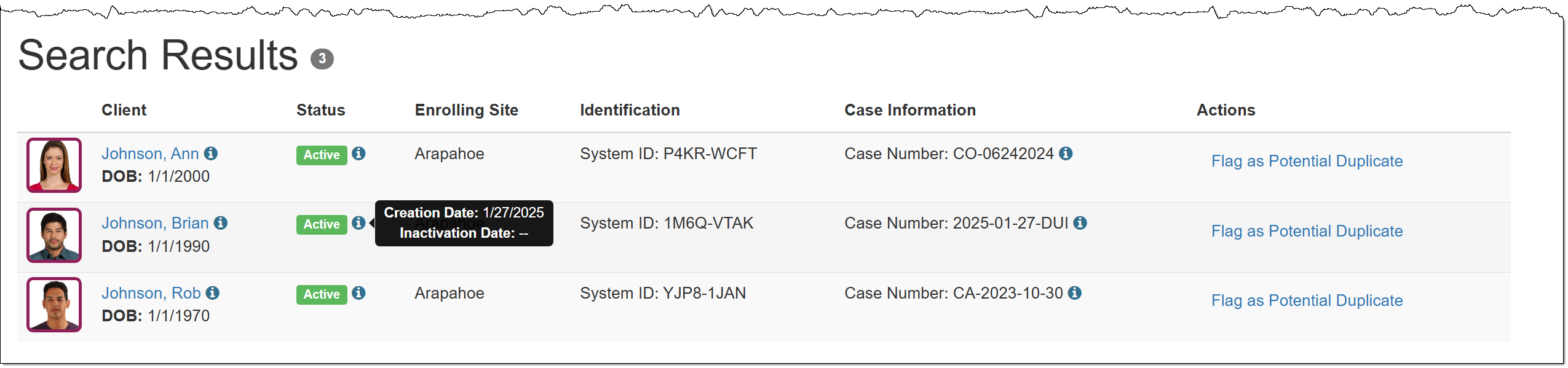
The Status column has been relocated, and an information icon that will display the creation and inactivation dates when hovered over has been added.
A new Case Information column displays the client’s case number, along with an information icon that shows the case type and case reason when hovered over.
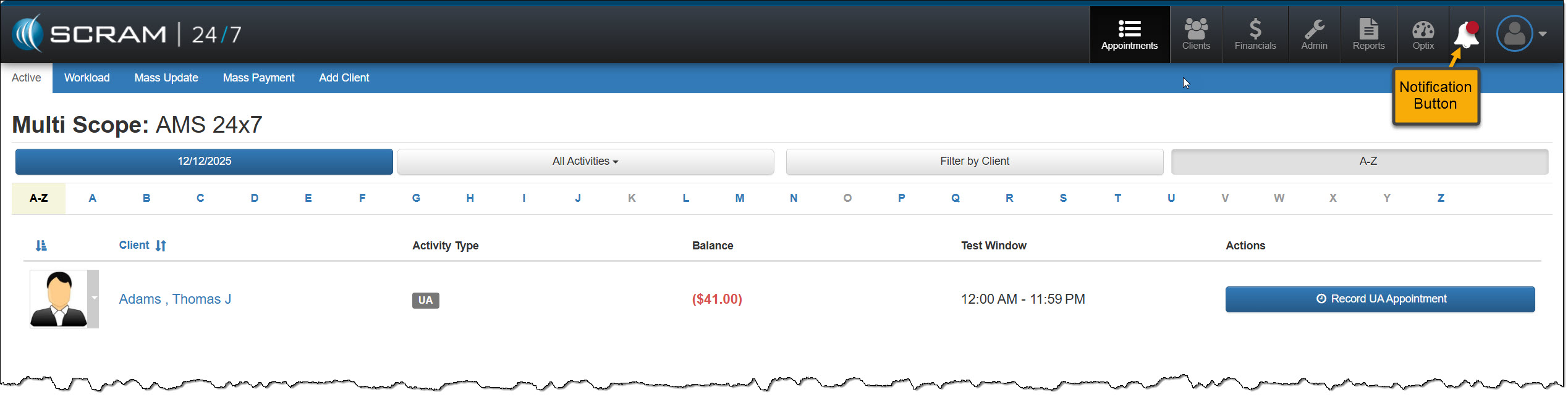
On December 17,th, 2025, SCRAM Systems will release a new Notifications “bell” button in SCRAM 24/7. This Notification dropdown window displays new messages sent from your clients who have a TouchPoint Activity with Messaging enabled. With this feature, you may view, clear, mark messages as read, or respond to your clients’ messages from within SCRAM 24/7. All actions completed within the Notifications dropdown window are reflected on the client’s Communication tab and within their SCRAM Optix TouchPoint profile.
Notifications in SCRAM 24/7
When your client sends a new message via their SCRAM TouchPoint mobile app, the Notifications button in SCRAM 24/7 will display a red badge. To view the message, select the button.
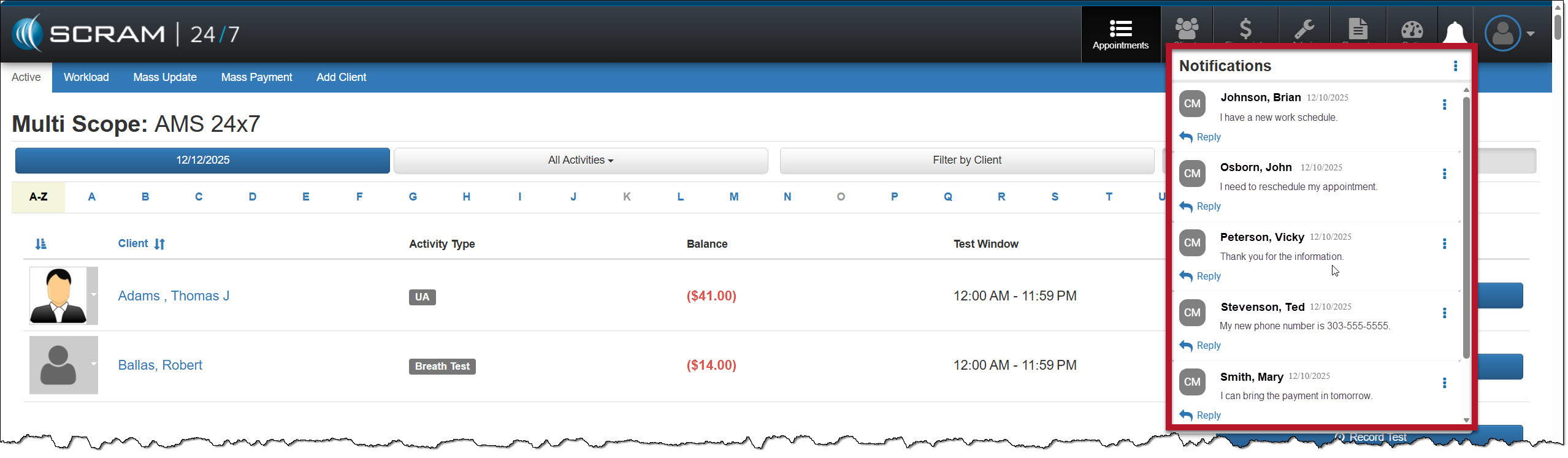
On the Notifications dropdown window, the client’s name, date, and message are displayed.
Managing the Notifications Window
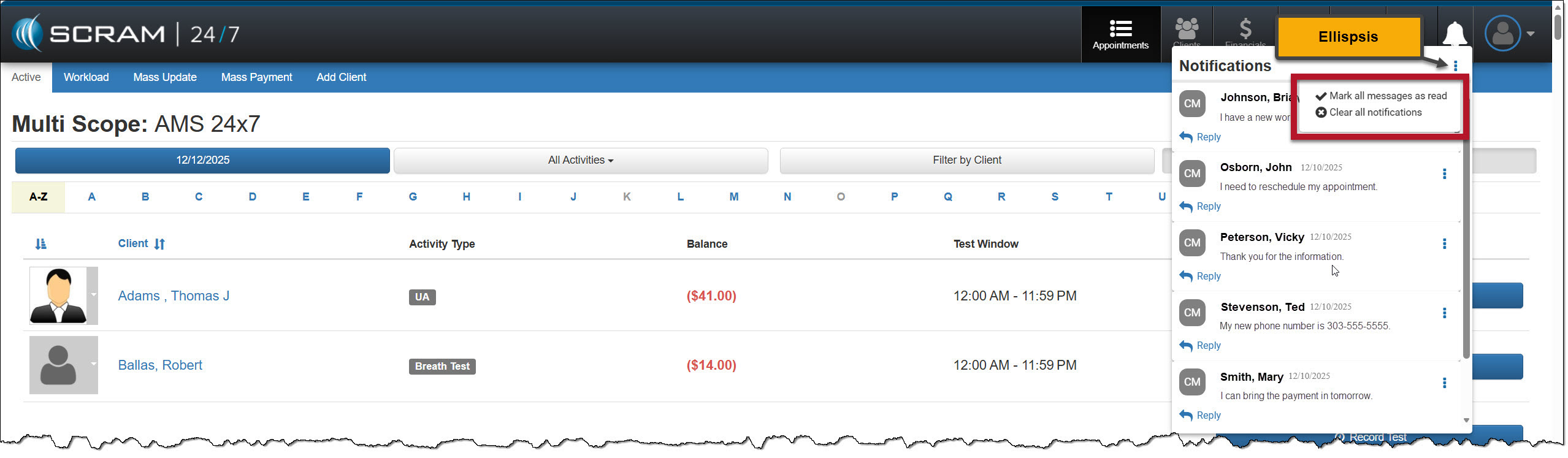
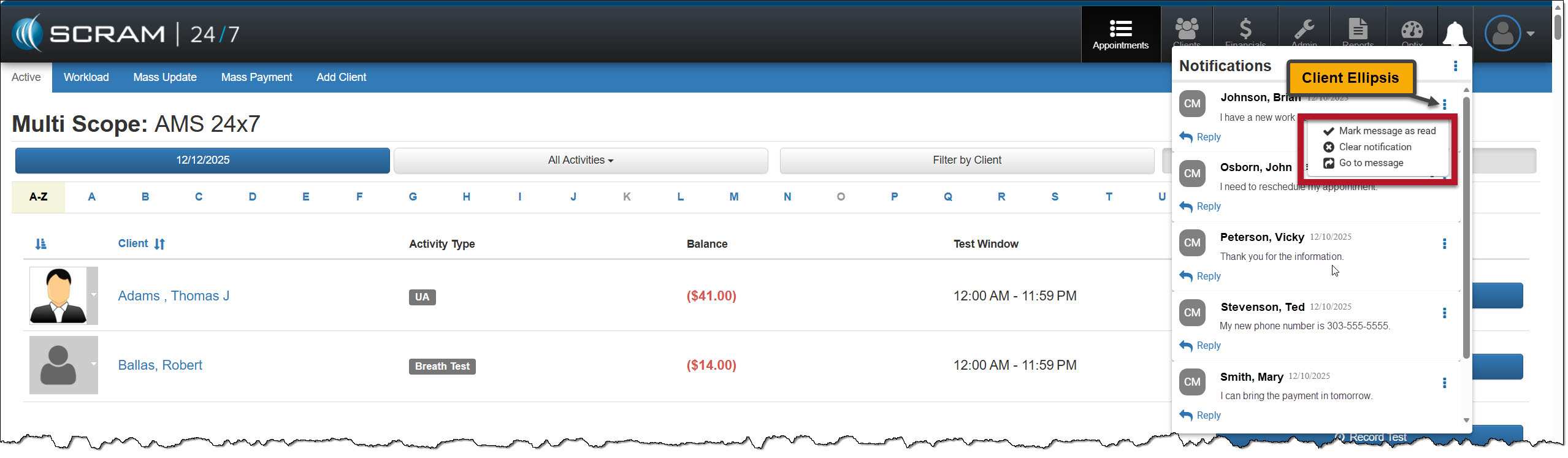
Selecting the ellipsis next to the Notifications heading at the top of the dropdown window, or next to the client’s name, will display a menu with following options:
- Mark all messages as read, or mark a message as read: When selected, the message will be removed from the Notifications window. On the client’s Communication Messaging page in SCRAM 24/7 and their Optix TouchPoint Messaging page, the message will display as Read for the client.
- Clear all Notifications or Clear Notification: When selected, this option clears all messages from the Notifications window in SCRAM 24/7. This does not mark the message as Read on the client’s Communication Messaging page in SCRAM 24/7 and their Optix TouchPoint Messaging page; it simply clears the message from the Notifications window.
- Go to Message: This option will open a new tab that displays the client’s Optix TouchPoint Messaging page. This action will clear the message from the Notifications window.
Option One
Mark all messages as read or clear all notifications by selection the ellipsis to the right of the Notifications heading.
Option Two
Manage each message individually by selecting the ellipsis next to the message.
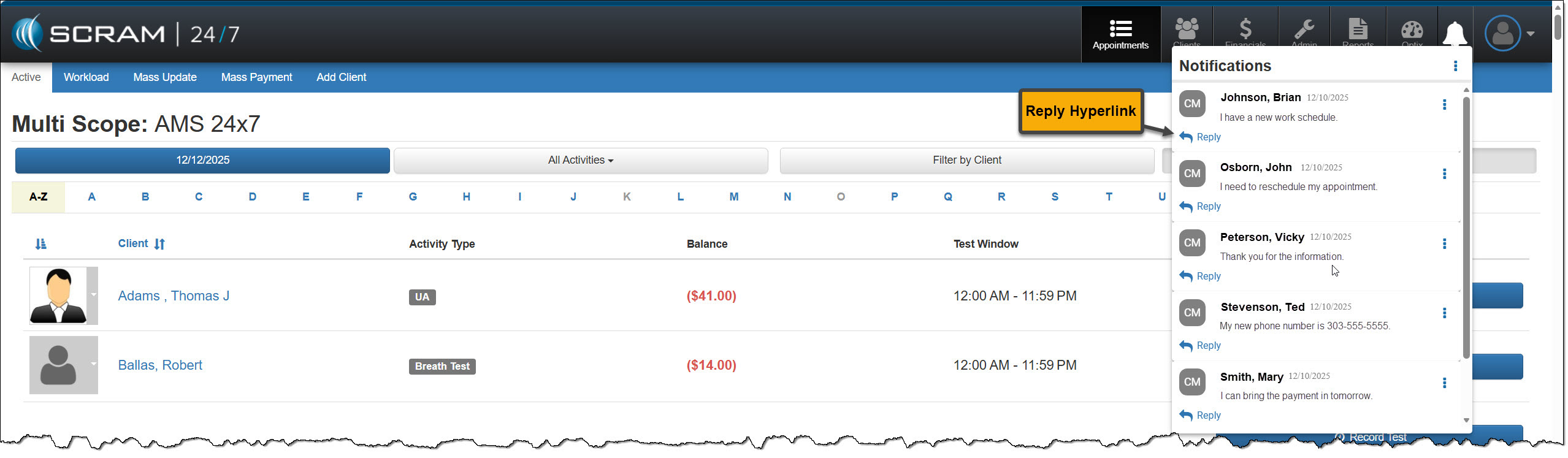
Reply
Click the Reply hyperlink to respond to the client’s message. After entering a response, select the Send button.
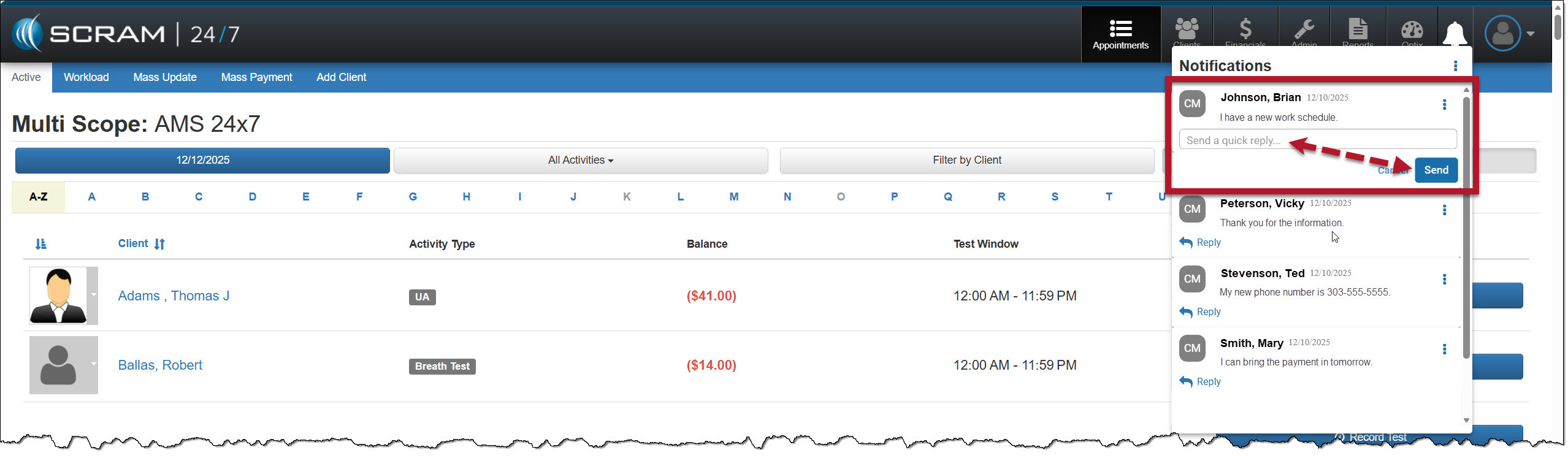
The message will no longer be displayed in the Notifications window.
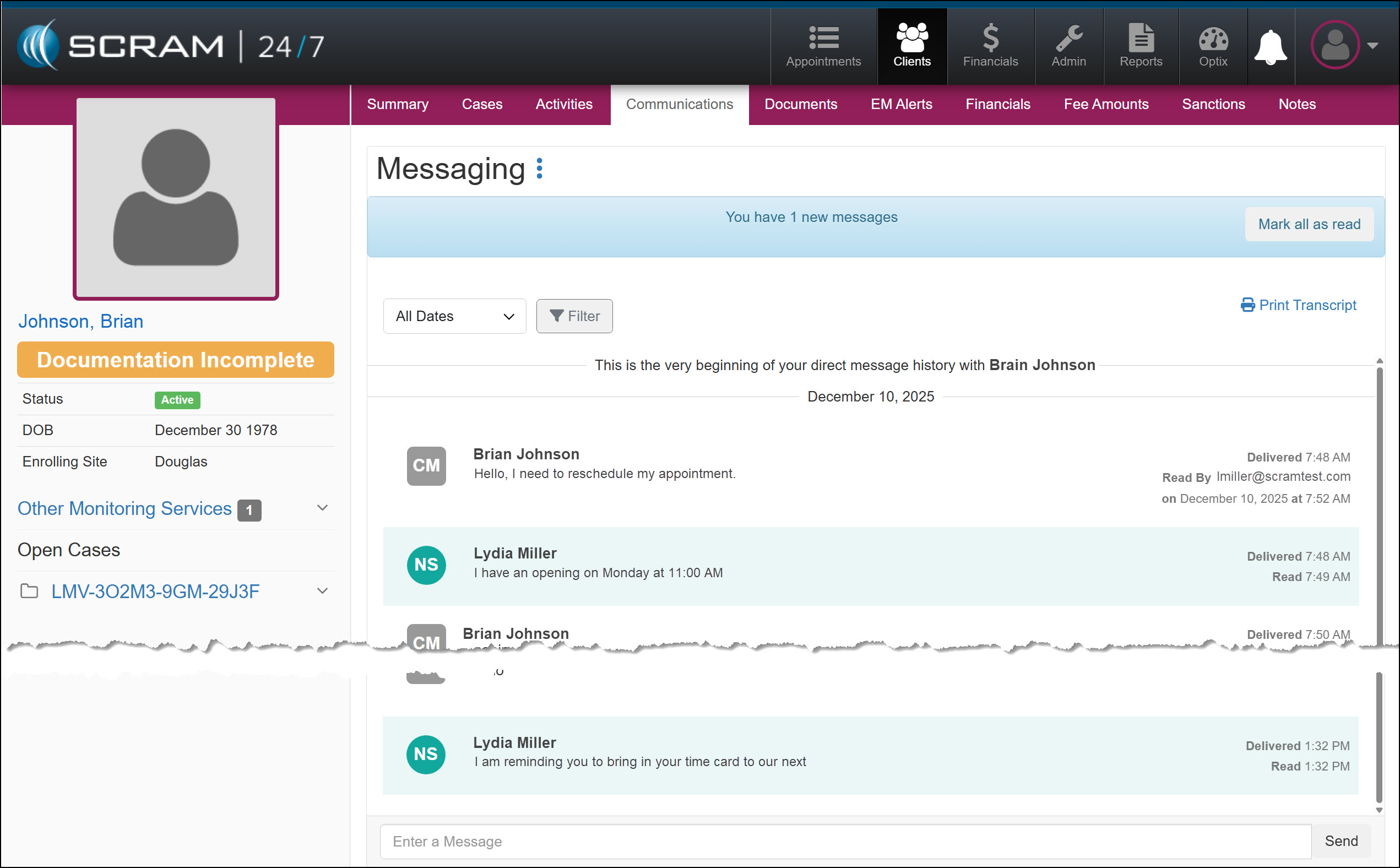
On the client’s Communications / Messaging page, the message will be marked as Read, and the user’s response will be displayed.
Starting on December 2nd, 2025, and continuing through December 18th, SCRAM Systems® will release enhancements for your Remote Breath Pro (RB Pro) Caseload. The first enhancement focuses on devices currently in “Storage Mode.” The second enhancement provides the client with four (4) options to establish and manage Wi-Fi networks from the RB Pro device’s menu.
Included in this enhancement:
- Auto “Power off” functionality for devices in Storage Mode.
- RB Pro menu options for client-accessible Wi-Fi management.
|
Contact your Account Manager for details on your devices’ firmware enhancement dates. |
Auto “Power off” functionality
With this enhancement, when devices in “Storage Mode” are powered on to check the battery level status, they will automatically power off – if not manually powered off – after 30 minutes of being cycled on. This will conserve battery levels between client assignments.
RB Pro Wi-Fi Menu Options
Currently, to connect to their Wi-Fi network, clients must navigate to wifisetup.scramsystems.com and enter their Wi-Fi network name and device serial number. Additionally, their RB Pro device must have a good cellular connection for the Wi-Fi setup to work. To simplify this process and provide additional options for connecting and managing client-accessible Wi-Fi networks, the client may access the RB Pro’s Wi-Fi Setup menu options. On the Wi-Fi setup menu, the client may select :
- Add with WPA (Wireless Protected Access)
- Add Open WiFi (Unprotected Wireless Access)
- Add with WPS (Wireless Protected Setup)
- Remove (remove a client-added Wi-Fi network)
|
|
Connect to a Client’s Wi-Fi Network:
- Start by accessing the RB Pro Menu.
- Use the up/down buttons on the RB Pro to highlight the WIFI SETUP option and then press the select button.
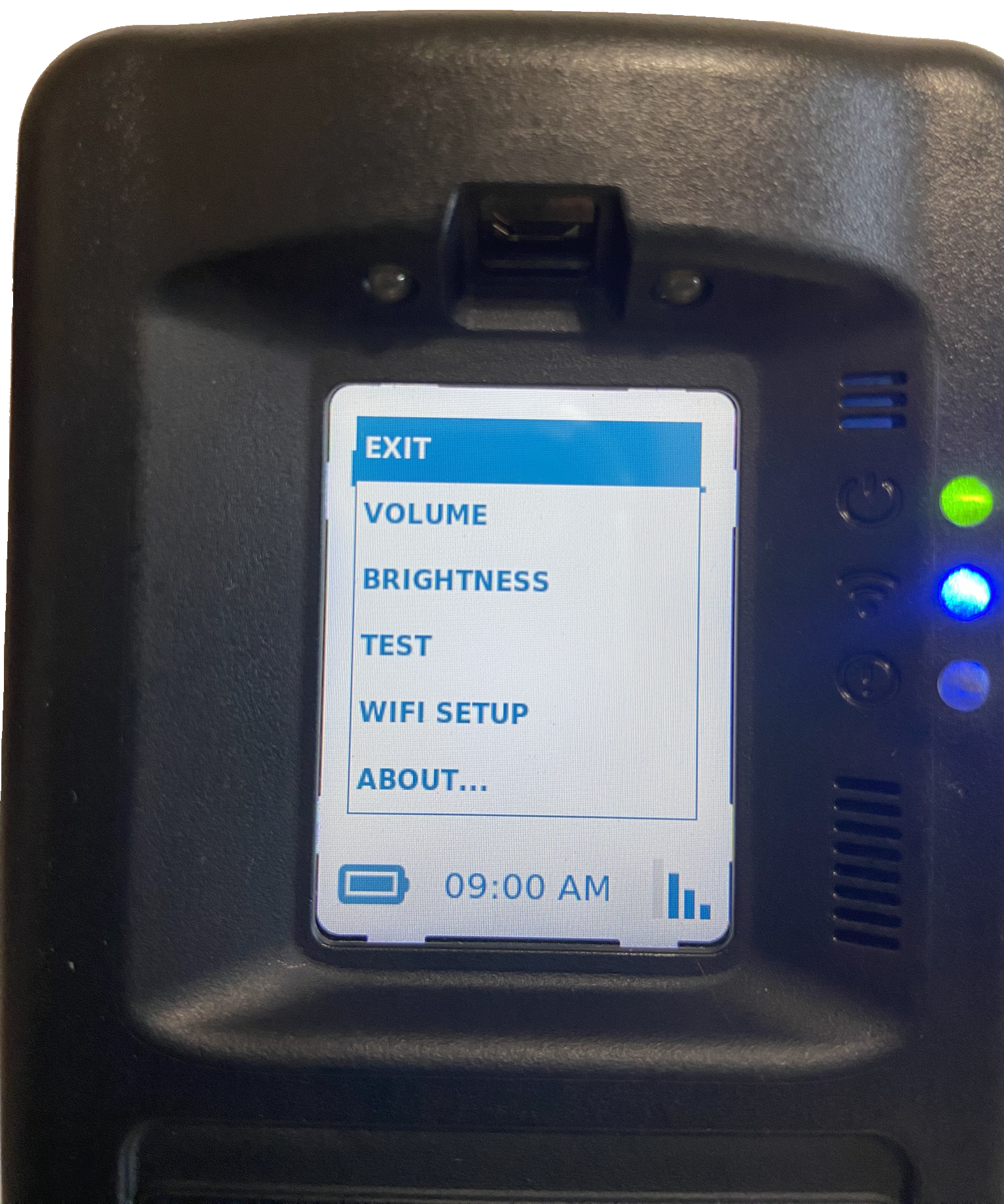
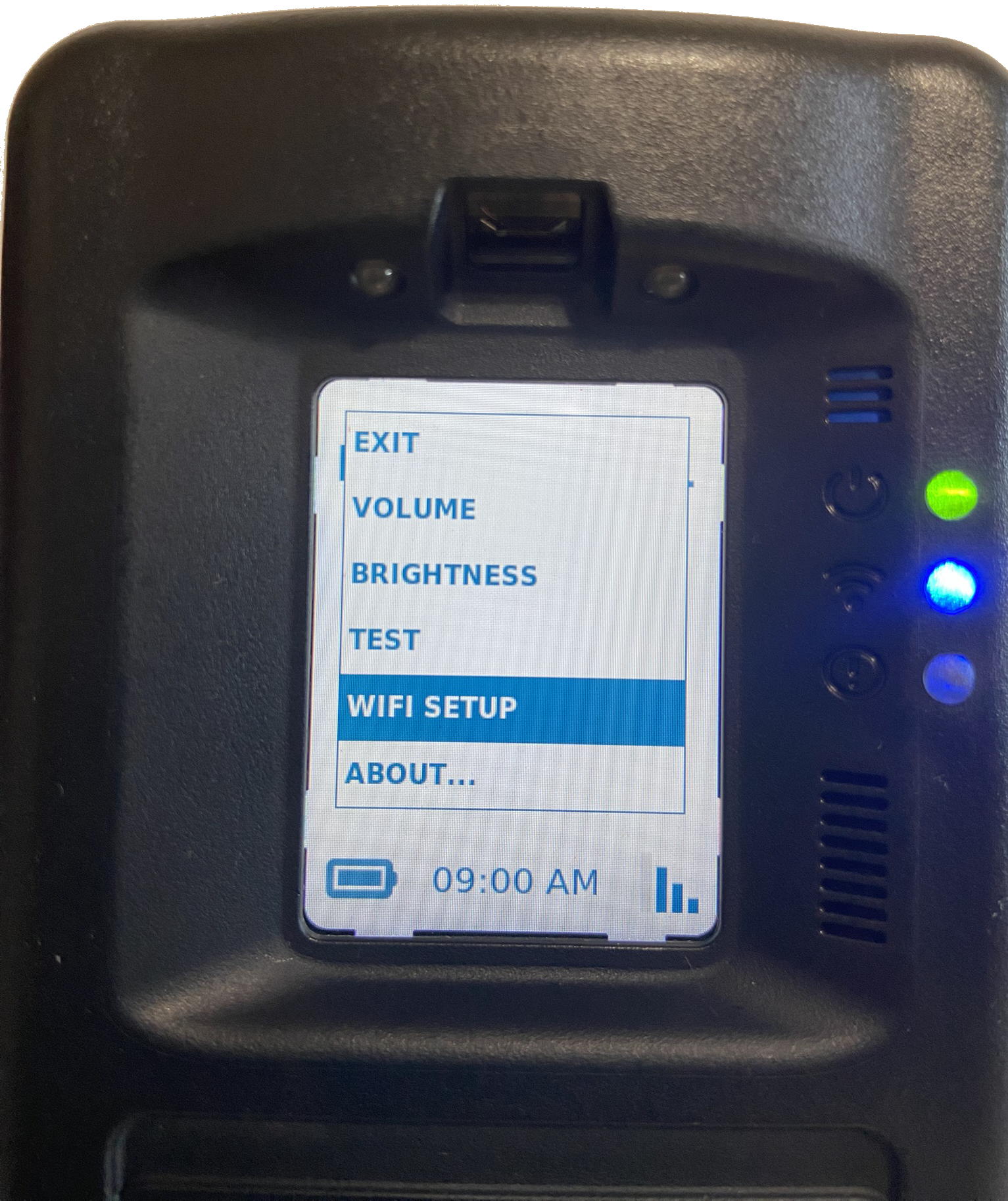
- On the Wi-Fi option screen, select one of the options available and follow the instructions for connecting
Connect using the “Add with WPA” Option
- Once the “Add With WPA” option is selected on the RB Pro, the screen will display instructions for accessing the wifisetup.scramsystems.com by either entering in the web address or using the QR code displayed.
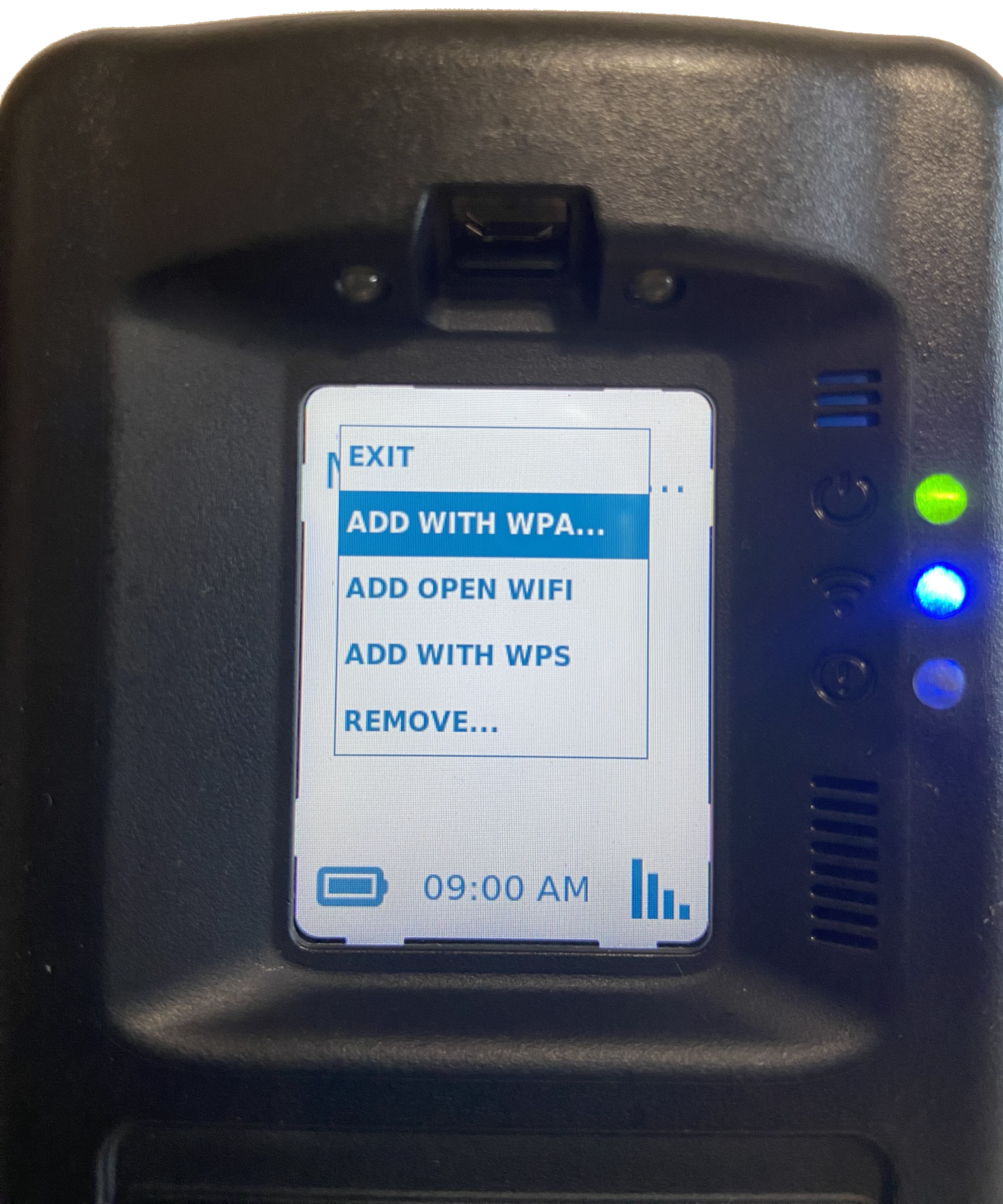
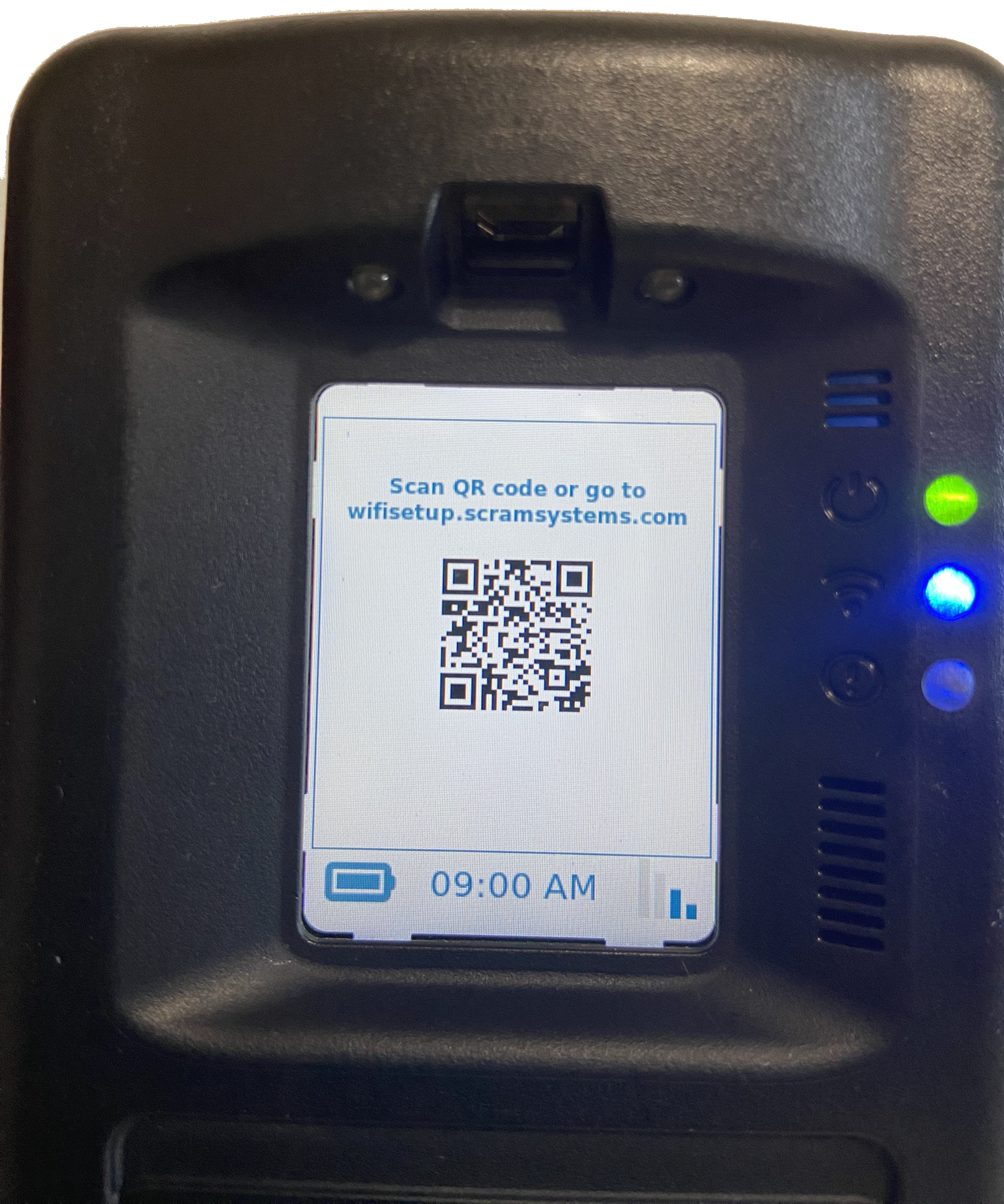
Connect using the QR code:
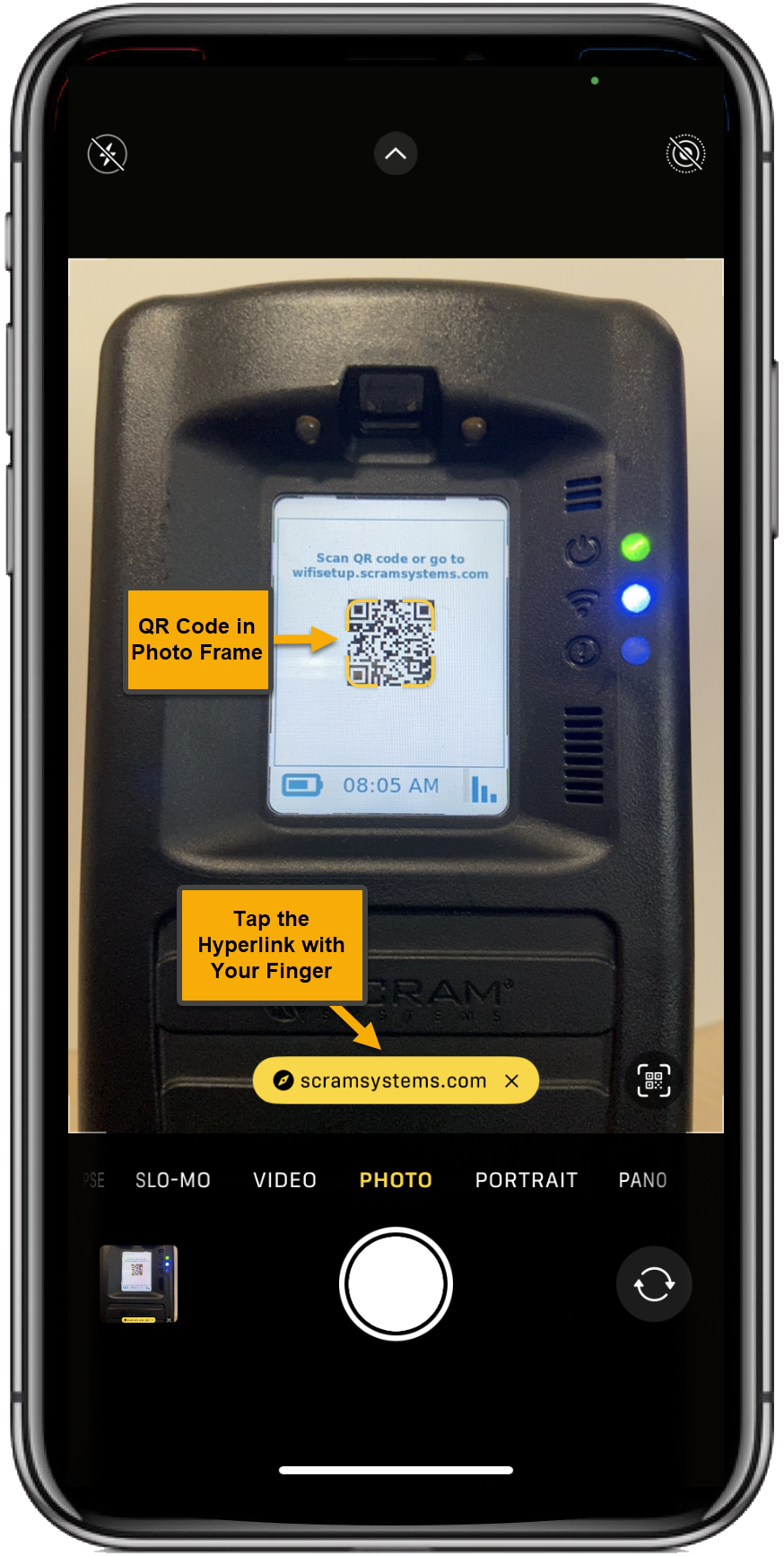
- Using a smartphone, open the camera option and bring the QR code into the photo frame.
- On the smartphone’s screen, tap the revealed hyperlink for “scramsystems.com.”
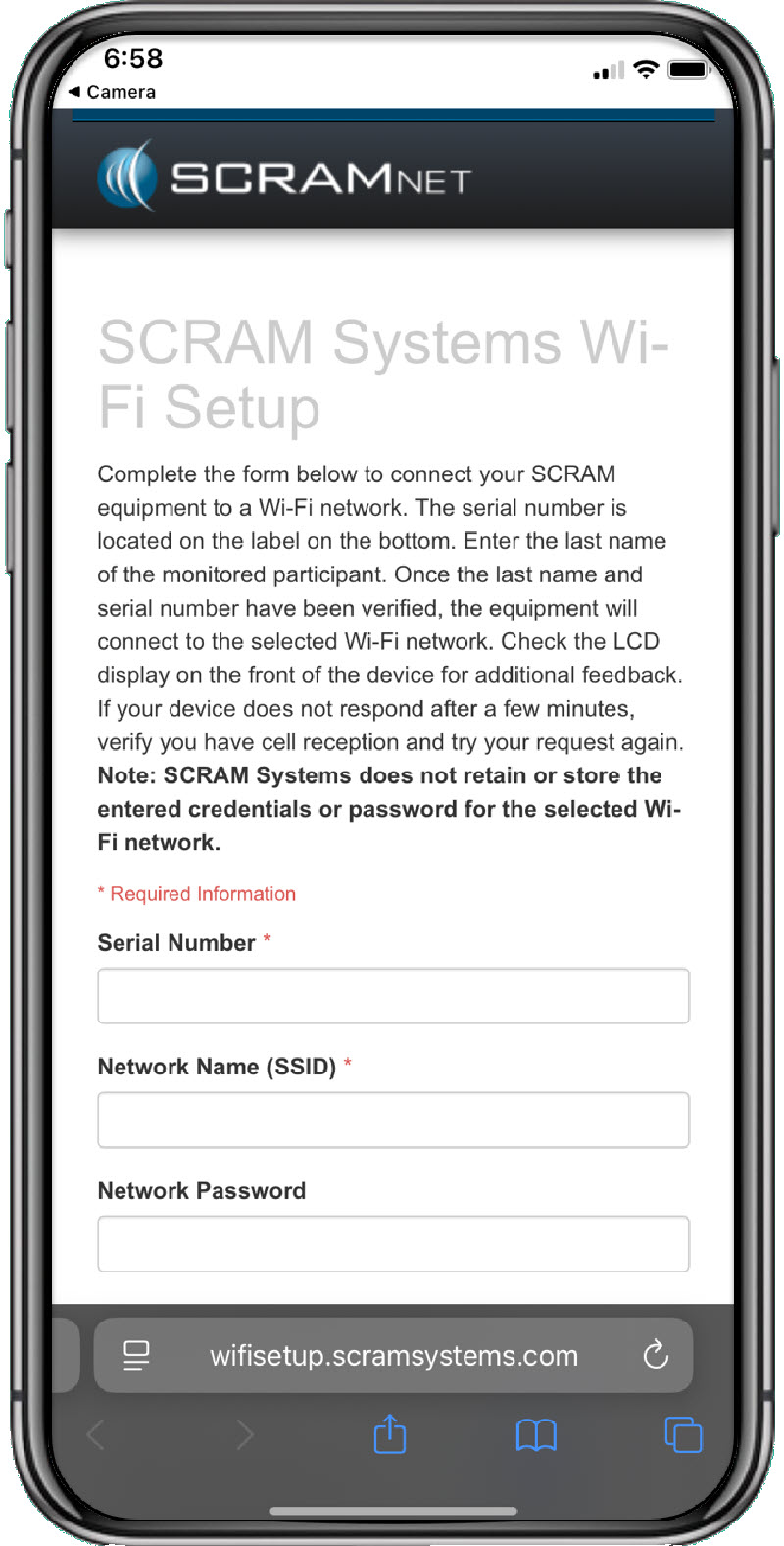
- An internet page for SCRAM System Wi-Fi Setup will open on the smartphone. Enter the required information and complete the captcha requirement.
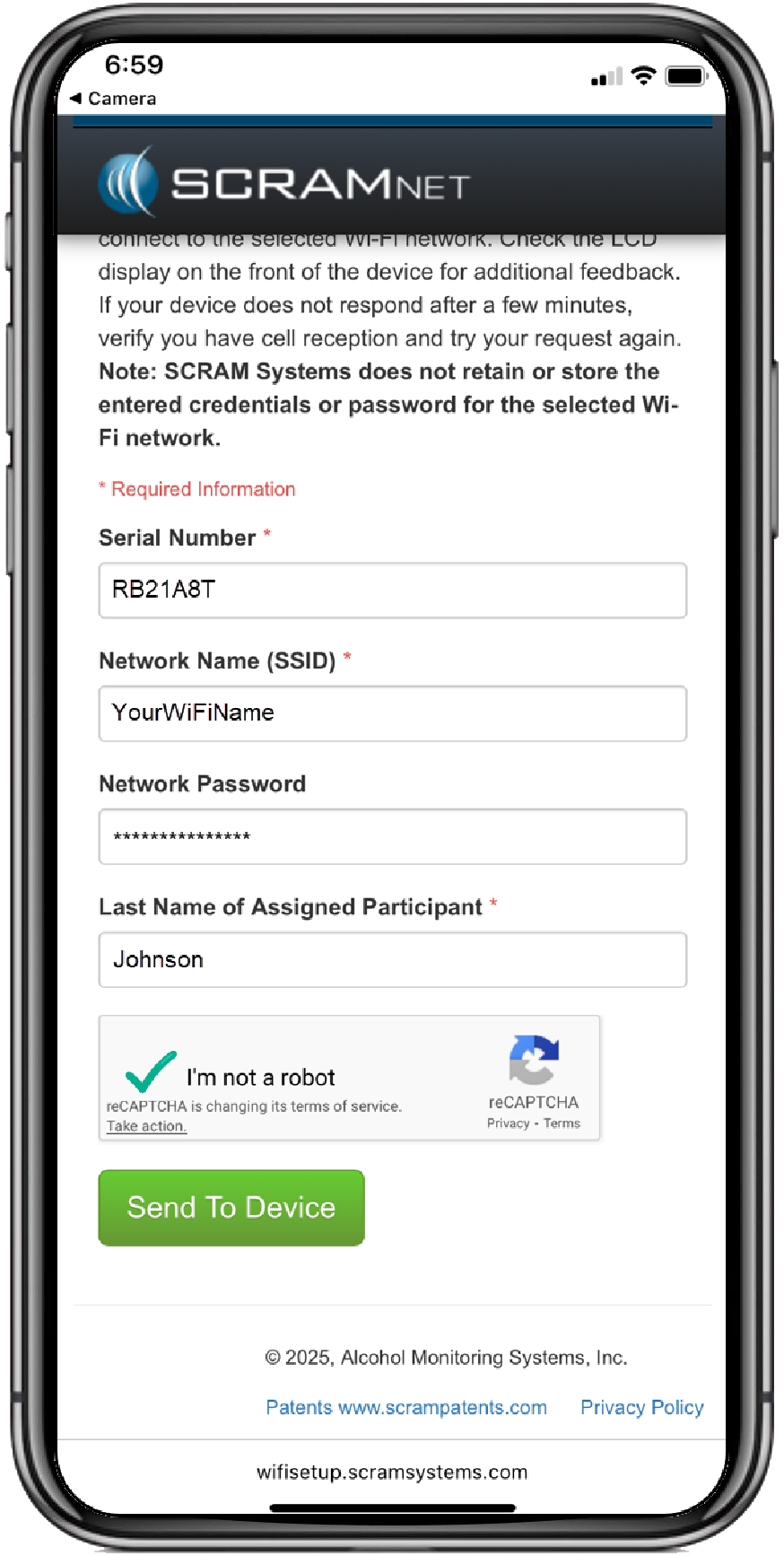
- Tap the Send to Device button.
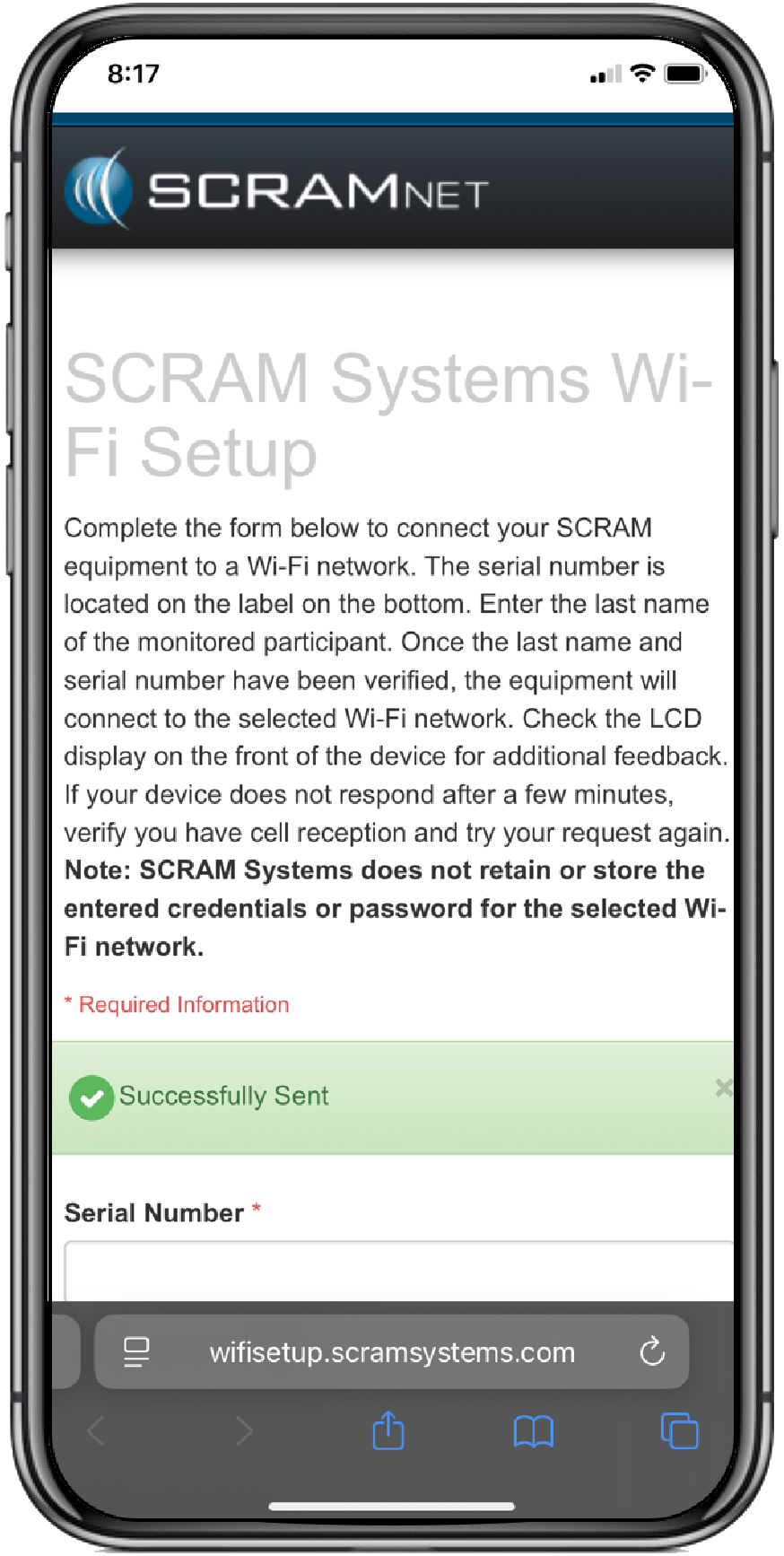
A Successfully Sent banner will be displayed on the smartphone’s screen.
Once the Wi-Fi’s information has been communicated to the RB Pro over a cellular network connection, the RB Pro’s screen will display the Wi-Fi icon in the lower right corner. After 60 minutes, it will automatically switch back to a cellular network, regardless of the cellular network’s signal strength. Moving forward, the device will only connect to the Wi-Fi network when it cannot communicate data over the cellular network.
|
For the RB Pro device to receive Wi-Fi network information, it must first connect to the cellular network. It may be necessary for a client to relocate the device to an area with a cellular network connection. |
Connect using the “Add Open WiFi” Option
- Using the up/down buttons on the RB Pro device, highlight the “open Wi-Fi” network you wish to connect to.
- Once highlighted, press the “select” button on the RB Pro device.
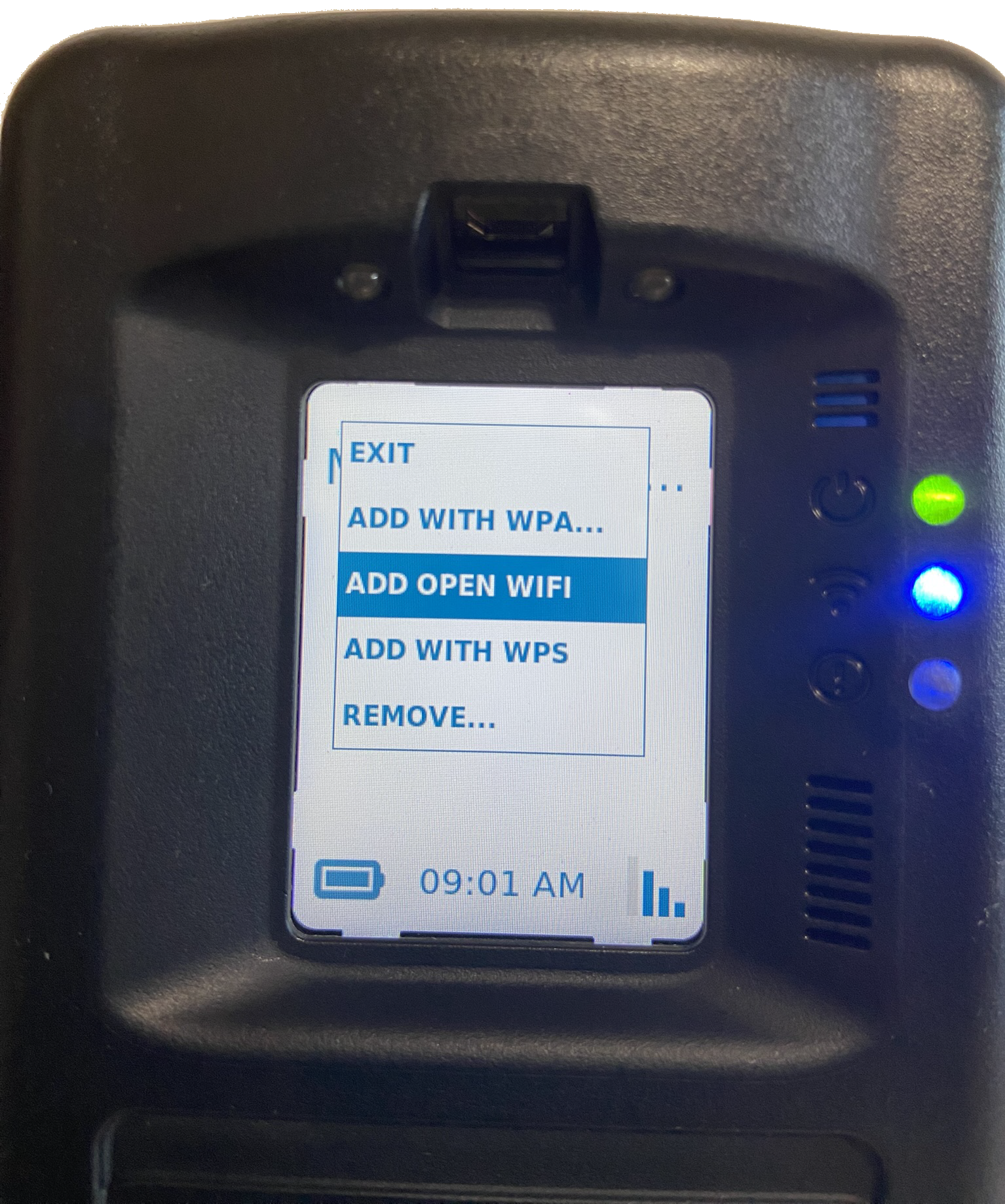
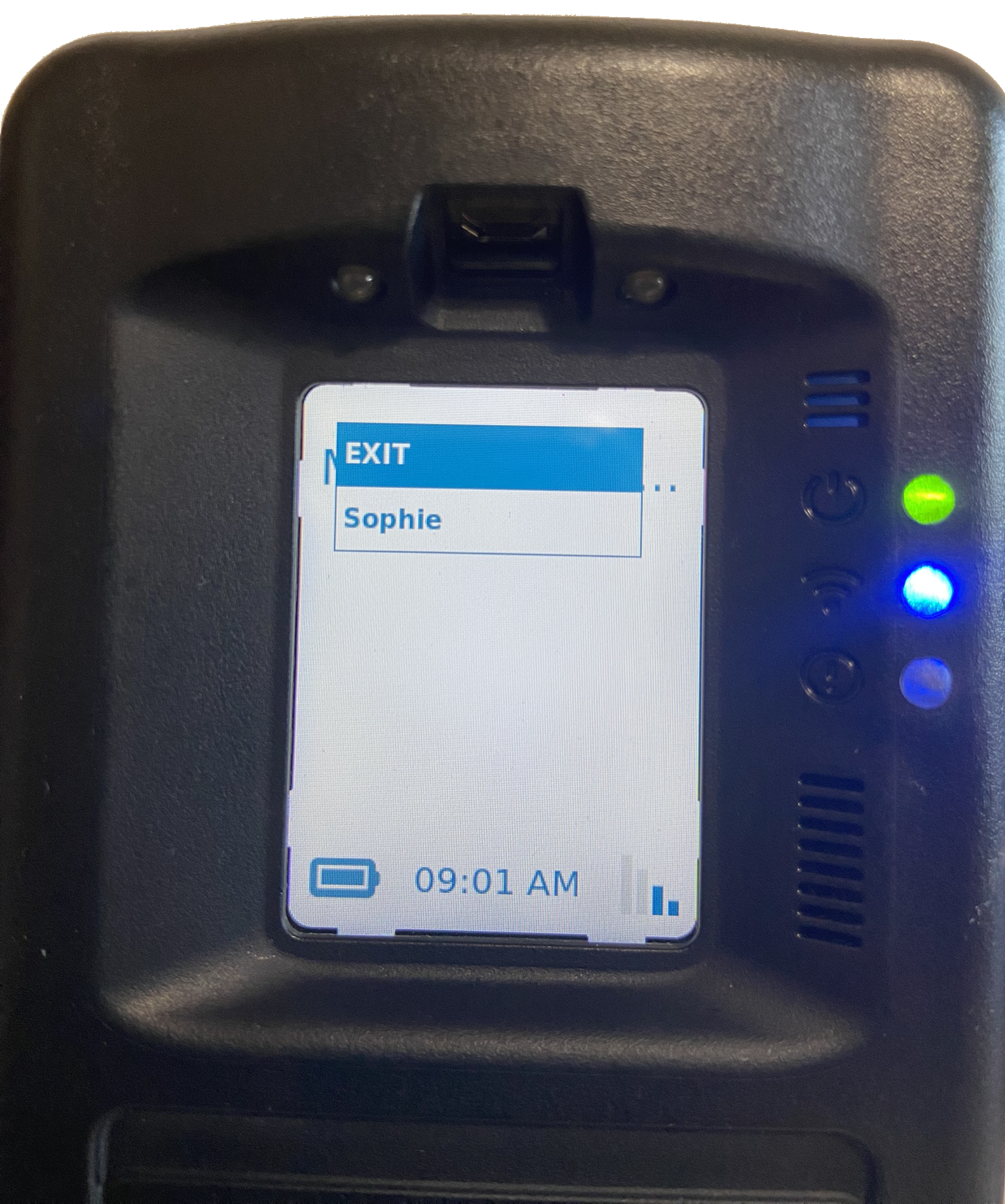
After a few minutes, the RB Pro’s screen will display the Wi-Fi connection in the lower right corner. After 60 minutes, it will automatically switch back to a cellular network, regardless of the cellular network’s signal strength. Moving forward, the device will only connect to the Wi-Fi network when it cannot communicate data over the cellular network.
|
|
Connect using the “Add With WPS” Option
- Once the “Add With WPS” option is selected on the RB Pro device, instruct the client to locate the WPS button on their modem or router and press that button.
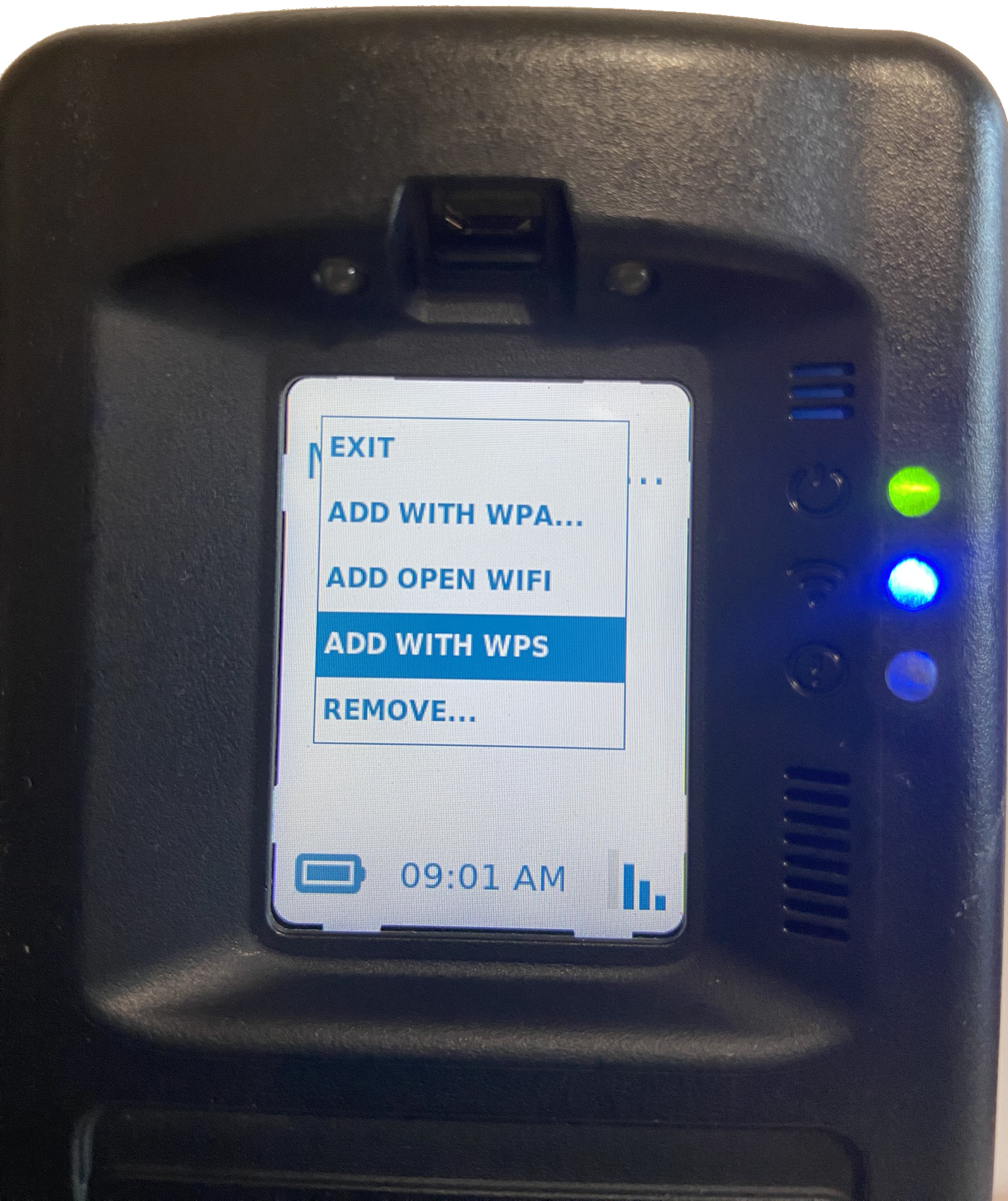
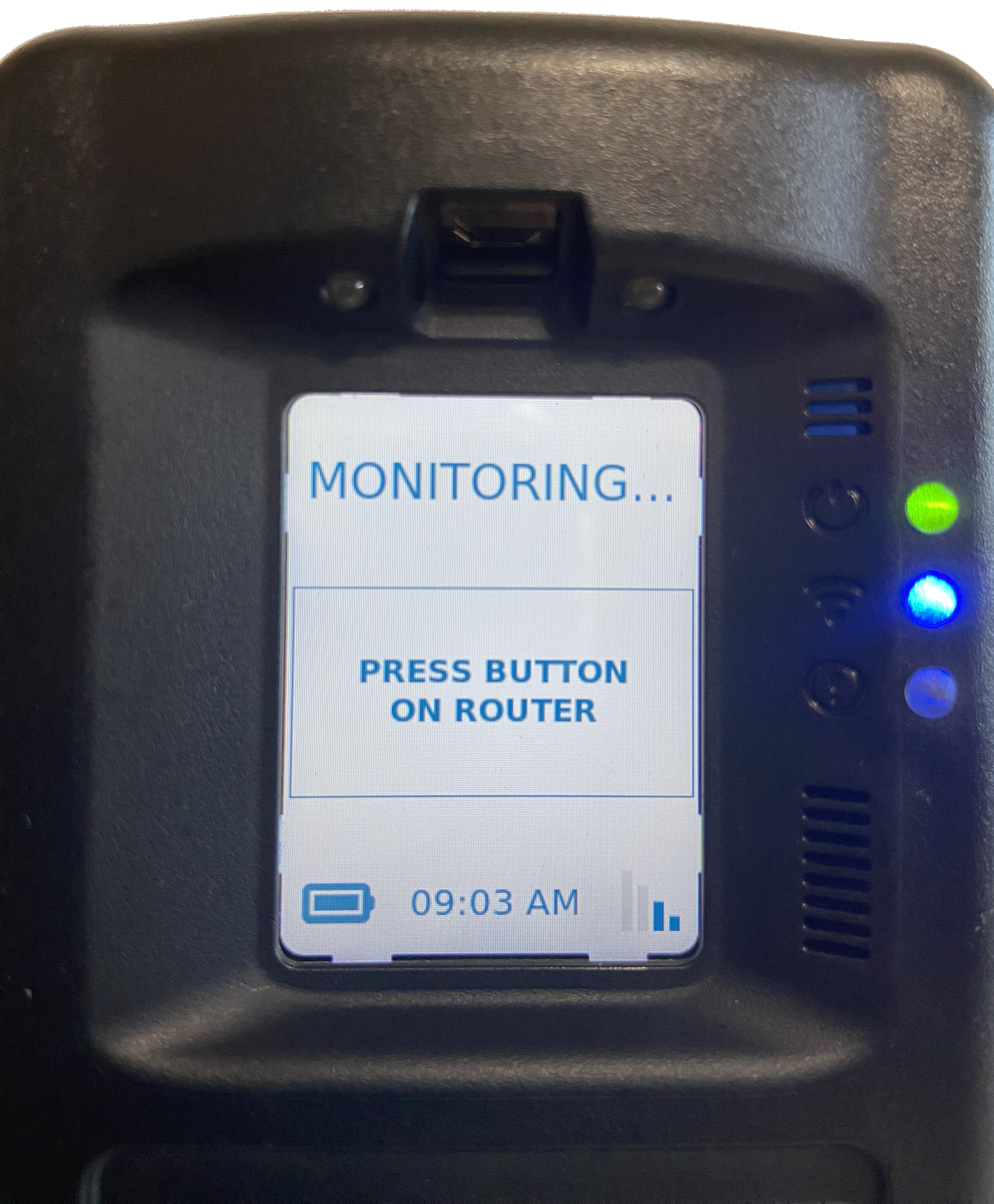
After a few minutes, the RB Pro’s screen will display the Wi-Fi connection in the lower right corner. After 60 minutes, it will automatically switch back to a cellular network, regardless of the cellular network’s signal strength. Moving forward, the device will only connect to the Wi-Fi network when it cannot communicate data over the cellular network.
|
|
Manually Remove a Client-Added Wi-Fi Network
If the client would like to remove a Wi-Fi network that they have connected to, they may accomplish this task by:
- Accessing the RB Pro WiFi Setup menu.
- Use the up/down buttons on the RB Pro to highlight the Remove option and then press the select button.
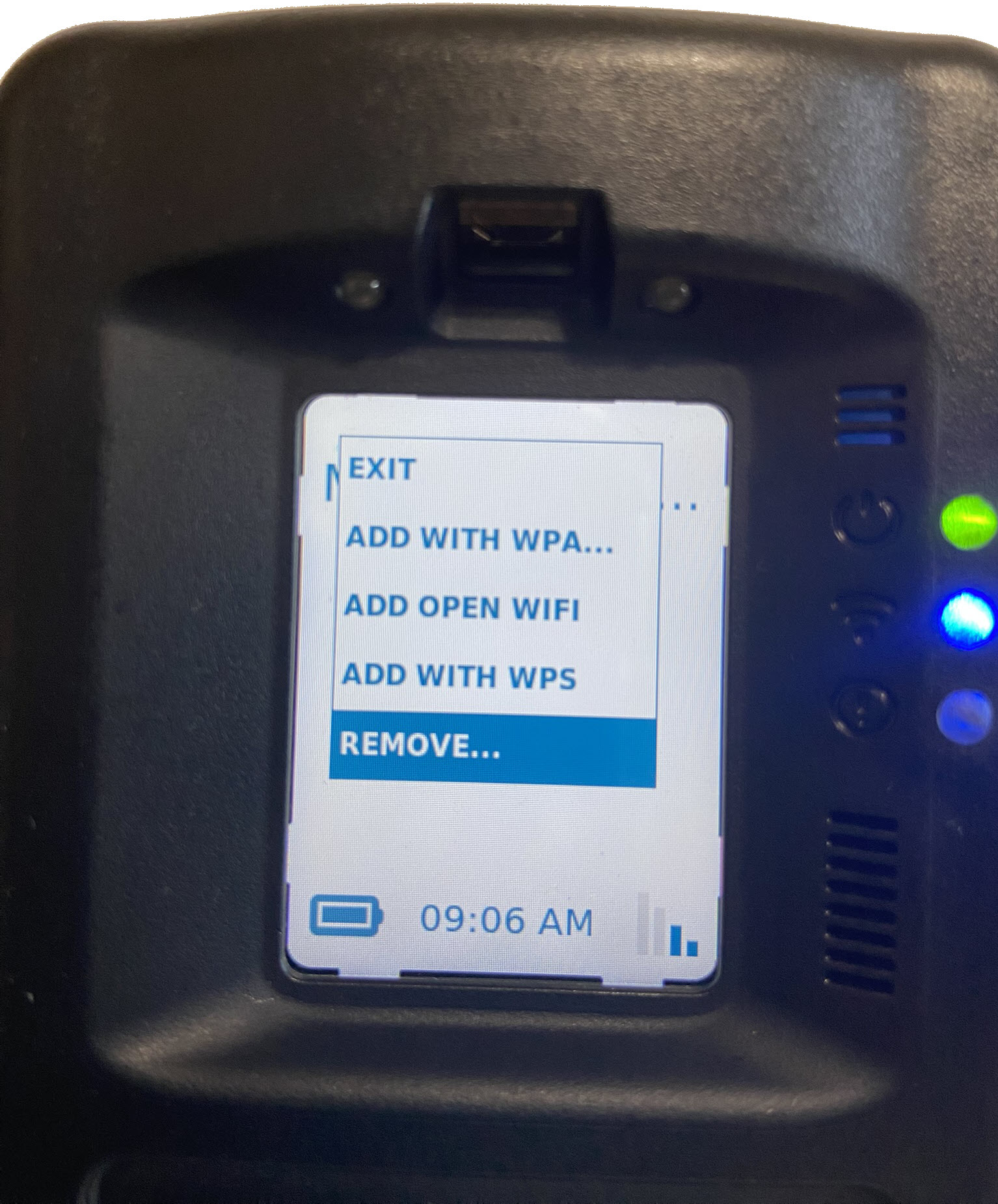
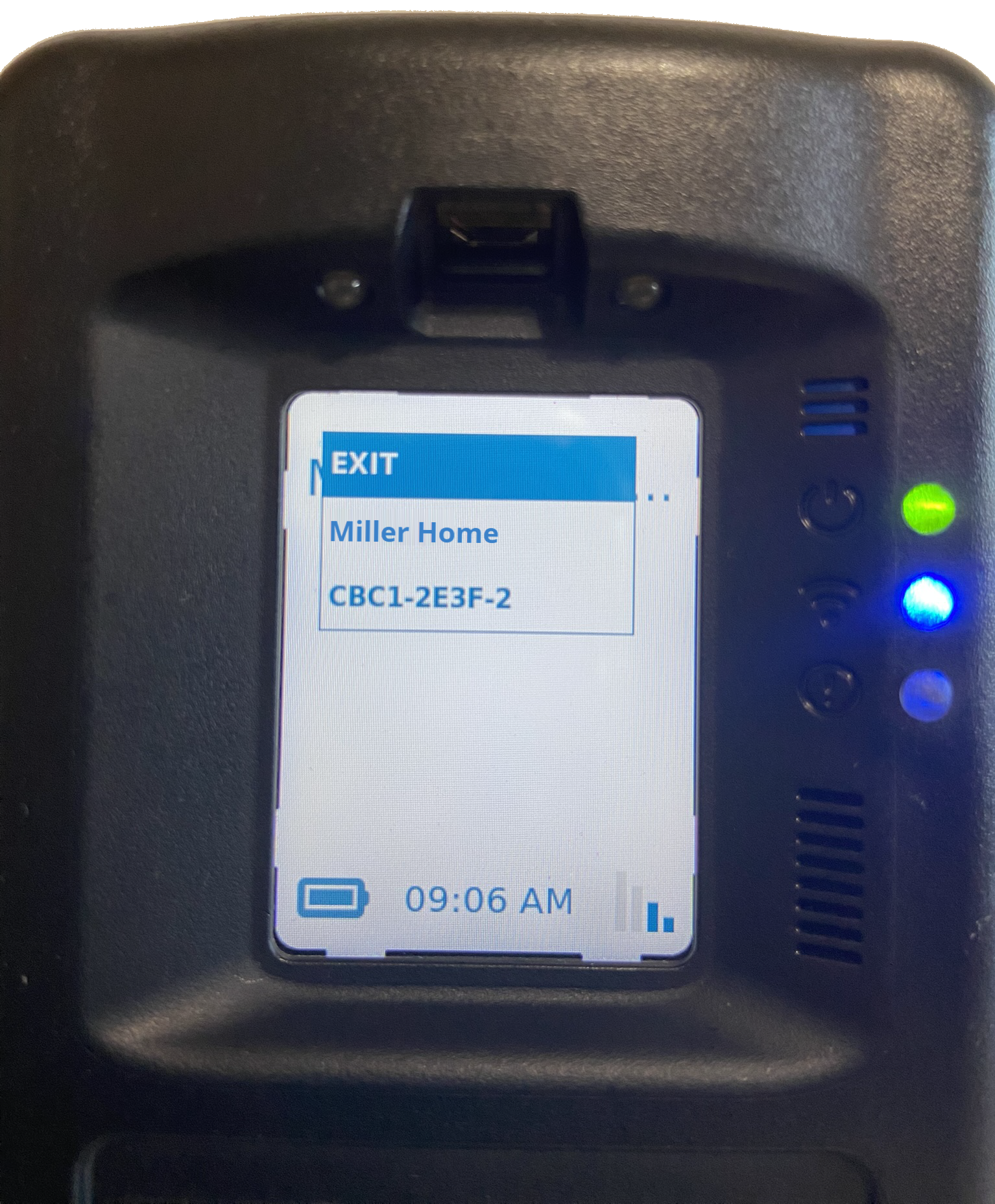
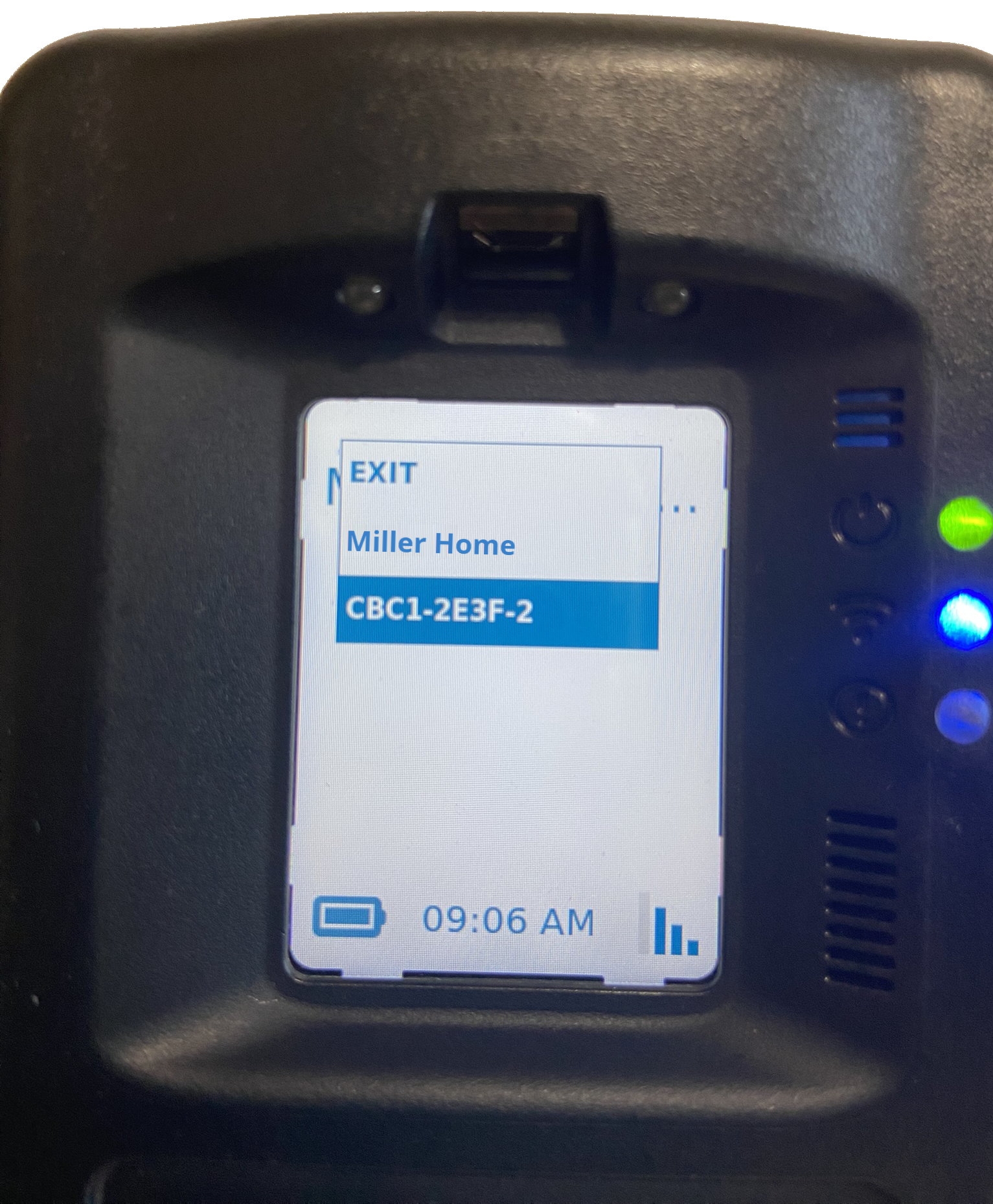
- Use the up/down buttons to highlight the wi-fi network to be removed and then press the “select” button.
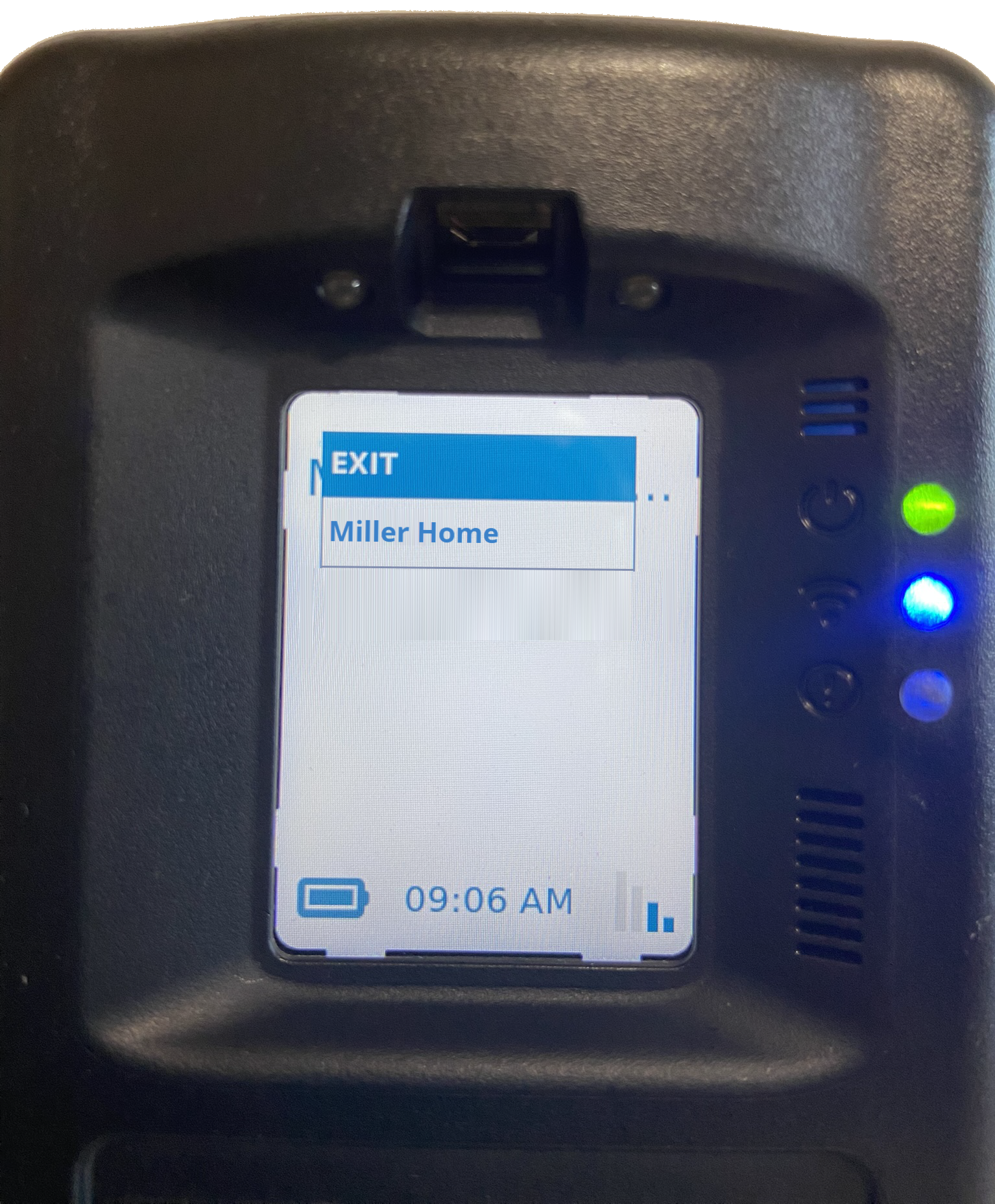
The Wi-Fi network is no longer displayed.
On October 15th, 2025, SCRAM Systems will release multiple enhancements for your SCRAM 24/7 Monitoring program.
These enhancements are:
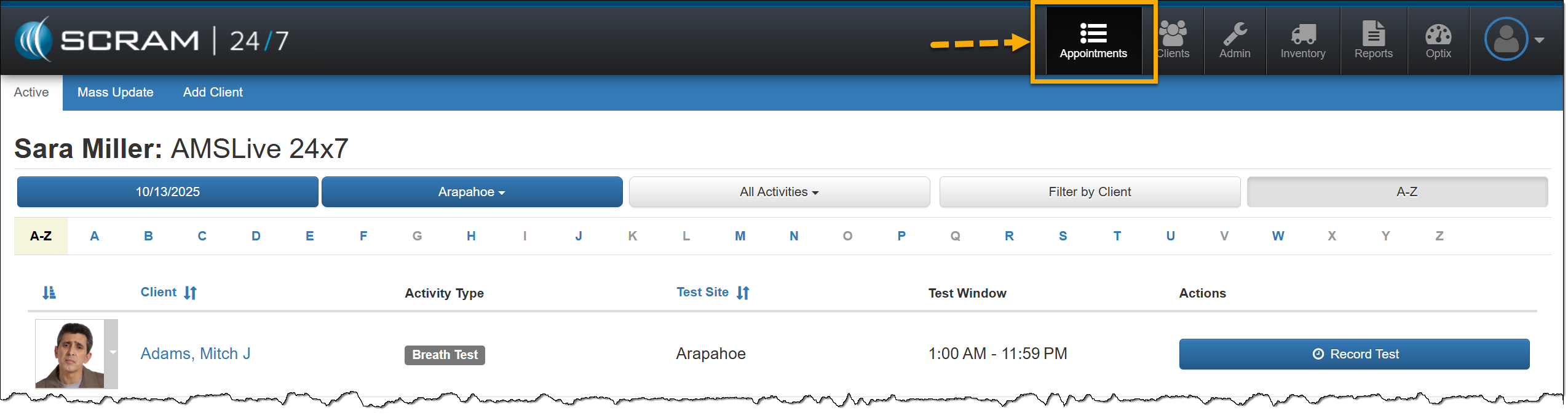
- New “Appointments” button replaces the “Testing” button.
- A Documents page for your client caseloads.
- A Communications page within SCRAM 24/7 for clients utilizing the Messaging feature with their TouchPoint Activity.
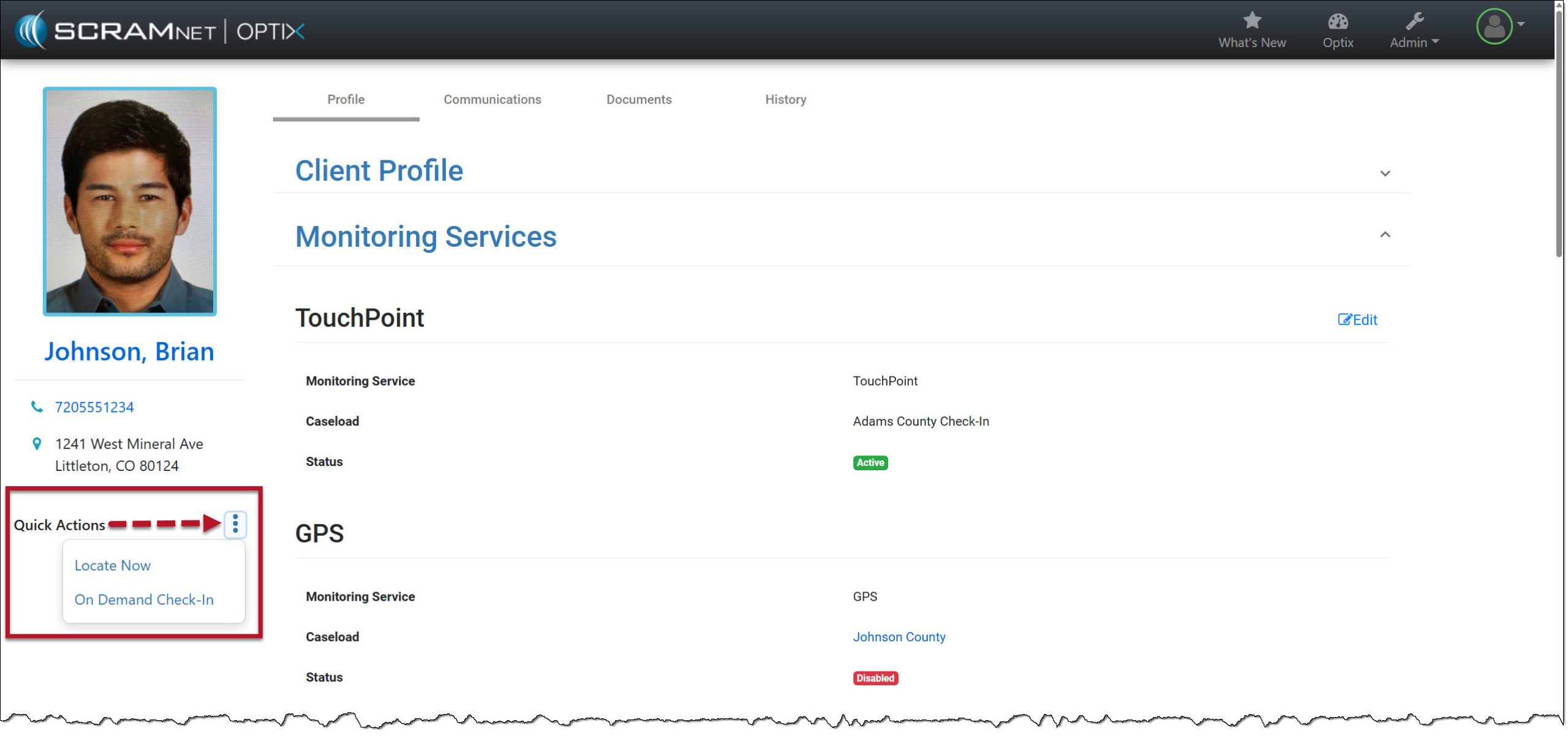
- Touchpoint Activity “Quick Actions” dropdown menu.
Appointments
With this release, the current main navigation button of “Testing” will be updated to “Appointments” to more accurately represent the activities that may be required for clients during their monitoring program.
Documents
Currently, during your client’s monitoring program, you may associate and save documents relating to a specific case on the Cases tab. Depending on the client, there may be occasions when the client has multiple cases and documents. This enhancement will add a dedicated Documents tab for each client in SCRAM 24/7, providing centralized management of client documents.
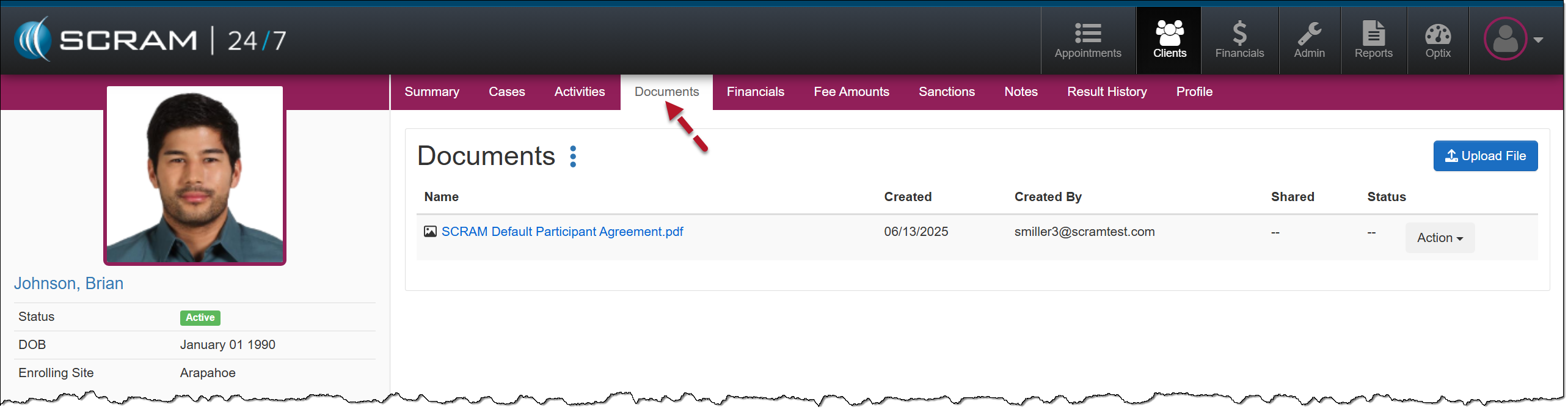
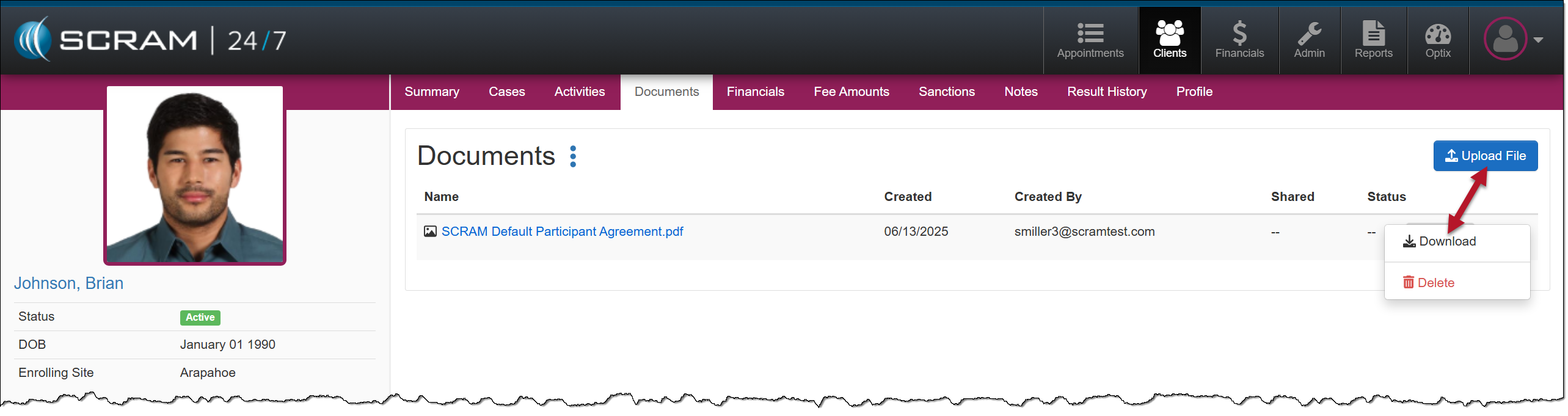
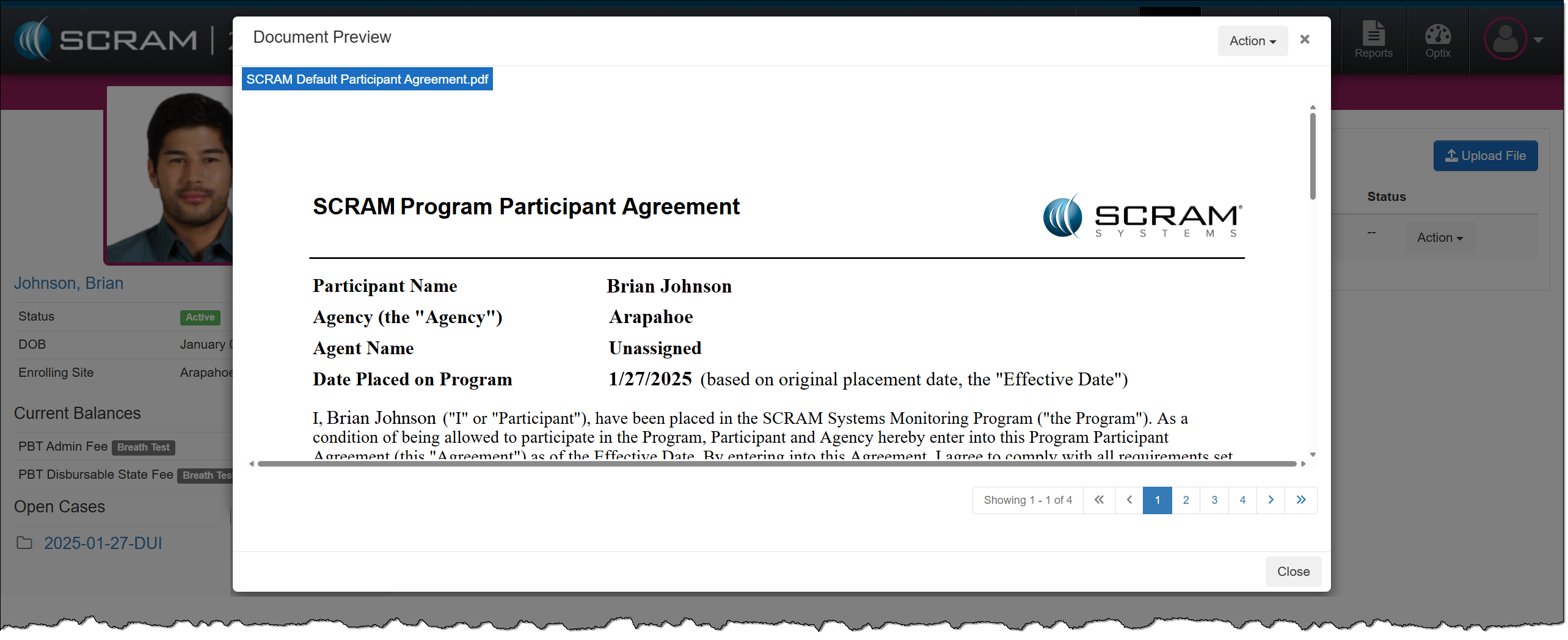
Once the Documents enhancement is released, all current documents saved on the Cases tab will automatically be relocated to the client’s Documents tab for easy access. From there, you may upload or download files, select the document’s hyperlink to view it in a preview window, or delete it.
An additional benefit of this Documents enhancement for clients utilizing the TouchPoint Activity and the SCRAM TouchPoint Mobile application is that you may take advantage of all the benefits of the Documents service without navigating to the client’s Optix Profile. This includes:
- sharing documents directly with the client through the SCRAM TouchPoint Mobile application,
- requiring client e-signatures, and
- generating “Read” date and time stamps on shared documents.
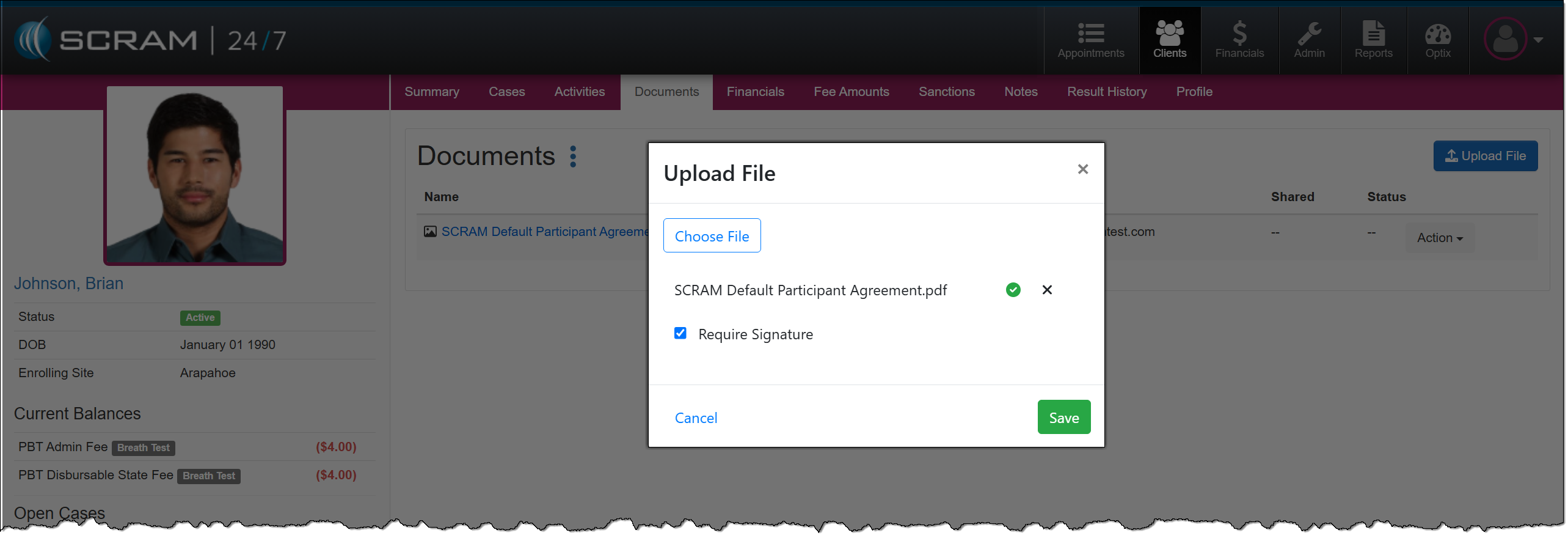
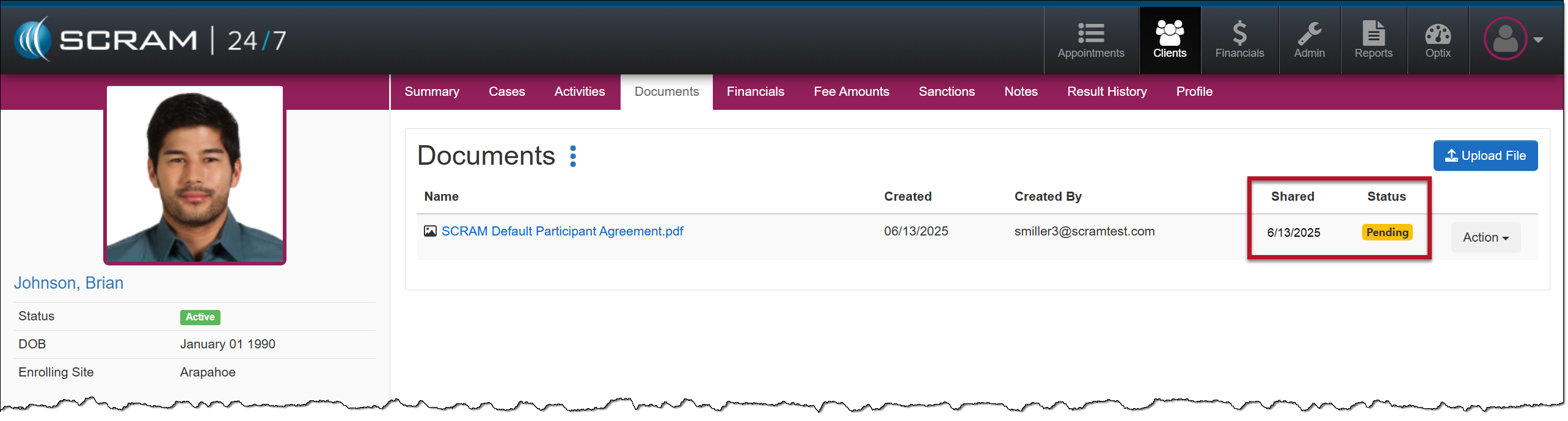
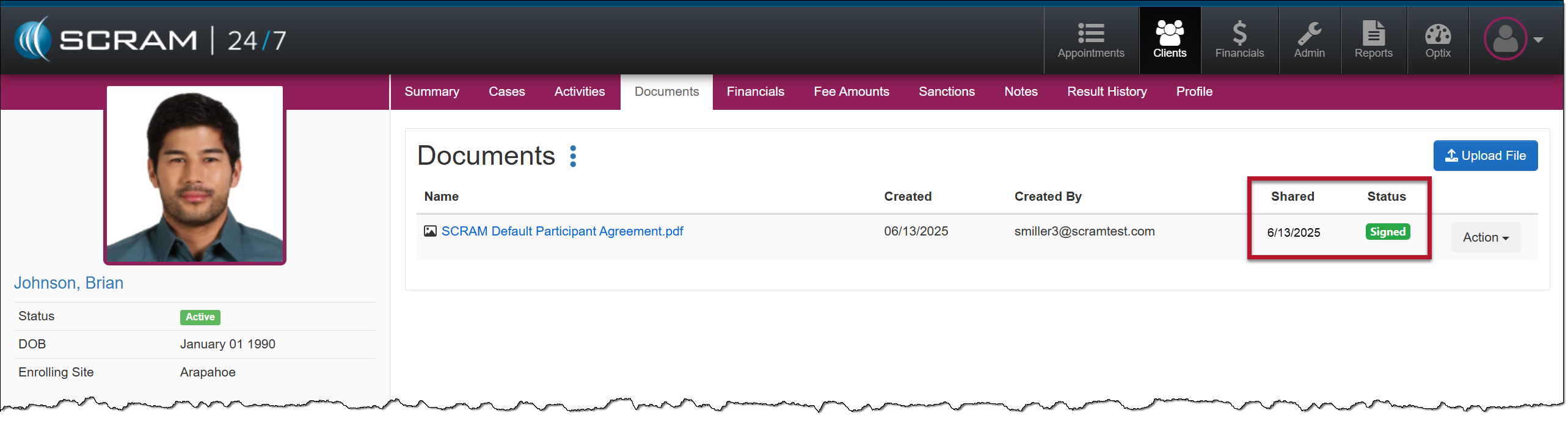
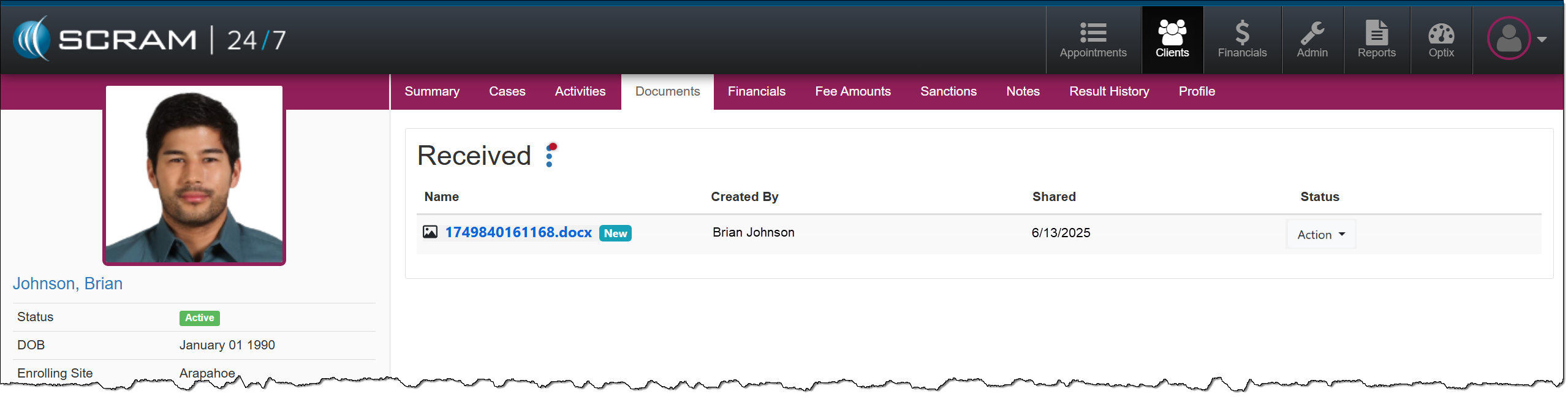
Additionally, the client may send documents and images directly from their mobile application to their Documents page in SCRAM 24/7, thus streamlining the delivery, receiving, and saving of documents to the client’s SCRAM 24/7 Profile.
Communications
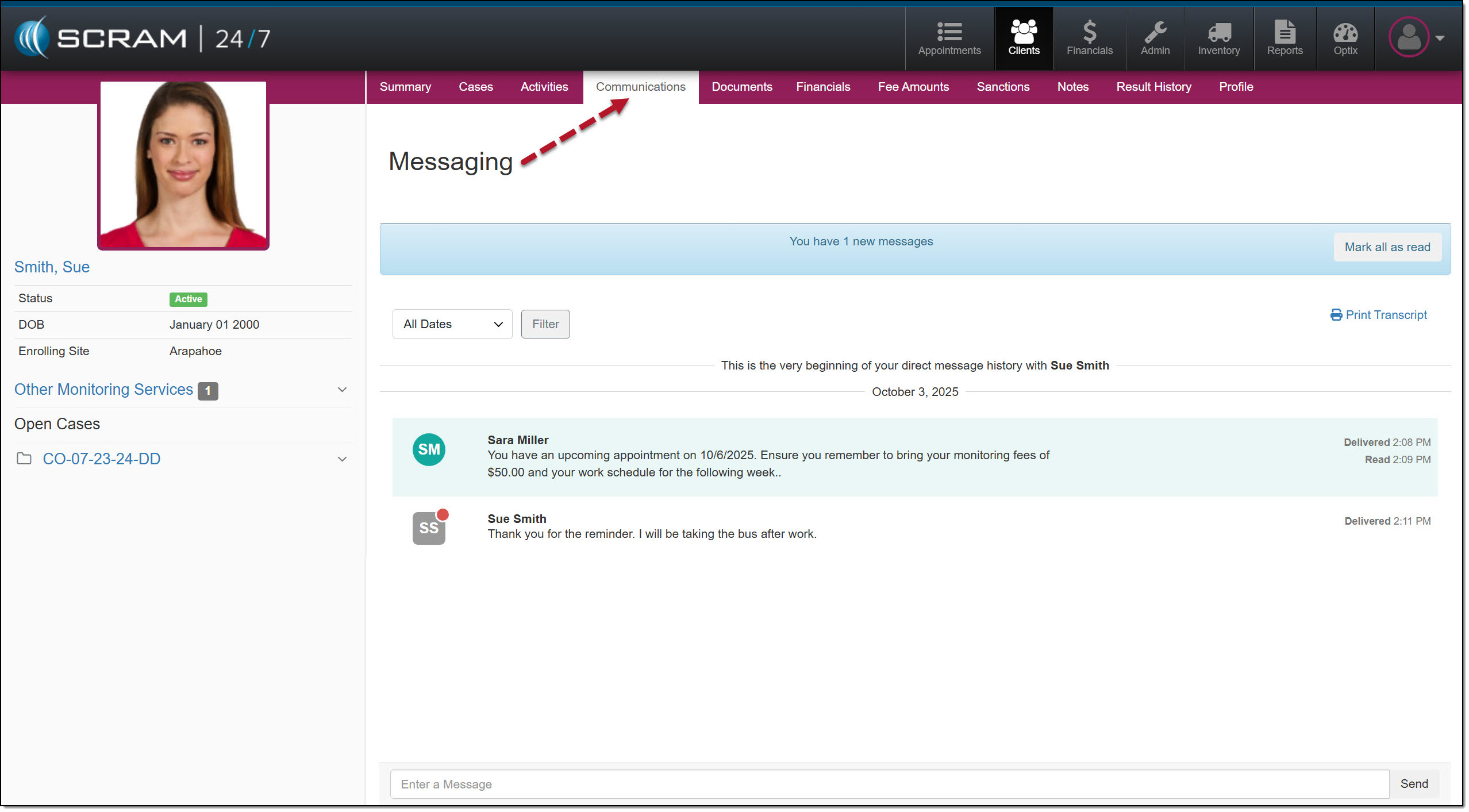
Currently, after adding the TouchPoint Activity and enabling the Messaging feature for your client, you must navigate to the client’s Optix TouchPoint profile to send, view, and print a history of messages.
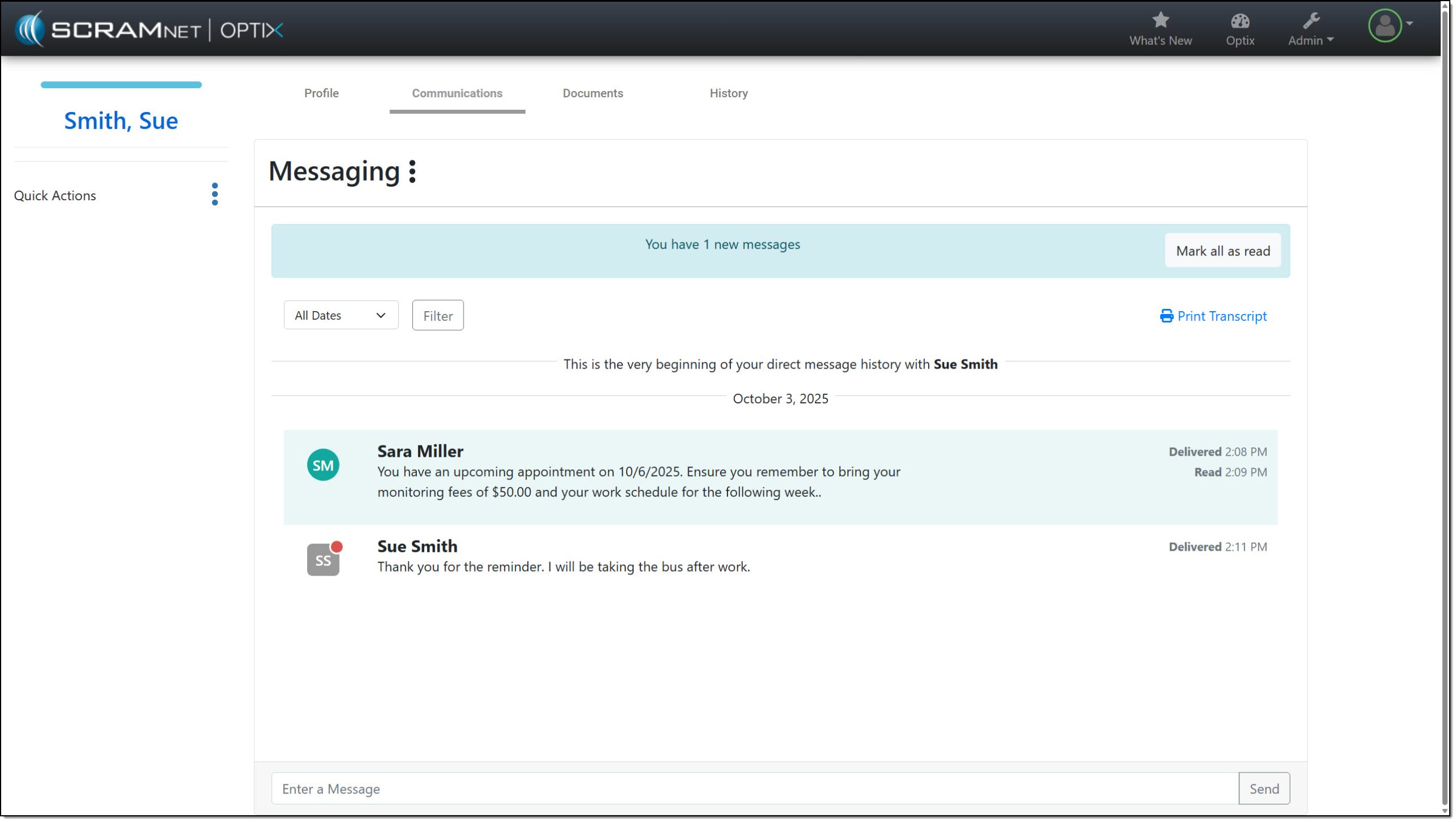
With this enhancement, you may complete all messaging tasks from within SCRAM 24/7.
TouchPoint Activity “Quick Actions” Options
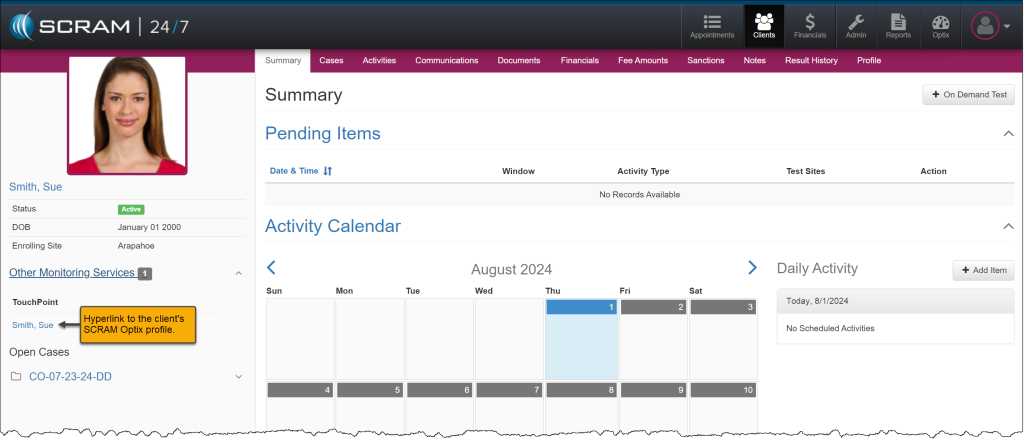
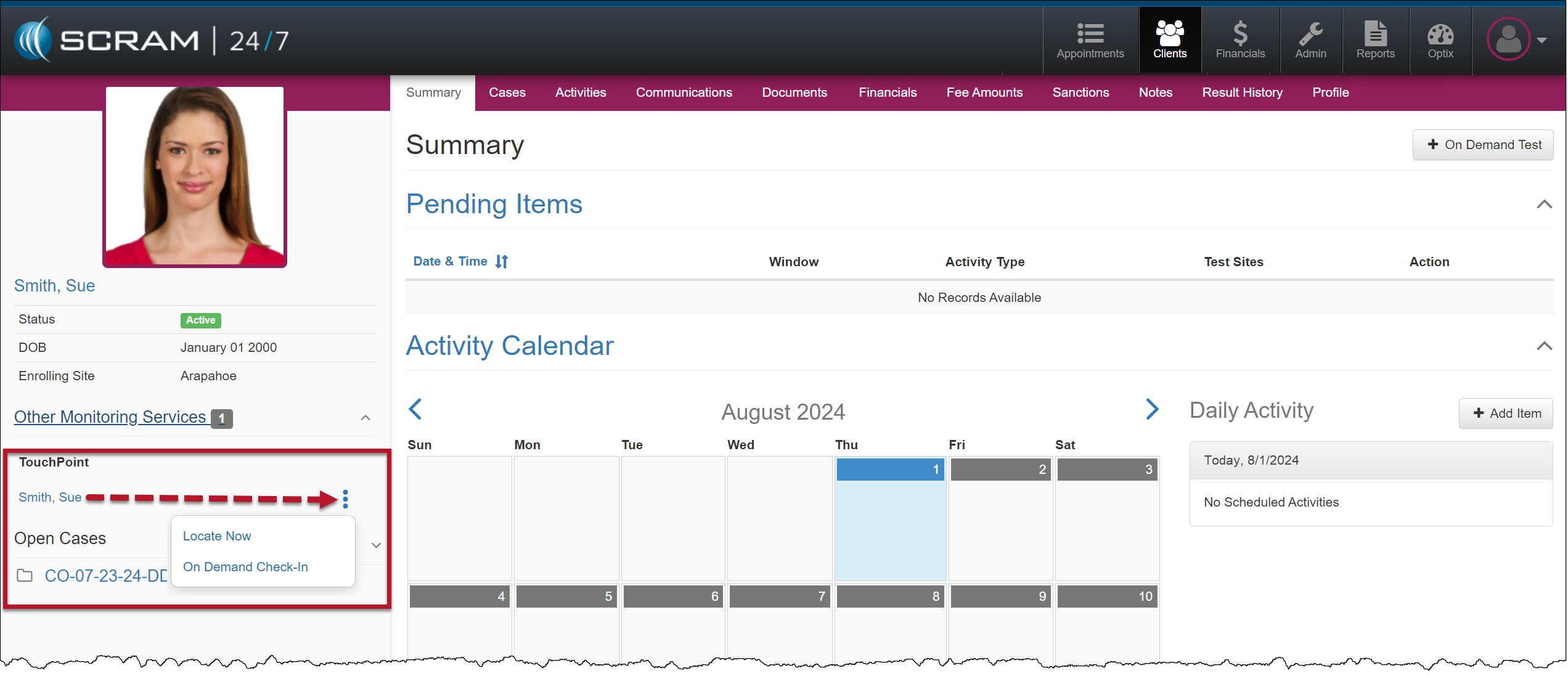
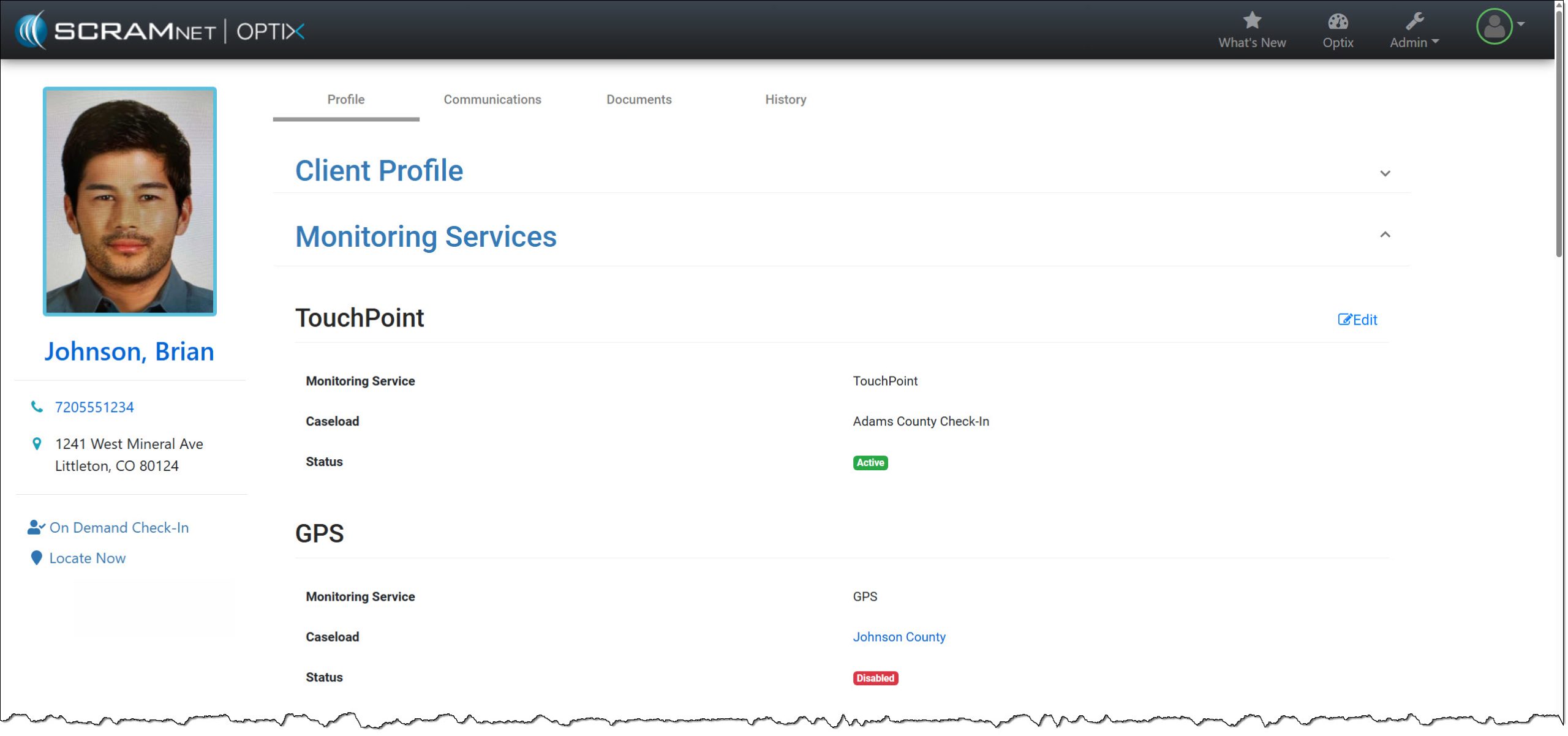
Once a TouchPoint Activity has been enabled for your SCRAM 24/7 client, to utilize the on-demand features like “Locate Now” or to request an “On Demand Check-in,” you would navigate to the client’s Optix profile using the client’s name hyperlink located in the Other Monitoring Services section under the “TouchPoint” heading.
With this enhancement, you may now access and launch these features within SCRAM 24/7 by opening the Quick Actions dropdown menu.
|
|
On October 15, 2025, SCRAM Systems will release an enhancement for your SCRAM TouchPoint caseload. This enhancement consolidates the one-touch action hyperlinks into a Quick Actions dropdown menu and allows room for additional Quick Actions to be added in the future..
|
The options available on the “Quick Actions” dropdown menu will reflect the current SCRAM TouchPoint features enabled for the client. |
Thursday, October 9, 2025, at 5:00 a.m. MDT, SCRAM Systems will release two new features for your SCRAMNET GPS caseloads and the SCRAM Ally (Victim Notification) application.
The enhancements are:
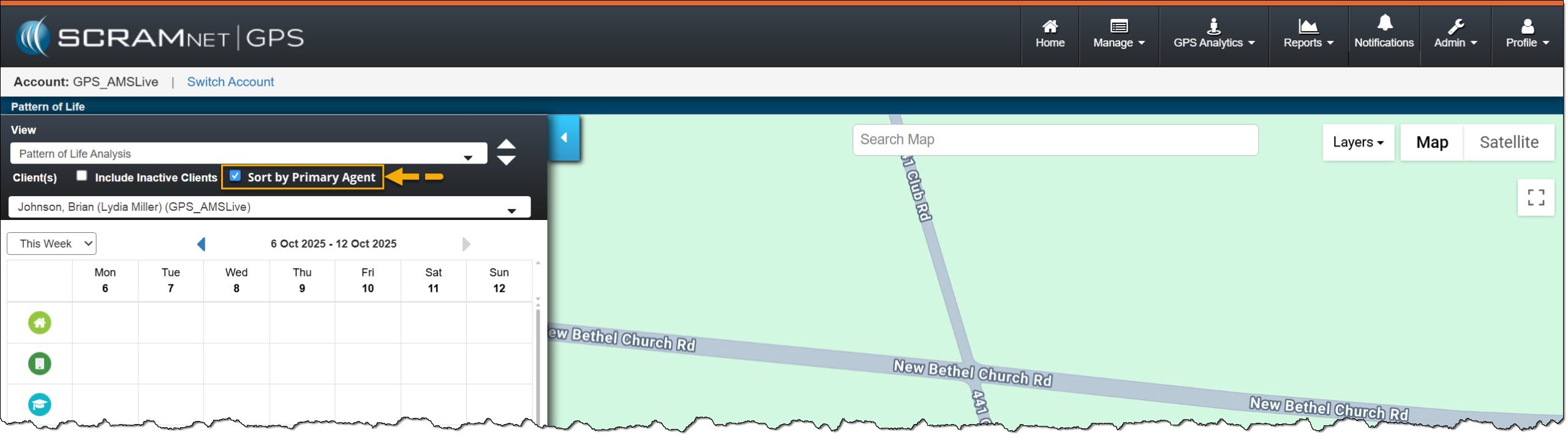
- Pattern of Life “Sort by Primary Agent” Filter option
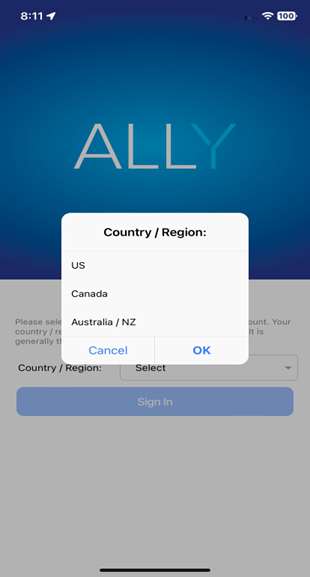
- SCRAM Ally application, County/Region option for Canada Victim Users
|
During the 15-minute deployment, you may not be able to access SCRAMNET GPS, but messages from the SCRAM GPS device will continue to be processed uninterrupted. |
Pattern of Life “Sort by Primary Agent” Filter option
Use the “Sort By Primary Agent” to customize the Activity view within the Pattern of Life Analysis data..
Updated Country/Region Selection for Ally
The first time the victim accesses the SCRAM Ally app on their smartphone, the victim must select one of the following options: US, Canada, or Australia/NZ for the app to operate correctly.
|
IMPORTANT: Activation of the Victim Notification service requires a contract amendment. If you are interested in the service, please contact your SCRAM Systems Account Manager or Sales Representative. |
On September 3rd, 2025, SCRAM Systems will release multiple enhancements focusing on Alcohol and Tamper alerts that require maintenance activities after analysis to resolve them.
These enhancements include:
- Five new Maintenance Alerts
- Updates to the Alert Management Console
New Maintenance Alerts
Currently, once a Data Analyst completes their review, the next step for some alerts requires a maintenance activity to be completed to close them. To improve efficiency in both identifying and taking the required actions to resolve these alerts, SCRAM Systems will introduce new alerts that will appear in the Scheduled Maintenance section on the Workload page. Each alert will include the specific actions required to resolve the alert and to ensure proper client monitoring. These new alerts and required actions are:
- Removal without Reinitialization – Removal without re-initialization – CLIENT IS NOT BEING MONITORED. Need to meet with client to perform a re-initialization. First, utilize the Maintenance Link. Second, reinstall bracelet to the proper fit. Third, perform a direct connect. Once the bracelet receives the required initialization this alert will auto resolve, and monitoring can begin. Click the Maintenance button below to begin the process.
- Fit Check Requested – Fit check – First, utilize the Maintenance Link. Second, inspect client’s bracelet to ensure a proper fit. If the bracelet is not fit properly, please remove and reinstall to the proper fit. Third, perform a direct connect. Once the bracelet receives the new initialization this alert will auto resolve. Click the Maintenance button below to begin the process.
- Assigned Off Body – Assigned off body – CLIENT IS NOT BEING MONITORED. Need to meet with client to perform a re-initialization. First, utilize the Maintenance Link. Second, inspect client’s bracelet to ensure a proper fit. If the bracelet is not fit properly, please remove and reinstall to the proper fit. Third, perform a direct connect. Once the bracelet receives the new initialization, this alert will auto resolve. Click the Maintenance button below to begin the process.
- Battery Replacement Required – Battery Replacement Required – First, utilize the Maintenance Link and select the “Battery, Faceplate and Exhaust Cap Replaced” option. Second, remove the bracelet. Clean the battery contacts using a dry, fine-bristled brush and wipe clean using the microfiber cloth. Install a new battery and faceplate, ensuring you hear four audible clicks. Third, perform a direct connect. Once the bracelet receives the new initialization this alert will auto resolve. Click the Maintenance button below to begin the process.
- Alcohol detected at Install – Alcohol detected at install. This could be attributed to prior consumption of alcohol, product use, or environmental contaminants. Waiting for alcohol to dissipate and reach zero for long enough to allow the required initialization to complete. Once the bracelet receives the required initialization this alert will auto resolve, and monitoring can begin.
To keep your monitoring program running smoothly, ensure you are managing the alerts displayed in the Scheduled Maintenance section daily.
Alert Management Console
In addition to the five new alert types, we have made a couple of updates to the Alert Management Console (AMC).
- Upon opening the AMC, you will note a new alert banner that will display any required maintenance items that need your immediate attention for client monitoring.
- When a maintenance task is needed, a new Maintenance button is available for you to access and complete the required maintenance tasks.
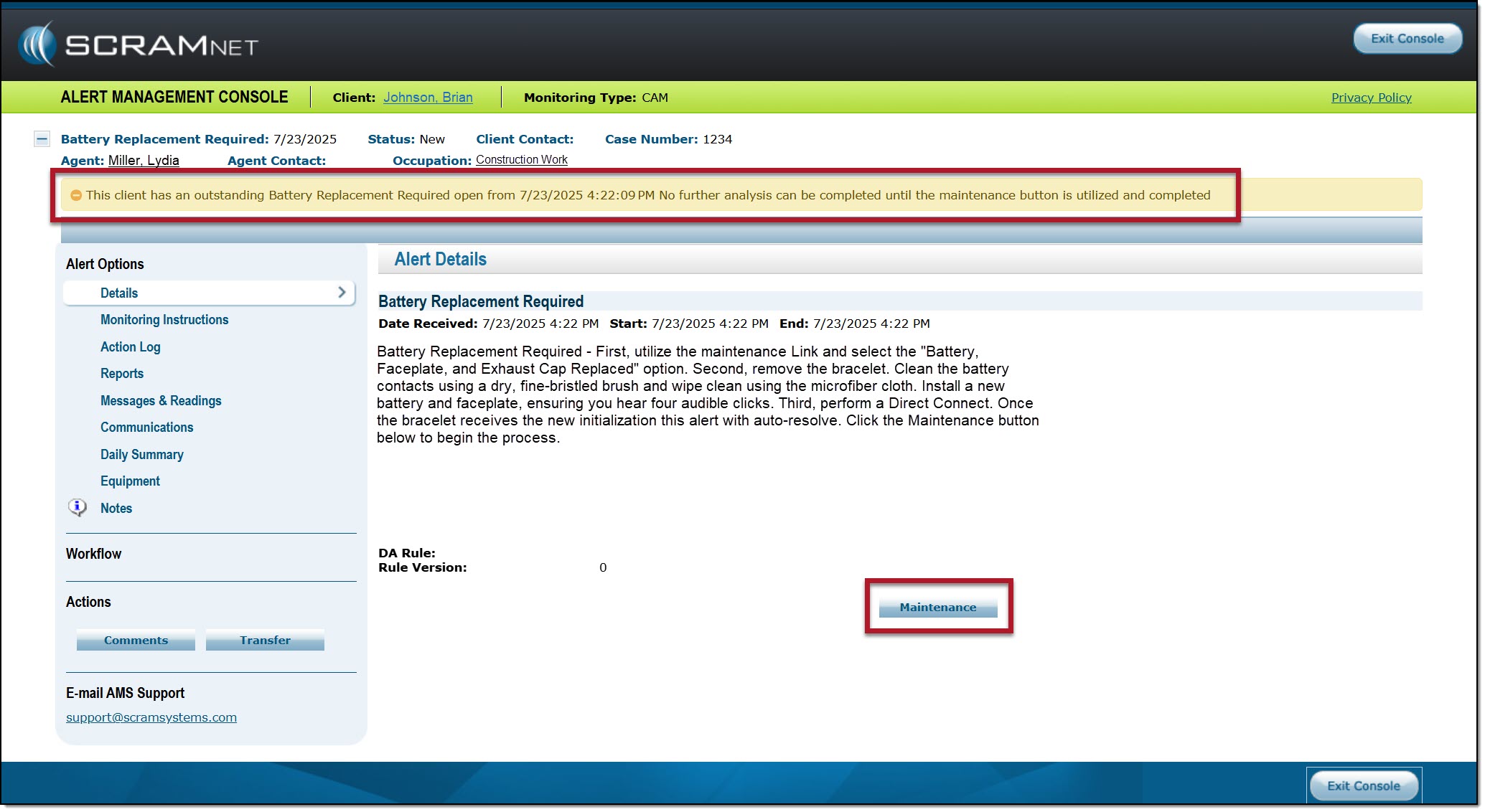
Handling the New Alert Types
Let’s walk through an example of an alert so you can better understand the workflow.
Data Analysis
- A “Tamper” alert is generated and displayed in the Tamper section of the Workload page.
- The Data Analyst completes their analysis of the data and determines that a fit check is required.
- The Data Analyst will generate a “Fit Check” alert that is displayed in the Scheduled Maintenance section on the Workload page and then will resolve the “Tamper” alert, thus removing it from the Tamper section.
Your Tasks
- Expand the Scheduled Maintenance section and select the Fit Check alert.
- Complete the required actions.
- Once all required actions are completed and recorded in SCRAMNET, the system will automatically resolve the alert.
Day-to-Day Operations
Overall, this update will improve your efficiency by providing a centralized location for all alerts that require maintenance actions to be completed to ensure client monitoring. Additionally, once the appropriate actions have been completed on your part and recorded in the system, the alerts are auto-resolved, eliminating the requirement to “Transfer” an alert back to your Data Analyst, thus removing alerts from your Workload page more efficiently.
If you have any questions or concerns, contact your Data Analyst or Customer Service.