This release includes the following enhancements:
- Interface Style Changes
- Houseless Indicator
- Client Contact Standard Metrics Update
Nexus: Interface Style Changes
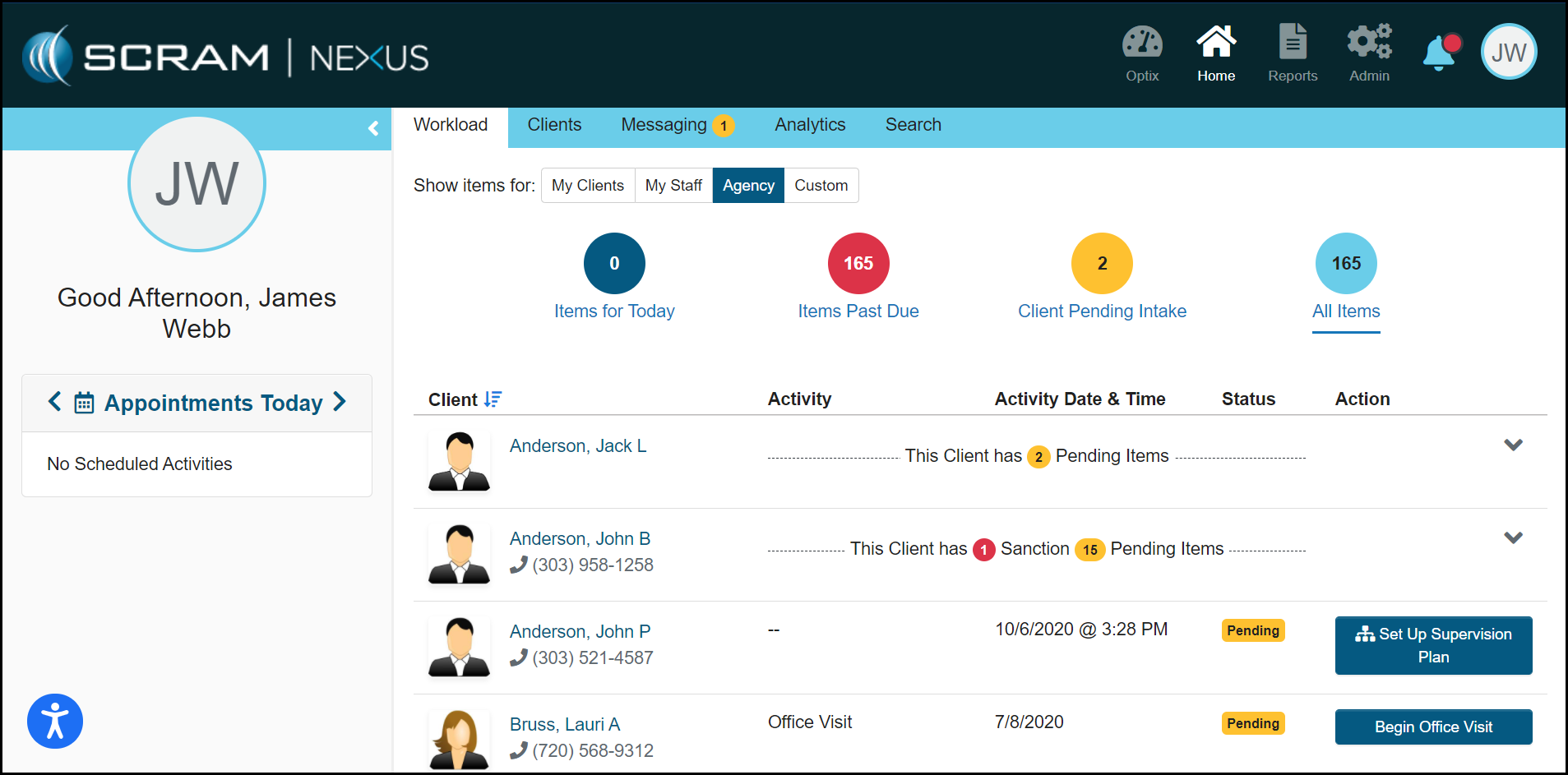
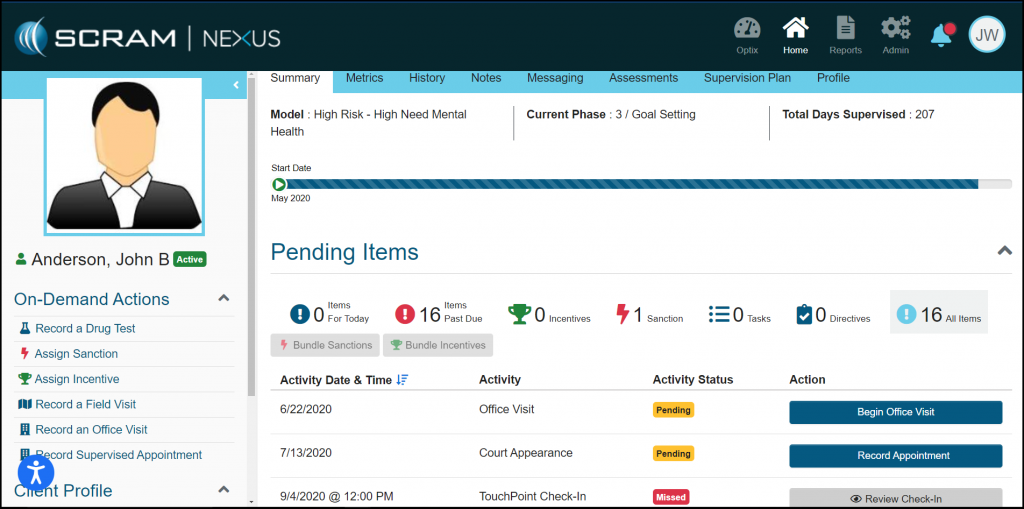
The SCRAM Nexus interface has been updated to make content more accessible and usable. You will notice a marked improvement in the consistency of buttons, labels, and page layouts. This is a huge step toward Nexus adhering to Web Content Accessibility Guidelines.
Client: Houseless Indicator
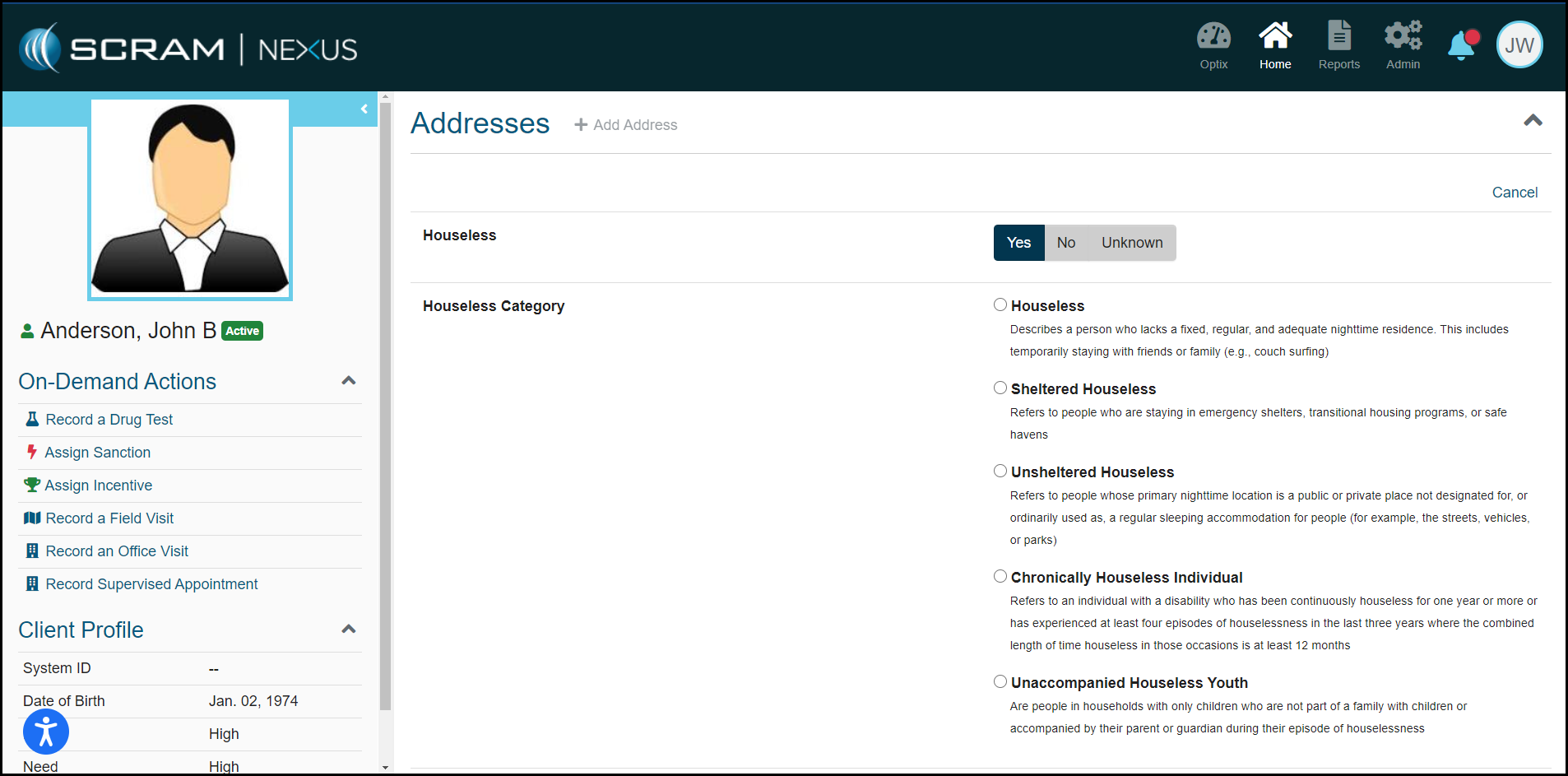
An officer can now indicate if a client is experiencing houselessness or housing instability. There are five categories that an officer can choose from in the address section of the Client Profile. The categories and definitions in this section were defined by the U.S. Department of Housing and Urban Development. This indicator will provide insight for which clients may need more assistance in achieving stability and or permanent housing.
- Houseless: Describes a person who lacks a fixed, regular, and adequate nighttime residence. This includes temporarily staying with friends or family (for example, couch surfing).
- Sheltered Houseless: Refers to people who are staying in emergency shelters, transitional housing programs, or safe havens.
- Unsheltered Houseless: Refers to people whose primary nighttime location is a public or private place not designated for, or ordinarily used as, a regular sleeping accommodation for people (for example, the streets, vehicles, or parks).
- Chronically Houseless Individual: Refers to an individual with a disability who has been continuously homeless for one year or more or has experienced at least four episodes of houselessness in the last three years where the combined length of time homeless in those occasions is at least 12 months.
- Unaccompanied Houseless Youth: People in households with only children who are not part of a family with children or accompanied by their parent or guardian during their episode of houselessness.
Client: Contact Standard Metrics
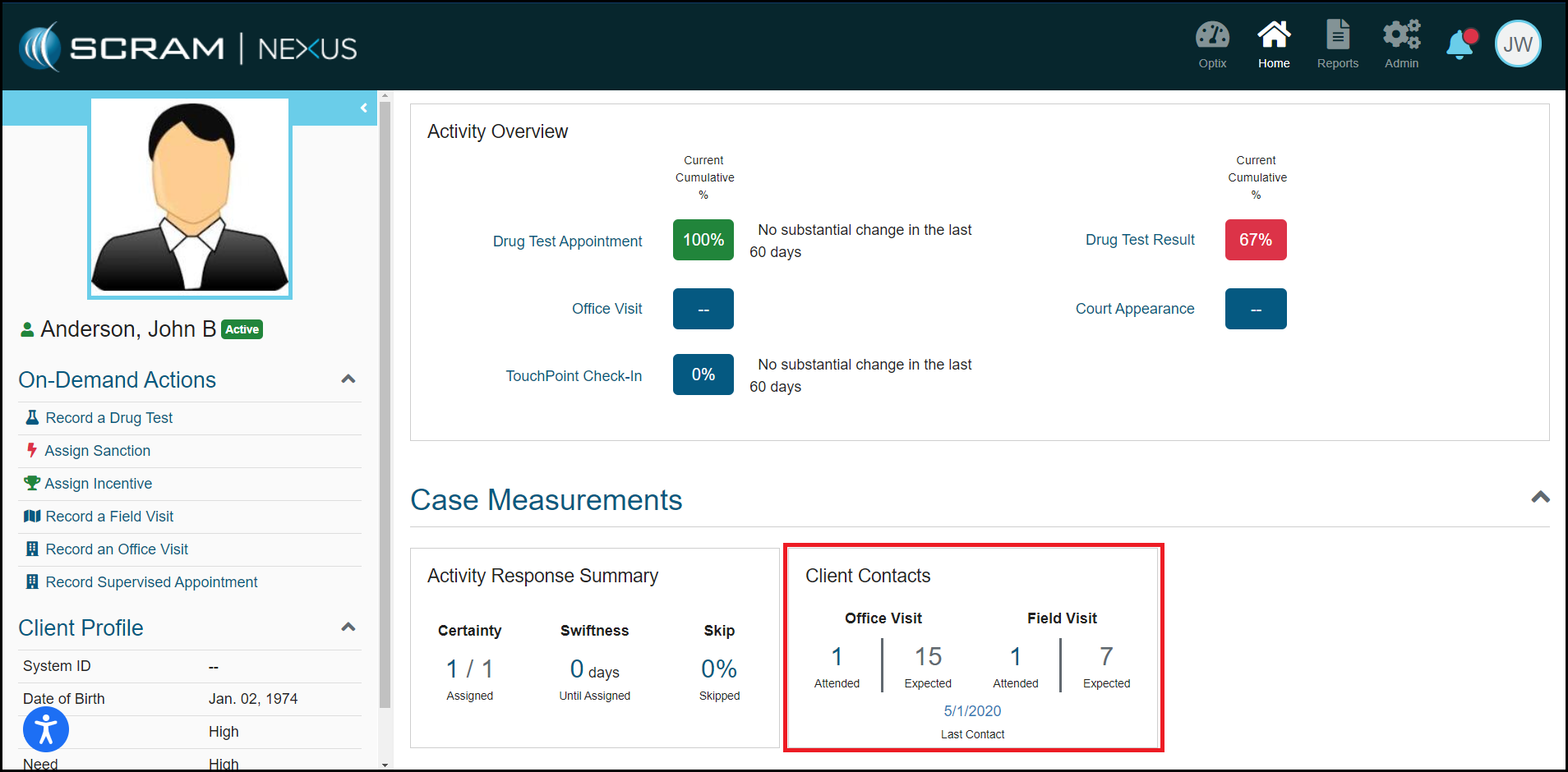
The Contact Standard metric for clients has been updated to reflect actual contacts compared to the model requirements. Nexus will report on the number of office visits and field visits that were attended in the current phase and compare it to the number expected to be attended according to model requirements. The activity must be in that phase of the model in which the client is assigned in order to determine an expectancy.
Feedback
As always, please contact SCRAM Systems Customer Service with recommendations for system improvements.